In the 1990s, thanks to Bart Simpson, Buffy the Vampire Slayer, and George Costanza’s girlfriend in Seinfeld, Americans picked up biblical Hebrew without even realizing it: yada yada. In casual slang it means “blah, blah.” Literally, it’s closer to “I know, I know.” But in the Old Testament, yada goes deeper—naming Adam’s intimacy with Eve, describing God’s attention to Israel’s suffering in bondage, and reminding us that knowing is always more than mere brain activity.
The distance between the English idiom and its Hebrew roots is itself a reminder of the layered complexity of knowing. For what do we really know, anyway? How do we come to know what we know? And what about the fact that, by definition, we don’t know what we don’t know?
Read our latest issue or browse back issues.
In a post-truth age of slippery facts and competing authorities, the question of knowledge is inseparable from the question of power. Cultural anthropologist Johannes Fabian highlighted this fraught relationship when he distinguished between three types of knowledge: as state, possession, and activity.
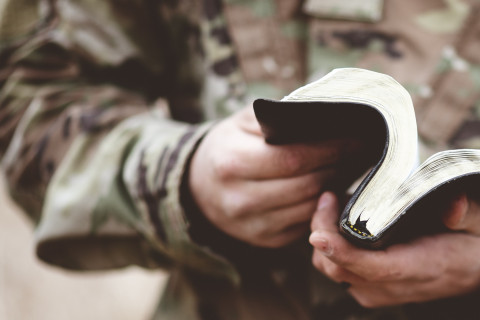
Knowledge is sometimes a state, static and devoid of process, reified into settled dogma. To question this kind of knowledge is to risk heresy and condemnation.
Knowledge is often a possession, especially in American Christianity, cherished for its transcendent value and wielded as a mark of superiority. A learned minority retains ownership rights, and even when they share their knowledge with others, they remain gatekeepers and exclusive purveyors.
Fabian’s third type, knowledge as activity, is rare in the world today. It invites participation in an ongoing process, emphasizing the elusiveness, even the impossibility, of singular control.
What fascinates me is the contrast between knowledge as possession and knowledge as activity—bracketing, at least for now, the notion of knowledge as state.
Where knowledge as possession requires a teacher, a bearer of knowledge willing to impart it, knowledge as activity depends instead on a readiness to engage, to be moved. Knowledge as possession is concerned with answers; knowledge as activity is open to questions.
The life of faith calls for both kinds of knowing in order to nurture a strong and vibrant spirituality. We long to hold fast to what we know to be true and reliable—we possess knowledge. Yet there are moments when our understanding shifts, when our way of seeing the world bends or even crumbles, and the whole framework needs renovation—we engage in the activity of knowledge.
We see both kinds of knowledge in the Bible. Take Psalm 62, which opens with the psalmist exuding unshakeable confidence: “I will never be shaken,” we read in verse 2 (my translation). It is the declaration of a person basking in the noonday sun without a storm cloud in sight, confident that there is no tempest that can shake their faith. This is knowledge possessed.
By verse 6, the “never” in “I will never be shaken” has fallen by the wayside, and the psalmist struggles to assert, “I will not be shaken.” It is the kind of declaration made not before a storm, but in the midst of one—in the very moment of being shaken—spoken as if saying it might make it true. The psalmist is shaken, yet clings to the hope of standing firm. It is a paradox that only makes sense through the lens of faith: “I believe, help my unbelief!”
It’s one thing to think you’ll never be shaken; it’s another to cling for dear life when everything around you is falling apart. This contrast helps explain the shift between verses 1 and 5. In verse 1, the psalmist declares, “Truly my soul waits upon God”—a calm, confident statement. By verse 5, however, the tone changes to “My soul, wait only upon God!”—an urgent plea, almost a command to the soul itself.
To paraphrase, “My soul is at peace” in verse 1 expresses faith as possession—steady, assured, and calm. By verse 6, “Calm down, my soul!” shows faith as activity—the kind of thing you say to yourself when your mind is racing at 100 mph, screaming at 120 decibels.
Mark Twain once quipped, “When I was a boy of 14, my father was so ignorant I could hardly stand to have the old man around. But when I got to be 21, I was astonished at how much the old man had learned in seven years.” Twain thought he knew his father and found him lacking. But his knowledge was much more limited than he knew. His account offers a vivid example of knowledge as possession giving way to knowledge as activity.
Fabian’s work on knowledge deepens my reflection on Psalm 62. I begin to see how much my faith rests on insecure, untested knowledge, knowledge as possession as depicted in the psalm’s opening verses. I wonder what it might look like to follow the song’s movement all the way: confronting uncertainty, wrestling with doubt, and holding on amid life’s storms. Through it all, knowing is not simply something we possess; it is something we enact, bending and adjusting to make room for whatever life brings. In this way, knowing itself becomes an adventure.