On December 15, 2025, I became eligible for Canadian citizenship. I have never lived in Canada, nor have my parents or grandparents. And I did nothing to pursue this status. But my biological grandmother, the woman who gave up my mother and her siblings for adoption, was born to parents who lived for generations in Ontario before emigrating to Detroit. With the passage of Bill C-3: An Act to Amend the Citizenship Act, the Canadian government removed its one-generation limit to citizenship by descent, paving the way for millions of people like me—known as Lost Canadians—to claim our citizenship.
Intellectually, I know that each nation-state can devise its own rules governing the legal right to citizenship. My Palestinian friends in East Jerusalem are permanent residents of Israel who are denied passports and are subject to discriminatory laws. Sierra Leone is one of several African nations to grant citizenship to Africans in the diaspora based on DNA testing. Myanmar’s decision to restrict citizenship based on ethnicity has left 600,000 Rohingya Muslims stateless, making education, travel, and property ownership nearly impossible.
Read our latest issue or browse back issues.
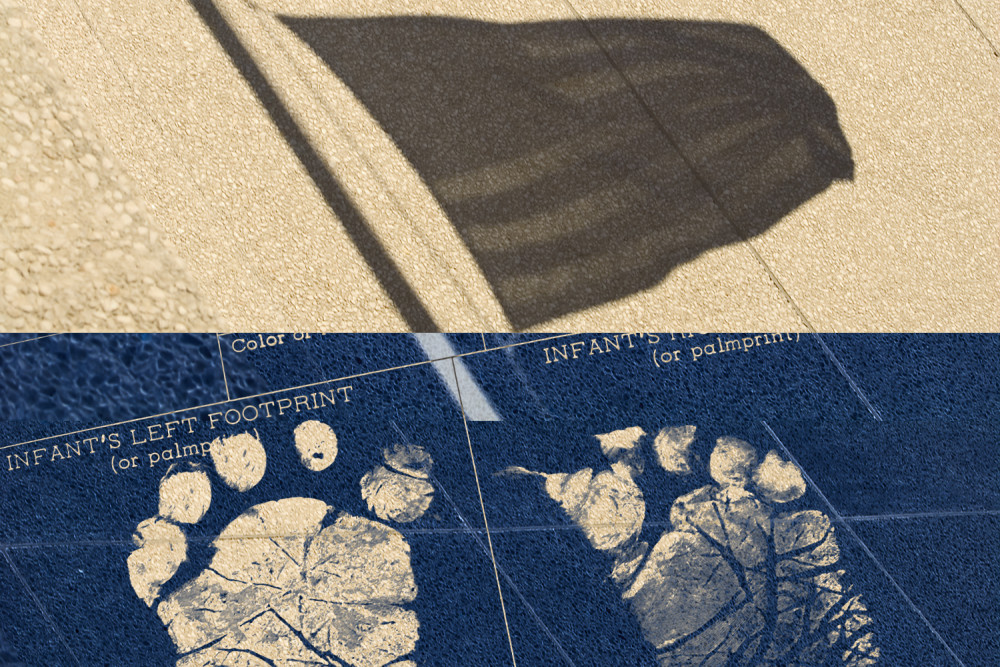
Yet I was surprisingly unnerved when confronted with the reality that the government can truly create citizens with the stroke of a pen, that it can birth political identities by fiat. My sense of the fragility of my own civic identity returned a few months later when the US Supreme Court struck down President Trump’s executive order seeking to end automatic citizenship for anyone born on US soil. Once a fringe theory, the testing of birthright citizenship in the highest court was a reminder of the tenuousness of the legal status many Americans take for granted.
One alternative to birthright citizenship is jus sanguinis, where one’s citizenship is passed down through blood. But doing so requires the government to define an initial citizen population—a legal starting point from which citizenship could thereafter be inherited. Without this kind of demarcation, every person, regardless of when and by what means they arrived in the United States, would eventually trace their ancestry back to someone who was not a US citizen, making it impossible to transmit citizenship to the next generation. That initial population would be demarcated arbitrarily: Everyone present before a certain date is a citizen.
Another alternative to birthright citizenship is to extend earned citizenship, the kind undertaken by naturalized citizens, to all residents of the United States. Under this proposal, a person born in the country would receive legal status but would not become a citizen until fulfilling certain obligations. Those might include passing state-established ethical behavior checks or taking a civic knowledge exam, establishing residency in the country for a certain number of years, or serving in the military. These are just two of the ways that the US government could create, redefine, and withhold citizenship.
It’s unnerving to know that a state can create citizens—or erase them—with the stroke of a pen.
The civic instability I experienced this year offered me a new perspective on Paul’s admonishment to the Philippians to recognize their citizenship in heaven (3:20) as members of a polis comprised of different tribes, ethnicities, and languages. Paul knew what I confronted: Political communities are forever renegotiating who belongs and what is exchanged to secure that belonging. Paul’s Roman citizenship, a coveted and contingent legal identity, could be limited, purchased, or bestowed. Paul didn’t escape these realities—on several occasions in Acts, he invokes his Roman citizenship when he is caught up in legal trouble for his proselytizing. But he refuses to adhere to the state’s identity-making, no matter how hard the empire tries to secure loyalty through religion or identity.
The Roman colony of Philippi was one of the missionary sites where Paul came into conflict with Roman authorities because Paul’s gospel lacked official status as a recognized religion in the Roman pantheon. New Testament scholar Mikael Tellbe describes the Philippians as particularly scrupulous in their observance of Roman law, as proud of their citizenship and of the colony established by Caesar Augustus. When Paul preached the gospel of Jesus Christ, the Philippian magistrate leveled the political offense of disloyalty to the Roman code against Paul. In turn, the residents of Philippi were outraged by Paul’s breach of civic duty.
Considering the Philippians’ religious devotion to their civic identity, Paul’s redirection toward citizenship in heaven comes across not as piety but as myth-breaking. The fairy tale we have absorbed, whether in Christian nationalism’s attempt to tighten the knot between Christian identity and citizenship or in White nationalism’s racialization of Americanness, is that political belonging is naturally grounded in territory, race, ancestry, or a shared national identity. Instead, our citizenship—along with our access to education, property, banking, and democratic participation—depends upon political decisions that governments continually revise.
In 1975, Richard John Neuhaus infamously told a Time magazine reporter, “When I meet God, I expect to meet him as an American.” He went on to clarify that he intended only to make clear “that God is not indifferent to the American experiment.” Neuhaus was surely right. God is never indifferent to empires. God judges empires, uses them, and brings them to an end. But to God, the United States possesses no greater claim upon history than Babylon, Rome, or Canada. Every nation is judged by the same Lord—and relativized by the same heavenly citizenship. Nationalism, in all its varieties, is a myth that Paul’s heavenly citizenship excises from our political and theological imaginations. Our national belonging, as citizen-making and unmaking, reveals nothing more than a contingent legal structure. My own already-not-yet Canadian citizenship exposed that fiction. I did not become Canadian because I embraced a culture or pledged a new allegiance. Parliament simply changed the law.
Earlier this year, I decided to submit the documentation to claim my Canadian citizenship. I can receive the practical benefits of citizenship without treating them as natural or sacred. Further, I can organize to extend those protections to others whose citizenship is denied, revoked, or rendered precarious because of race, legal status, or political persuasion. But beyond this, and contra Neuhaus, I want to live more deeply into the dislocation of my citizenship identity, allowing that dislocation to draw me more deeply into the political community that Paul names, whose membership is determined neither by blood nor by birthplace but by baptism into Christ.