
Online Columnists

The Bible is clear: Stay woke

The New Testament authors repeatedly tell their readers to be awake.

In 2016, journalist Kat Chow traced the evolution of the phrase politically correct. Chow recalled a 1991 commencement address at the University of Michigan given by then-president George H. W. Bush in which he stated: “The notion of political correctness has ignited controversy across the land. And although the movement arises from the laudable desire to sweep away the debris of racism and sexism and hatred, it replaces old prejudice with new ones.”

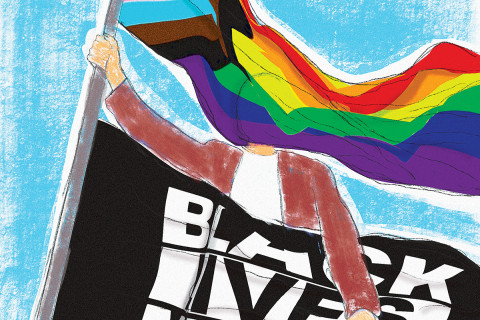
As they say, if history doesn’t exactly repeat itself, it does rhyme. Each time the pendulum swings (or the universe’s moral arc bends) toward justice and equality, it is met with strong opposition, a countermovement that co-opts specific language in an attempt to push the pendulum back in the opposite direction. In the 1980s, political correctness emerged as an effort to make room for greater multicultural awareness and diversity. By the time of Bush’s speech, it was being decried by conservatives as a new form of prejudice. More recently, the word “woke” gained popularity as a term to describe people who are alert and aware of racism and other forms of social injustice. But today, particularly among conservatives, it might as well mean “anything that stands in the way of the conservative agenda.” It is used as a catchall insult toward progressive people, policies, actions, and institutions.

Of course, words can and do change meaning across time and cultures. When I teach biblical Greek, I warn my students that their newfound knowledge will not equip them to fluently read a newspaper during a vacation to Greece; it won’t even enable them to easily read other ancient texts like Sophocles’s Oedipus the King. Studying ancient meanings of words and how they have shifted can help us understand cultures, contexts, and our own language. In light of the weaponization of “wokeness” in our own time, I think it worth exploring the two Greek words in the New Testament that can be translated as “woke.”
The word γρηγορεύω (grégoreó) appears 23 times in the Bible and means “to be awake.” You find it in the gospels: “Keep awake, therefore, for you do not know on what day your Lord is coming. But understand this: if the owner of the house had known in what part of the night the thief was coming, he would have stayed awake and would not have let his house be broken into” (Matthew 24:42-43). Paul writes, “So, then, let us not fall asleep as others do, but let us keep awake and be sober” (1 Thessalonians 5:6). In the book of Revelation, you find: “Wake up and strengthen what remains and is on the point of death, for I have not found your works perfect in the sight of my God. Remember, then, what you received and heard; obey it and repent. If you do not wake up, I will come like a thief, and you will not know at what hour I will come to you.” (Revelation 3:2-3) Since sleep often indicates missing the mark, death, or dying, to be awake means to be alive. In this sense, being alert is to be aware of a potential threat, precisely one that can lead to your destruction. The New Testament authors repeatedly tell their readers to be awake.

Second and even more common is the word ἐγείρω (egeiró), used 144 times, which has a similar meaning but is closer to our phrase “to wake up.” Its figurative meanings include restoring from a dead or damaged state, healing, or raising to life. In Matthew, we find that “the tombs were opened, and many bodies of the saints who had fallen asleep were raised” (Matthew 27:52). Paul writes: “Sleeper, awake! Rise from the dead, and Christ will shine on you” (Ephesians 5:14). In the Gospel of John, we find: “Jesus said to him, ‘Stand up, take your mat and walk.’ At once the man was made well, and he took up his mat and began to walk” (John 5:8-9). In these examples, to awaken is to overcome death, align oneself with Christ, and be fully restored and completely healed. 

Both words appear in the New Testament at the hearts of warnings, instructions, and imperatives. Readers are told to wake up—to overcome the forces of death, to rise up and align with the light. They are also told to be awake—to be vigilant about threats and possible spiritual destruction. In other words, the Bible tells us pretty clearly to be woke and to stay woke: “But watch yourselves lest your hearts be weighed down with dissipation and drunkenness and cares of this life, and that day come upon you suddenly like a trap. For it will come upon all who dwell on the face of the whole earth. But stay awake at all times, praying that you may have strength to escape all these things that will take place, and to stand before the Son of Man” (Luke 21:34-36). The fact that some have weaponized the term as a political insult should not impede our embrace of wokeness. Interestingly, to be called a Christian in the first-century Mediterranean world was also a slur. It serves us well to not only ask what words mean on paper, but to assess the ways people try to use them for political gain.

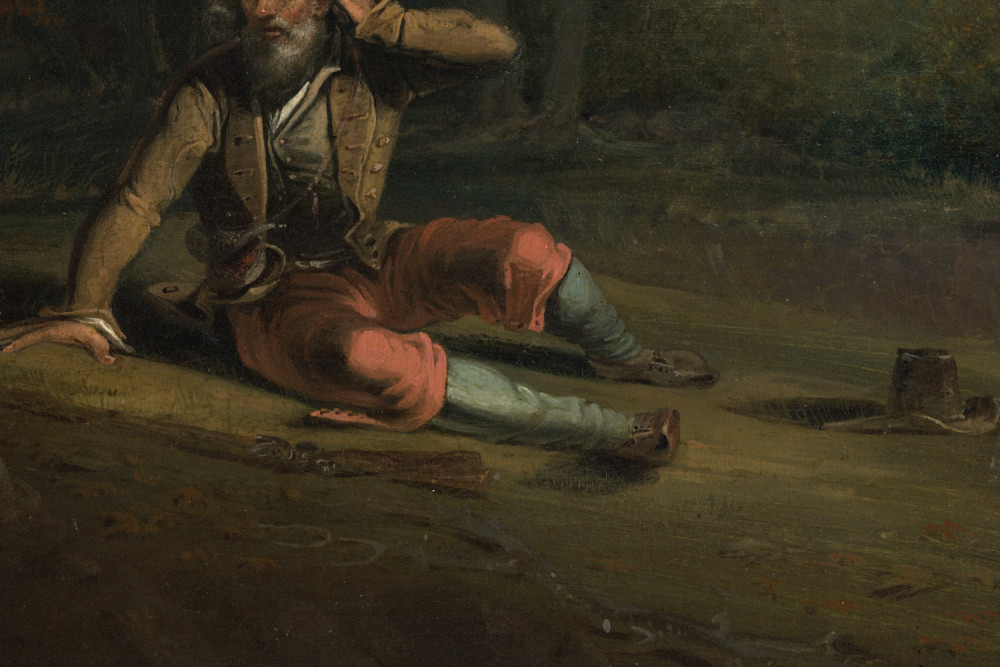
In June 1965, Martin Luther King Jr. delivered a commencement address at Oberlin College entitled “Remaining Awake Through a Great Revolution.” In the speech King reflects on Rip Van Winkle, the title character in the famous short story by Washington Irving.

Van Winkle slept for 20 years. King states:

“But there is another point in that story that is almost always completely overlooked: it was a sign on the inn in the little town on the Hudson from which Rip went up into the mountain for his long sleep. When he went up, the sign had a picture of King George III of England. When he came down, years later, the sign had a picture of George Washington, the first president of the United States. When Rip looked up at the picture of George Washington, he was completely lost; he knew not who he was. This reveals to us that the most striking fact about the story of Rip Van Winkle is not that he slept 20 years, but that he slept through a revolution. While he was peacefully snoring up on the mountain, a great revolution was taking place in the world—indeed, a revolution which would, at points, change the course of history. And Rip Van Winkle knew nothing about it; he was asleep.

There are all too many people who, in some great period of social change, fail to achieve the new mental outlooks that the new situation demands. There is nothing more tragic than to sleep through a revolution.”

King’s words remain instructive today. At another point in this speech, King explains how interconnected the world is and suggests that it is our moral and ethical duty to live together with our siblings. He states, “This is the great issue facing us today. No individual can live alone; no nation can live alone. We are tied together.” Because our freedom and justice are connected to all other people’s struggles for the same, we should not be found sleeping through a revolution. “Stay woke” is not only a rallying cry; it is also an indictment of injustice, an invocation for peace, a moral imperative.

Seeking God’s justice shakes us from the slumber of indifference. In order to heal and restore life, we must respond to the call to wake up. We must push back against anyone or anything that would lull us into a state of sleep and numbness—which would only lead to our own utter destruction. The past tense of the verb wake (as in “Wake up!”) is woke. What does the word’s shift in meaning tell us about our cultural context? The Bible encourages us to stay woke. King admonishes us to remain awake. Nobel laureate author Toni Morrison writes that “Misery don’t call ahead. That’s why you have to stay awake—otherwise it just walks on in your door.” The advice of our ancestors will set us free if we let it. Otherwise we might find ourselves sleeping through a revolution.

Jennifer Kaalund

Jennifer T. Kaalund is an online columnist for the CENTURY and an independent scholar who works at the intersection of Christian scriptures and early Christianity, African American history, and material culture. Her book, Reading Hebrews and 1 Peter with the African American Great Migration: Diaspora, Place, and Identity, explores the constructed and contested religious identities in Hebrews and 1 Peter through the lens of the “New Negro.”

All articles »