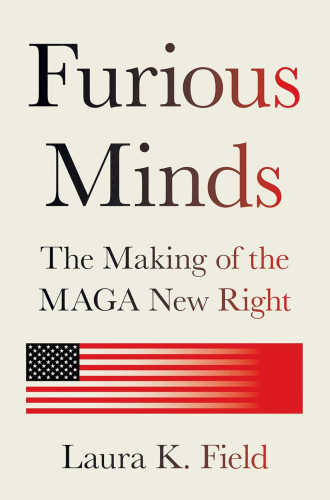
Furious Minds
The Making of the MAGA New Right
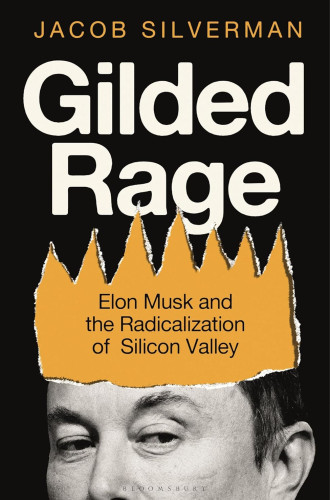
Gilded Rage
Elon Musk and the Radicalization of Silicon Valley
“I love the poorly educated,” Donald Trump said in 2016. This wasn’t just rhetoric. His administration has attacked universities and worked to dismantle the Department of Education. Nevertheless, some extremely well-educated people support this fundamentally anti-intellectual movement.
Two recent books help clarify why. Laura Field’s Furious Minds offers a close study of the new right academics and influencers who became the intellectual arm of MAGA, and Jacob Silverman’s Gilded Rage looks at the far-right tech oligarchs funding the MAGA agenda. The movements these books document have wildly different values, ideological roots, and visions for the future. Yet the people behind them share a desire to dismantle our democratic republic.

Read our latest issue or browse back issues.
Field is a political theorist with a deep understanding of the new right intellectuals, in part because her academic background is similar to theirs. In Furious Minds, she identifies political philosopher Leo Strauss, who taught at the University of Chicago for many years, as a key figure for understanding how they operate. For Strauss, any appeal to historicism was a gateway to relativism. His approach to criticism involved extracting the text from its cultural context and reading it in a vacuum, seeking secret teachings about politics or morality, placed there by the Great Books authors and somehow as intelligible to a 20th-century American as to an ancient Athenian.
This critical approach helps clarify why MAGA intellectuals are both dismissive of history and vulnerable to propaganda. It also connects with what Field characterizes as their “ideas first” approach to the world: a tendency to concoct ideological frameworks without reference to reality, then impose them on everything.
Academics who have worked in conservative spaces will appreciate Field’s incisive analyses of the contingents she discusses. Having come from a similar world, I recognize in her analysis my former professors and peers, and they are some of the last people I would trust to manage an ice cream stand, let alone the nation—not because they are stupid but because they are divorced from reality.
Field identifies three conservative subgroups that helped boost Trumpism: the Claremonters, the postliberals, and the national conservatives.
The Claremonters are affiliated with the Claremont Institute, a conservative think tank dedicated to recovering what they believe to be the principles of the American founding. Though obsessed with ideas about liberty, they are prone to justifying, or even praising, the Confederacy. Field describes their aesthetic as “youthful, bitter, masculinist, and counterrevolutionary.” The heirs of Barry Goldwater, who directed Richard Nixon’s “Southern strategy” to appeal to White southern voters’ racial prejudices, the Claremonters embrace isolationism, nationalism, and nativism. Larry Arnn and Michael Anton are thought leaders in this group.
The Claremonters are also obsessed with manliness. “These are not men who have ever learned how to be reasonable about women, and they self-selected into the corners of academia where that was acceptable,” Field writes. Patriarchal sexism is, however, an essential marker for all the branches of the new right.
Compared with the Claremonters, the postliberals may seem more appealing and less bitter. These idealistic traditionalists, many of them Catholic, believe the liberal experiment in pluralism has failed. They hate late-stage capitalism and favor a more communitarian organization—not an egalitarian one, however, nor one that has space for religious or cultural diversity. Their aesthetic, Field writes, is “sober, traditionalist, and highbrow.” Catholic integralists are influential in this group.
In keeping with an ideas-first mentality, the postliberals embrace farfetched prejudices about liberals and feminists as immoral, miserable people incapable of loving their own families. Postliberal scholars like Patrick Deneen, Sohrab Ahmari, Gladden Pappin, and Adrian Vermeule supported Trumpism because they believed it would demolish the “tyranny” of liberal democracy and allow them to build anew on the rubble of the liberal democratic state. How exactly they plan to do this is unclear. Nor, as Field notes, is it clear what their plan is for the “people who don’t fit into their new scheme.” The postliberals are a major influence on J. D. Vance, though we’ll need to look at Gilded Rage to see which people put him in power.
The last group, the national conservatives, are “fervent and unyielding” opponents of the American project of pluralism. They are nationalists yet believe more powerful nations have a right to annex others. Some of them, Field writes, are sincere in their economic populism and critical of the superrich who control the nation’s wealth. Kevin Roberts of the Heritage Foundation is one significant national conservative. R. R. Reno of First Things, is another.
Beneath these groups, Field explains, is the hard right, men like Steve Bannon, Tucker Carlson, Curtis Yarvin, and Stephen Miller who flagrantly glorify violence against minorities and wallow in fantasies about male aggression. They’re the ones who lent their energy to the Unite the Right rally in Charlottesville and the January 6 insurrection. Field also traces the influence of internet manosphere characters and Christian nationalist sects.
As for the new right intellectuals, Field notes that their ideas-first vision of society has made them like G. K. Chesterton’s madman, who has “lost everything except his reason.” They are fighting a furious battle against an enemy that exists largely in their own minds. Unfortunately, many real people are getting caught in the crosshairs.
There’s a certain grim irony in the fact that these high-minded idealists ended up supporting someone like Trump and working with crass extremists. In their arrogant refusal to test their theses against reality, and their willingness to disenfranchise minorities, they are now yoked to characters they would typically denounce as godless and amoral—like, for instance, the people Silverman describes in Gilded Rage.
Jacob Silverman, a financial journalist who has investigated the tangled world of tech and finance, writes that Elon Musk is at the heart of the “right-wing radicalization overtaking America’s business class.” But Musk is just one of many. “Any time a class of wealthy elites begins to intervene in politics, we should be looking at where their money goes and to what ends,” Silverman writes. In this case, they are funding extremists and demonizing marginalized groups.
Fifteen years ago, when progressive values seemed ascendant, Silicon Valley culture was nominally on board. Many of the individuals in Gilded Rage supported Hillary Clinton in the 2016 presidential race, but once Trump was elected, they pivoted quickly. This shouldn’t be surprising. As Silverman writes, progressive politics was “always an awkward fit for tech and finance elites.” But it was the COVID-19 pandemic that pushed things over the extremist edge. Resentful of public health protocols in California, Musk began to lap up conspiracy theories and regurgitate them on social media.
It’s important to note that ultra-wealthy corporate bosses like Musk, Peter Thiel, and Vivek Ramaswamy are not creators. They got rich through financial engineering. And then, as Silverman documents, they wanted to “translate their bankrolls into political power.”
Initially, Silverman says, venture capitalist Thiel, who bankrolled Vance’s run for the US Senate, was the intellectual leader of the Silicon Valley far right. But as Thiel became disillusioned with Trump, Musk was ready to take his place. Still, as Silverman writes, these characters are “less important as individuals than as representatives of a rising sociopolitical class of venture capitalists and financiers.”
Musk and the others differ from the magnates of the Gilded Age in that they adopt populist resentments and claim not to be elites themselves. They’ve succeeded in pushing this narrative, given how many working-class people applaud the billionaires who are making their lives worse. Ultimately, Silverman says, this is “a story about class involving people who, since they stand atop the economic pyramid, don’t wish to acknowledge its existence.”
Yet these billionaires have grown increasingly disconnected from everyday life in America, to the extent that they see themselves as victims. Silverman describes them as “a lot of angry men displaying little ability to process, or usefully direct, their grievances.” They claim that they don’t have real power and are oppressed by the bureaucratic state. They also diverge from the Gilded Age elites in that they aren’t funding anything any normal person wants. We want libraries, good roads, health care, and affordable housing, but the tech elites keep dabbling in cryptocurrency and trying to go to Mars.
Some Silicon Valley right-wingers claim to be libertarians, but their commitment to freedom seems questionable. They’re notorious for creating unpleasant workplace conditions and an authoritarian company culture with zero tolerance for protest or dissent. And for all their fretting about regulation, they seem fine with police states and government surveillance. Start-ups like Palantir and Anduril were specifically created for intelligence work. And yes, these names are stolen from J. R. R. Tolkien’s world, which many tech fascists are obsessed with but fundamentally misread.
Silverman reports that Palmer Luckey, cofounder of Palantir, told an audience that “societies have always needed a warrior class that is enthused and excited about enacting violence on others in pursuit of good aims.” The theory is that we must be ruthless in defense of America—that is, the West. Yet the “America first” posturing of Musk and the others is undermined by the reality of their foreign entanglements, especially with Saudi Arabia, which has long used technology for surveillance.
Silverman points out that by 2018, Saudi Arabia was the biggest investor in tech start-ups. The Saudi crown prince, Mohammed bin Salman, set up an elaborate spy ring using Twitter to track dissidents and identify victims, to the point that the FBI actually had to pay a visit to Twitter headquarters. When Musk purchased Twitter, the Saudis helped finance this. Musk then proceeded to tear Twitter apart.
The Saudi-Musk-Twitter connection is perhaps the most alarming of the stories Silverman relates in Gilded Rage, but he also follows other tortuous money trails, looking at company towns, land grabs, the crypto collapse, and the financing of Vance’s political ascendancy. The book ends with Musk’s DOGE rampage: “Musk was doing to the federal government almost note-for-note what he had done to Twitter.”
As I read these books, I kept noting how miserable these people seem. Conservatives often revile liberals as angry and bitter, yet the wealthy, influential people steering MAGA seem to loathe the world they live in. As Silverman says of the tech elites, they “have the world at their fingertips, but they can’t stand the touch.”
And what is it that upsets them so much? It seems to be equality. They hate being held to the same standards as others, hate the restrictions placed on them by the social contract implicit in democracy, hate being told that queer folks, disabled folks, and immigrants are just as good as they are. It’s no wonder misogyny is an essential feature of all these groups. The subjugation of women is humanity’s oldest inequality and one that nearly every man can get in on.
If knowledge really is power, I should feel more powerful for having read these books. Both writers have done impressive, even monumental work—not only in painstakingly researching and collecting their information, but in connecting the dots, and laying things out clearly and accessibly. Thanks to them, I have a clearer vision of why these shadowy moneymen and manipulators do what they do.
But it’s hard not to feel helpless, especially after witnessing the mayhem and evil that have unfolded in MAGA’s short time back in power. It might get a lot worse before it gets better.
Field and Silverman both acknowledge that things were amiss in the nation even before the MAGA movement came along. Liberals, Field writes, had become too complacent. And Silverman notes that President Joe Biden, after warning in his farewell address of the dangers of oligarchy, turned around and gave a warm welcome to the “very oligarch he had called a threat to democracy.”
“The election of Trump in 2016 began to reveal just how much we liberals had taken for granted, and just how fragile our understandings of the world had been,” Field writes. What we need, she argues, is “liberal renaissance and reinvention,” with an emphasis on virtue. I’m a fan of this idea, though I’m not sure how much MAGA mess we’ll have to clean up before we have a chance to try it.
Field also writes that liberals need to be more willing to tolerate a greater diversity of ideas, including “worldviews that we find incomprehensible, deeply offensive, or dangerous.” About that, I’m not so sure. Our national penchant for tolerating dangerous worldviews is one thing that landed us here in the first place. After the defeat of the Confederacy, the nation bent over backward to accommodate the slavers. Later, we tolerated an active Nazi party while persecuting people for any whiff of communism.
In this society that refuses to hold powerful predators accountable, is it really more tolerance that we need? Or might it be a more efficacious justice?