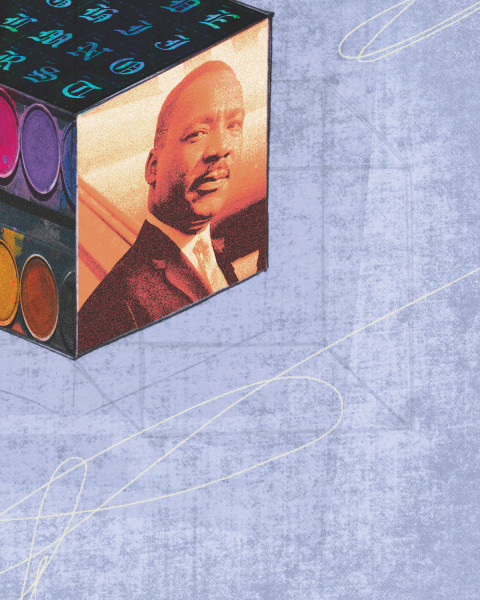
I remember it as if it were yesterday. I was 11 years old, sitting in the living room watching television while my mother washed dishes in the kitchen. My father was on his way to pick up my brother from Boy Scouts; my sisters were in their bedroom. It was an ordinary Thursday evening.
A news bulletin interrupted the program: Martin Luther King Jr. had been shot. Before I could grasp what that meant, the reporter said that King was dead. I sat frozen, trying to reconcile what I had just heard with what I knew about King.
Read our latest issue or browse back issues.
What came back to me most clearly was a memory from five years earlier, when my parents called my brother, my sisters, and me into the living room to watch the March on Washington. I can still picture their faces as King delivered his “I Have a Dream” speech, how moved they were. Only later did I understand that they were taking in more than a historic moment; they were embracing a moral vision for the country in which their children would grow up.
I ran to tell my mother the news. She dropped the dish she was holding. Moments later my father rushed through the door, having heard the same report on the car radio. That night I went to bed while my parents sat silently glued to the television. It felt as though the hope they had known five years earlier—the dream King had given voice to—had died that evening. It felt as though the nation itself had taken a major step backward, forfeiting the possibility of a better future.
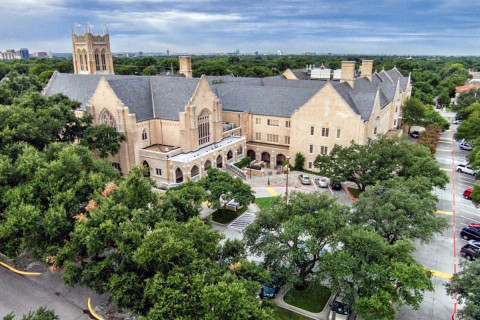
What I could not yet name that night was that King was killed not only for a dream but for telling the truth about the nation’s moral contradictions. Exactly one year earlier, he stood in the pulpit of Riverside Church and delivered his searingly prophetic sermon “Beyond Vietnam.” He called the country to account, urging it to live up to its professed ideals. He identified its “triple evils”: racism, economic exploitation, and militarism.
Herein lies the tension of April 4. In 1967, King spoke with prophetic clarity, held the nation accountable, and called it toward justice. In 1968, that prophetic voice was silenced by violence itself—perhaps the inevitable outcome in a nation unwilling to confront the contradiction between its rhetoric and its reality. One April 4 bears witness to truth telling and moral vision; the other reveals hypocrisy and violence.
This tension continues to shape our present. The current administration appears to see little contradiction in denying food assistance to millions and undermining access to health care while dramatically expanding budgets for the military and the paramilitary deportation force—all in the name of security. The nation proclaims liberty and justice for all while perpetuating bigotry, professes equal opportunity while tolerating staggering inequality, speaks of peace while relentlessly investing in systems of war.
King understood that these contradictions are not accidental. The triple evils are systemic and, as he said a few months after the Riverside sermon, “all tied together.” They shape our politics, public policy, and moral imagination. King’s warning was not merely about Vietnam. It was about a nation at risk of losing its moral compass.
The April 4 tension should be unsettling to the faith community. King made clear that he broke the silence surrounding America’s violent contradictions because of his “commitment to the ministry of Jesus Christ.” He spoke as a religious leader in a nation that claimed moral vision. He insisted that one could not profess allegiance to God while remaining silent about systems that sustain racism, entrench poverty, and sanctify war. Faith demanded an unswerving commitment to peace—not the absence of tension but, as he put it elsewhere, “the presence of justice.” For King there was no contradiction between America’s highest ideals and the gospel.
The issue for King was never whether America proclaimed a vision of justice and equality but whether it was genuinely committed to that vision. So April 4 signals both danger and possibility for our nation. The danger is continued hypocrisy: refusing to confront the triple evils woven into the fabric of our nation, thereby perpetuating violence and further eroding the nation’s moral center. The possibility is repentance: turning around, choosing a different path, reclaiming the vision King articulated. It’s a vision of a peace grounded in justice, dignity, and respect for all.
This question of commitment to the vision remains unresolved. But for those shaped by faith, a lack of commitment is not an option. Faith compels us to resist and protest the dominating forces of our time, to stand in the breach between our present and God’s promised future. It demands that we break the silence, as King did, and speak truthfully about the nation’s contradictions.
It’s a clear choice: settling for hypocrisy and injustice or standing up for truth and justice. We must decide whether we will hold the nation accountable to its highest vision—and ourselves to the demands of the gospel. As King said at Riverside, the choice is ours. We must decide—here, in this crucial moment of our time—whether we will finally reckon with the truth King dared to speak, and for which he died, and with moral resolve work to build a nation shaped by the peace that is justice for all. We must decide which April 4 we will live into.