

I spent my first 18 years in the General Association of Regular Baptist Churches and the next 30 wandering from denomination to denomination. In college I developed a romantic fixation on Catholicism and Orthodoxy, as disappointed evangelicals tend to do in college. I am denominationally postmodern.
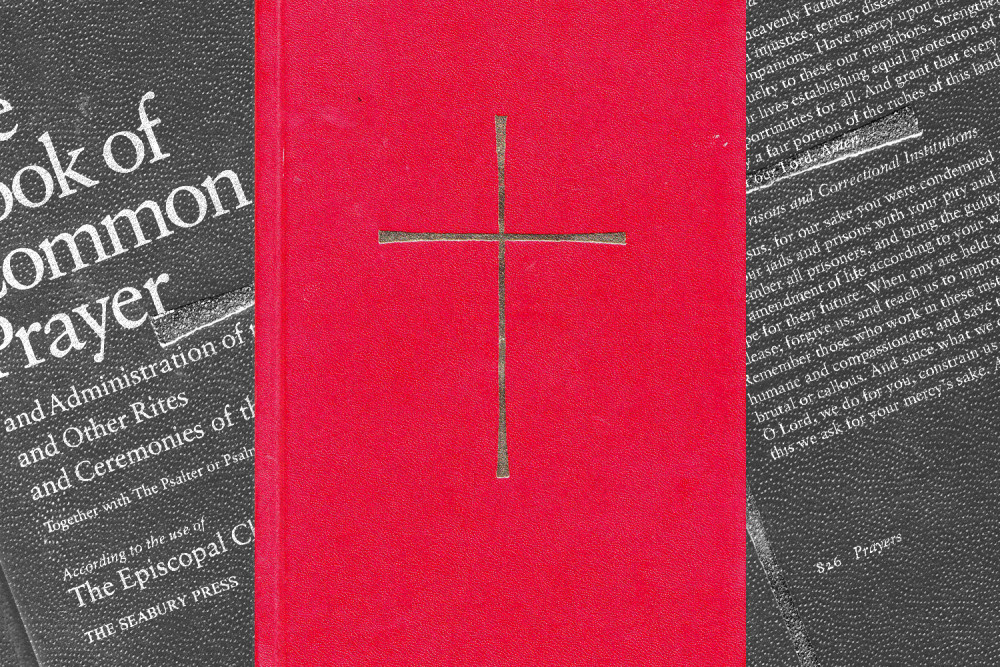
But the Episcopal Church is where I’ve spent the most years of my adult life. Nothing accidental about that. The denomination seems to serve as a sort of liturgical and intellectual center of gravity for the mainline, whether or not it always wants to or deserves to. It has a lot of old money and fancy buildings. It serves as a bridge (not the only one) to Christianities older than the Reformation. And it has a great prayer book.
A denomination’s primary prayer book shouldn’t be updated at the drop of a hat; I’d aim for once or twice a century, tops. When it comes to the emotional furniture people have sat on their entire lives, you want to wait to tamper with it until the legs start giving out. And I take it that churches have a responsibility—it’s not our main responsibility, but it’s one of them—to counterprogram the dominant media environments around them. Giving people old, carefully chosen words to speak and read is one way to do this. So, as a non-Episcopalian who will probably darken those doors again at some point, I hope the current Book of Common Prayer is still in effect when I do. It’s a full year younger than I am—it dates to 1979—and I am still more or less functional.


