Dan was 45 years old when I first met him, a handsome, suntanned guy in a high-end shirt, someone who was made for the pages of a golf apparel catalog. Never married, he lived with his widowed mother, both to care for her as she aged and to save his modest wages from his job at an insurance audit company. June was an engaged member of the church, which gave me the opportunity to meet her son while making a house call one day. She worried about Dan’s meager friendship circle consisting of only a few acquaintances from high school. Watching sports on TV was his passion. Given the chance to talk about the latest game, his personality leapt to life.
Aside from a few brief encounters, I lost track of Dan until his mother died. He was 64 then and the heir of the tiny ranch house he’d grown up in. Though I found him still dressed to the nines, he’d lost weight and didn’t appear particularly healthy. Life was collapsing in on him, it turns out, which became fully evident a year later when his closest friend encouraged me to drive by Dan’s house. There on the curb sat every piece of furniture that once graced his home. The bank had foreclosed on the property, and Dan was officially homeless, a tragic casualty of sports betting.

Read our latest issue or browse back issues.
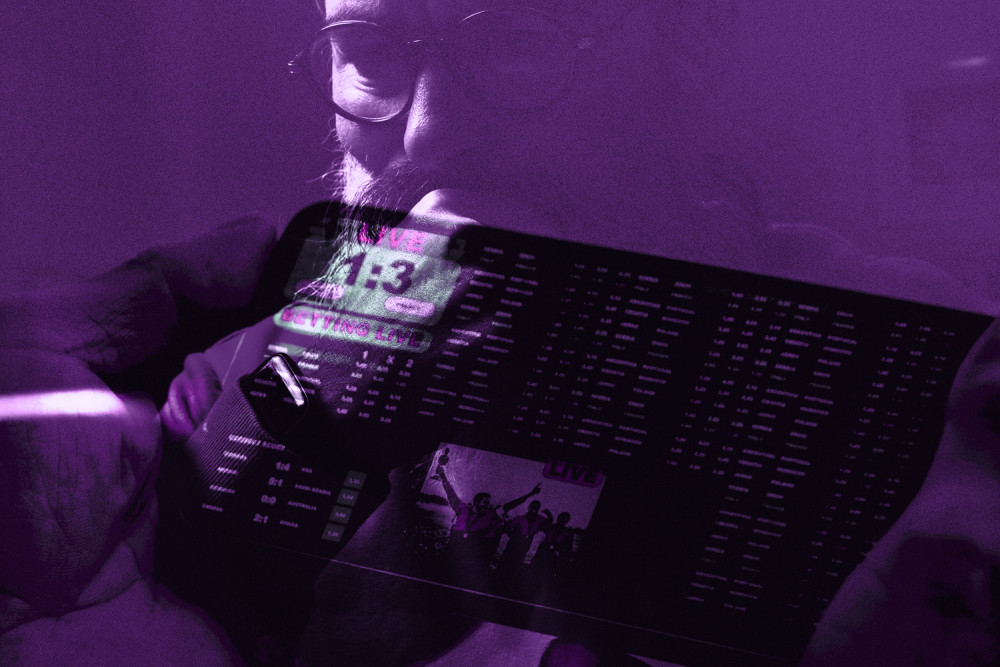
Betting on sports stayed out of the public eye for much of the 20th century. Notable exceptions involved allegations of the cardinal sin of American sports: players themselves involved in betting on games, as in the Black Sox scandal at the 1919 World Series and Pete Rose’s ban from baseball in 1989. Only with the arrival of online sports betting companies like FanDuel and DraftKings in the early 2010s, and the development of phone apps for placing bets, did sports betting become mainstream. One no longer had to get dressed and drive to a windowless casino along the interstate to gamble. Now you could gamble your life away 24/7 from your own recliner, betting on virtually every element of any game, from the color of a team’s Gatorade to the odds of their quarterback getting injured.
Today, gambling companies have a near total lock on the entire sports ecosystem. Online sports betting companies saturate the airwaves during commercial breaks. Media companies like ESPN have their own sportsbooks. Broadcasters’ game commentary is often laden with betting parleys, and big-name sports legends make millions speaking on behalf of the betting industry. League officials and team owners play their own outsize role in promoting gambling, given their financial stake in the sports betting complex. And, because FanDuel and DraftKings contribute money (however paltry) to anti-addiction efforts, while also steadily deepening fans’ dependence on betting, there’s no clear line between those who cause harm and those who treat it. It’s moral laundering reminiscent of the tobacco companies that once insisted they weren’t encouraging teens to smoke. Personally, I wish every gambling advertisement ended with the words, “Odds are you will lose, and in more ways than one.”
For the estimated 60 percent of avid sports fans who now engage in betting, the drama of a live, unscripted athletic performance is apparently not enough of a thrill. One wonders, though, if the proposition bet bonanza will eventually permeate every sector of society. Think symphony concert: Will the principal trumpet hit a high C? Will the cello section miss a downbeat? Open your betting app now.
Dan dropped by the church four or five times during the year after he lost his home. Despite his despairing circumstance, pride or shame kept him from accepting counsel, acknowledging his addiction, welcoming help, or revealing where he was living. We practically forced him to walk away with a bag of food each visit.
The last time I saw Dan was on a city street a few days before Christmas 2021. He was pulling his entire world of possessions behind him in a suitcase. Six weeks later, police found him dead in an abandoned apartment. He died of natural causes.