Colin Cutler is a writer and roots musician based in Greensboro, North Carolina. His most recent album, Tarwater, is inspired in part by the earthy characters of southern writer Flannery O’Connor, whose centennial is being celebrated this year.
There’s a line from Flannery O’Connor that feels like it could describe your whole album: “The writer operates at a peculiar crossroads where time and place and eternity somehow meet.” You titled your record Tarwater, which nods to her work but also seems to mark your own kind of meeting place. Can you talk about how that title came to you—and what crossroads you found yourself standing at?

Read our latest issue or browse back issues.
“Meeting place” is a perfect phrase for what this album became. It brought together so many parts of my life—academic, personal, musical. I studied O’Connor in college, spent time at the National Humanities Institute, and I’ve been writing and performing folk music for over a decade. This project let me merge all that.
But the name Tarwater also carries personal weight. My dad grew up in Washington, North Carolina—right where the Tar River meets the Pamlico—and my grandparents’ farm was just south of there. That confluence, that estuary, was part of my childhood geography. So naming the album Tarwater wasn’t just about O’Connor’s character; it was a way of tracing back to my own roots.
I’m a military brat. My dad left eastern North Carolina to join the Air Force, and my siblings and I grew up all over. For me, home was never one place to begin with. But I’ve slowly made my way back to North Carolina. I came here for grad school, spent four years overseas, and returned during the pandemic. Reading O’Connor helped me wrestle with my southern identity in a deeper way. I’d read one of her stories and think, I know this person. That’s a relative. That’s someone I served with. It all rang true. This album grew out of those convergences—place, memory, stories, sound—finally meeting.
I love that, and it makes me think that tracing the origins of a piece of art is a lot like mapping those intersections. So let’s follow that thread back: What was your early musical landscape, and how did it lead you here?
Music’s always been stitched into my life. When I was five, my mom stood me in front of our church to sing an Amy Grant song—“Got his angels watching over me.” After that came piano at seven, trumpet by nine, and guitar at sixteen. The soundtrack of my life was always expanding. As we moved, most of the churches we landed in were Pentecostal in one form or another. That worship was powerful—sometimes manipulative, sure, but at its best it was raw joy, collective celebration. I spent years in a mostly Black Pentecostal church in Nebraska, and the music there—the rhythm, the dancing, the call and response, the full-bodied sound—never left me, even as my tastes shifted.
In my teens, I was steeped in metal and punk and ’60s folk. Honestly, punk and gospel aren’t as far apart as they seem—both can hit with urgency, both can shake a room awake. This record isn’t metal or punk, but some of those sounds show up. I took songs I’d written on acoustic guitar and ran them through an amp. Working with Dashawn Hickman on a few tracks—he plays steel guitar in the Sacred Steel tradition—gave the songs a gospel backbone. It wasn’t about switching genres; it was about letting everything I’d soaked up rise to the surface.
Honestly, O’Connor feels a little punk, too.
Right? Punk fits with her famous observation, “To the hard of hearing you shout.” I don’t know if O’Connor would’ve liked the punks, but I think the punks would’ve loved her. There’s a certain grit to electric guitars, especially in old-school country, that I’ve always been drawn to. And that grit—that rough edge—feels right at home in her stories.
That raw edge you’re talking about feels central to roots music, too. I’d love to hear what traditions shaped you most deeply—and what you think about folk, especially in light of what O’Connor called the tension between the seen and the unseen. Does the music carry more than what’s on the surface?
I think of folk music more broadly: music from a community, by a community, for a community. That includes Appalachian ballads, Sacred Harp singing, blues, gospel—and even rap and punk, depending on how they’re grounded. What draws me in is the pre-commercial stage, when the music hasn’t yet been shaped for mass consumption. It’s raw, full of weird metaphors and wild sounds you’d never hear in polished pop or even mainstream folk. And it tells stories—especially the ballads, which carry collective memory. Blues leans more into personal experience—still rooted, but more inward-facing. I wouldn’t say there’s one single American folk tradition. There are many, and they’ve always been in conversation with each other. I started digging into that about ten years ago, and I’ve been tracing the threads ever since.
And old-time music was one of the threads that pulled you in.
Old-time is a kind of proto-bluegrass—bluegrass is more commercial, polished. Old-time feels closer to the source. I grew up listening to my dad’s bluegrass albums and liked the music fine, but it never caught me hard enough for me to want to play the banjo. Then, one day, a friend from Harpers Ferry was playing banjo in the older clawhammer style, and I said, “That’s what I want to do.”
At the time, I was still a total metalhead. But I walked into the music store with my Marshall amp and said, “I want to trade this for that banjo right there.” The guy behind the counter said, “That and fifty bucks,” and I said, “Deal.”
Not long after, I moved to North Carolina. Greensboro and Winston-Salem have this incredible old-time scene. And when I started my English master’s program there, I convinced them to let me take the old-time ensemble for elective credit—my greatest academic con to date.
O’Connor would have loved a good academic con! But she famously didn’t care much for music. How do you reconcile writing music inspired by someone who said she had a tin ear?
Here’s my pet theory. She says she played the accordion and the bull fiddle—stand-up bass—in high school, maybe early college, too. I kind of harbor this belief that she actually liked it. But she had a habit of playing coy, especially about things she didn’t fully master. I suspect she wanted to love it, maybe even did, but couldn’t quite get to the point where she wanted to go with it, and that probably frustrated her. So she’d shrug it off with a joke—like when she said the only reason she played the bull fiddle was because she was the only one who could hold the damn thing up.
She treated poetry the same way, calling it a filthy habit for a fiction writer to pick up. But I think there was more there, probably with both poetry and music, or she wouldn’t have turned her hand to them in the first place. As Katie Simon has pointed out, Milledgeville, Georgia, where O’Connor lived, had a lot of music around, too—it was a major stop on the Chitlin’ Circuit, where Black musicians performed during Jim Crow. I don’t know how much of that O’Connor encountered firsthand, but it was there, part of the air she breathed, whether she acknowledged it or not.
How did O’Connor’s music start weaving its way into your songs? I know her short story “Parker’s Back” is one that stuck with you.
I didn’t realize how central “Parker’s Back” was to me until I realized I’d written three songs based on it. But it’s always been one of my favorites. At first, I was drawn to how clearly O’Connor lays out her artistic philosophy in it. Her whole vision—life, faith, art—is grounded in the incarnation. My Pentecostal and then Presbyterian upbringing taught me a more propositional theology—the word preached, the sermon at the center. But for O’Connor, as a Catholic, it’s about presence: the Word made flesh. That shift—from abstract to embodied—reshaped how I understood art, too.
In “Parker’s Back,” that idea becomes literal. Parker tattoos a Byzantine Christ on his back. His wife, Sarah Ruth, beats the enfleshed Christ on him. It’s brutal—and biblical. But it’s also a story about longing. Parker keeps trying to be enough—he thinks this image will win her over—but he’s still rejected. That hit me differently as I got older, especially looking back on my own church upbringing.
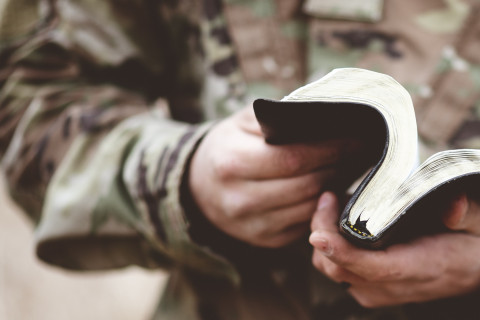
Then I noticed that Parker’s a veteran, as am I. O’Connor was at the Iowa Writers’ Workshop just after World War II, and she was surrounded by returning soldiers. I didn’t see that connection when I was still in the military, but afterward it landed hard. So yeah, I ended up with two versions of a song called “A New Tattoo.” One is set early in the story—Parker driving, angry, hearing this gritty rock version in his head. The other is slower, more bluesy—he’s stewing at a gas station. And “Parker’s Back,” the final track, is him at the end—worn out, looking back, carrying everything.
For O’Connor, religious revelation arrives through rupture, even violence. When I look at your album cover—a sun rising that’s also a peacock, O’Connor’s adopted symbol of revelation—and when I listen to your songs, I feel something of that same spiritual intensity. How has her faith, or your own religious background, shaped the way you make art?
O’Connor pushed me toward Catholicism, at least for a season. My great-grandmother was a devout Catholic, and my mom was raised Catholic before becoming Pentecostal. But it was O’Connor’s Catholic imagination that really stuck with me, especially her focus on the incarnation. That idea that the Divine comes to us through the physical, through people, through ordinary things—that’s stayed with me. I think grace doesn’t arrive abstractly. It comes through bodies, through mess. And that means, in art, that you try to present people truthfully. Not cleaned up or as some ideal version of themselves, but just as they are. Maybe as they want to be, but not as you want them to be. You give them space on the page, or in the song, and see what happens in that in-between.
So many musicians have been drawn to O’Connor’s work—Sufjan Stevens, Nick Cave, even Bruce Springsteen. Whether or not it’s overt, you can hear a Christ-hauntedness in their work. I sense that in your work, too.
Yeah, I’d say I’m pretty Christ-haunted—or at least haunted! There are very few supernatural claims I’d sign my name to. I tend to stay grounded in the human—in action, in experience. But O’Connor gave me permission to do that. It might not be the outcome she intended, but still—her work made room for wrestling, for doubt, for the idea that grace might move even when belief gets messy.
As an artist, you’re constantly calling something into being—a song that wasn’t there before now exists. Does that feel spiritual to you?
I get what you’re saying. But also, “there’s nothing new under the sun,” right? Especially in folk and roots music, where so much is handed down. I can trace a lot of what I write back to earlier traditions. Even when I write something new, I want it to feel grounded—like it grew from old soil.
That reminds me of something Tolkien once said: We’re not inventing new stories; we’re dipping back into a shared pot. There’s something incarnational in that too, right? The way songs and stories carry pieces of other people, other times?
Yes, absolutely. Being a part of a tradition, sharing not just the stories but also the history of those stories and the people involved with them. Tolkien, too, has been a huge influence on me. In fact, the one academic article I’ve published is on his Old English scholarship. One of the best pieces of advice I ever heard was: If you want to write like Tolkien, don’t read Tolkien, read what he was reading. So I did. Norse sagas, Old English poetry, Finnish epics. I even wrote a novella that wove together creation myths from different traditions, trying to trace the shared threads.
O’Connor worked like that too—she didn’t just stay in one theological lane. She looked at the roots: Where did these ideas come from? She looked at Jacques Maritain and Pascal and Aquinas, calling herself a “hillbilly Thomist.” That’s something I try to do with both music and writing—keep following the line backward. I mean, I grew up memorizing Bible verses—Awana, Royal Rangers, the whole deal. And a lot of that language still shows up in my songs. There’s a richness to those old lines. What I do now is hold them up and tilt them a bit to see what else might be there. Not necessarily to reject them, but to ask, What happens if we read this another way? That’s one of the main things I’ve carried with me.
I love that idea of recombining. It makes me think of what you’re doing right now, bringing O’Connor’s actual voice into your music. It’s striking how deeply she’s woven into this album—not just her voice but her characters, ideas, theology, even the music of her region. To bring us full circle—back to that image of convergence—when did it become clear that this wasn’t just a few songs in dialogue with O’Connor but a whole record built around her, a meeting place in itself?
When I first read her as an undergrad, I wasn’t sure I liked her. But during a quiet season between school and infantry training, I read everything—her fiction, essays, letters. The story that clicked for me was “A View of the Woods”—not her most accessible story, but that was the one that unlocked it for me. Then the album came together when I was riding out the pandemic summer on my grandparents’ farm in eastern North Carolina and I decided to stay here in the South. Some of the last songs I wrote then—like “New Tattoo” and “Run to the River”—feel closest to where I am now. The album tells a story, but I think it’s also the story I’m still living.