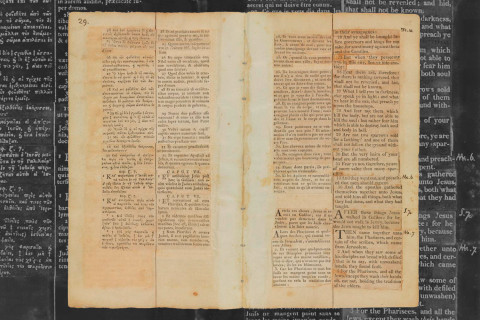

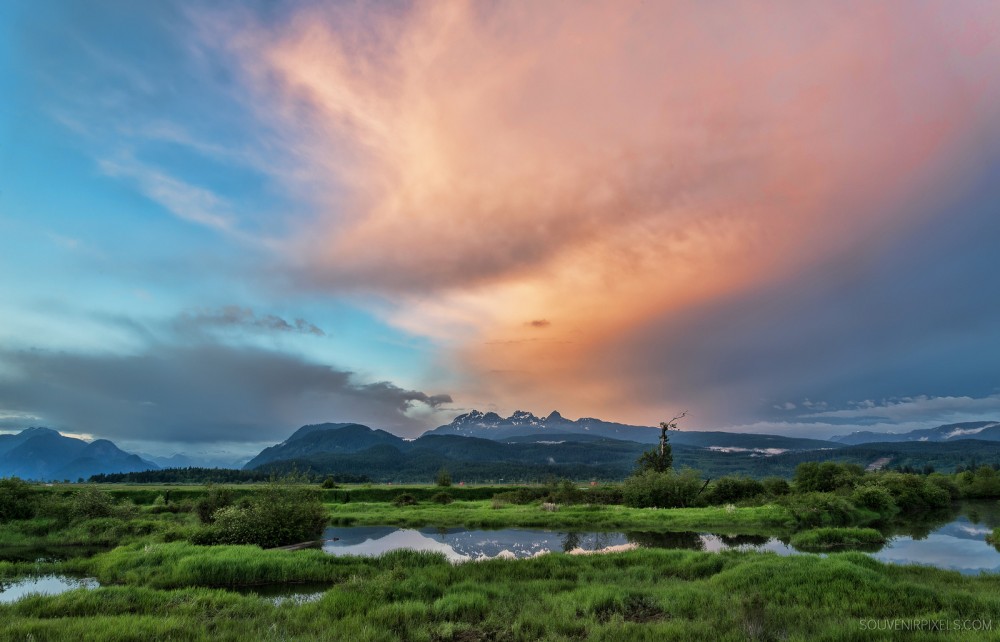
“In the beginning God created the heavens and the earth.” As a kid, I would read these first words in my children’s Bible over and over again—not because I found them particularly interesting, but because I was the kind of person who always started books from the beginning, and I could never seem to get any further into the Bible than Noah and the ark before I lost interest.
I also liked the first story in my Bible because it had some of the best illustrations. On one page was a friendly orange sun, and on the opposite page a shining yellow moon and twinkling stars. Next came an ocean with big waves, across from a page depicting mountains and forests. Even in a children’s Bible the distinctions God made when creating the universe were obvious. Each bit of the world was broken into pairs and opposites. For a kid who liked order and organization, the story of creation in Genesis 1 was just about perfect. There was a place for everything, and everything was in its place.
This kind of structure in scripture was something that I appreciated up until my teen years, when I began to get a sense of the way life sometimes falls outside black-and-white categories. Biologically, I learned that the world isn’t separated distinctly into land or sea; there are also marshes, estuaries, and coral reefs. Personally, I began to figure out more about my own sense of gender identity, and I wondered if all people were really divided into male and female, as Genesis 1 seemed to say they were.