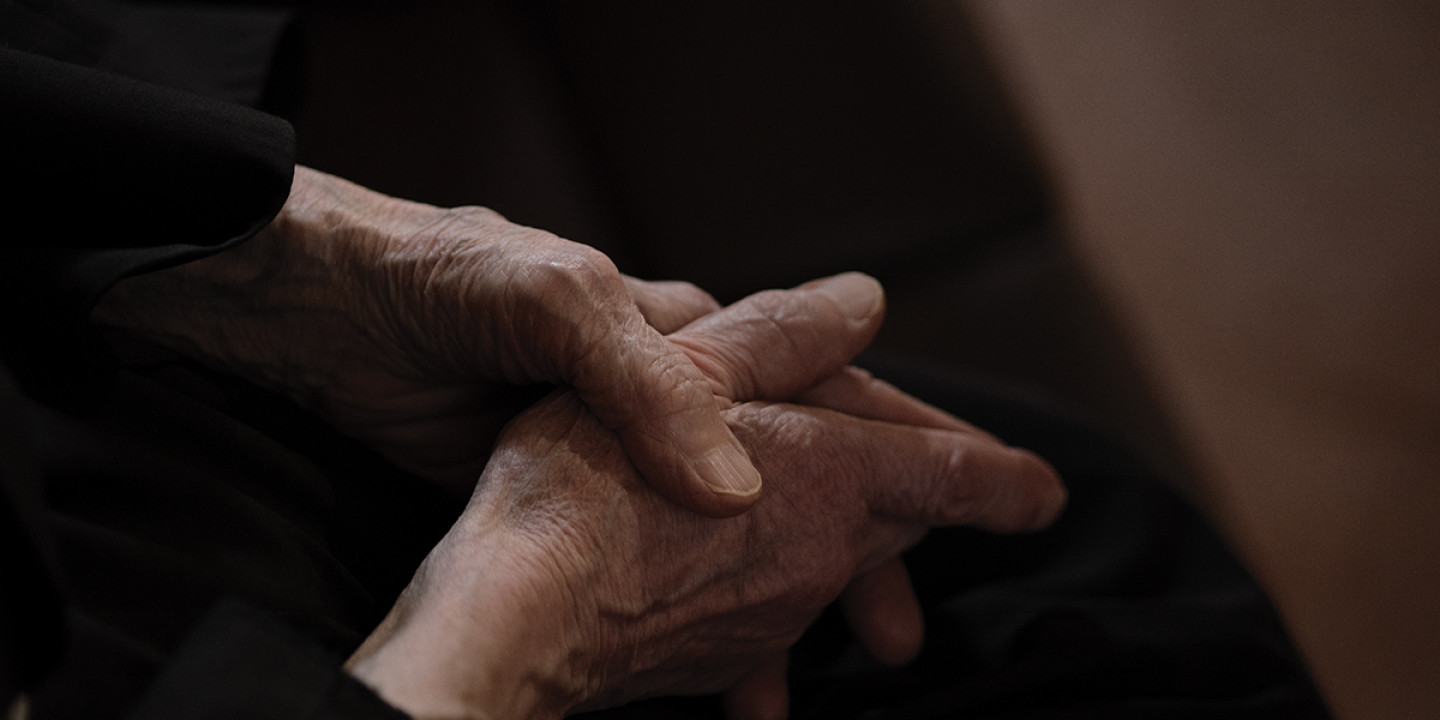
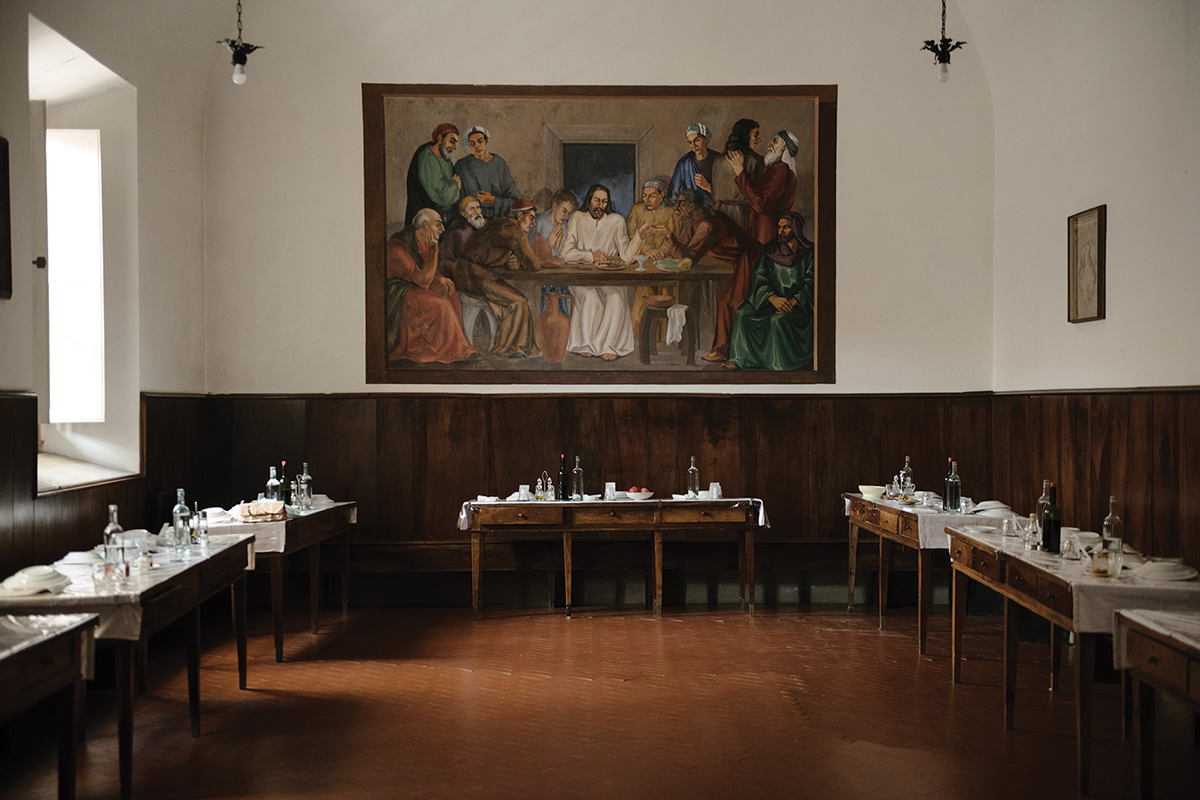
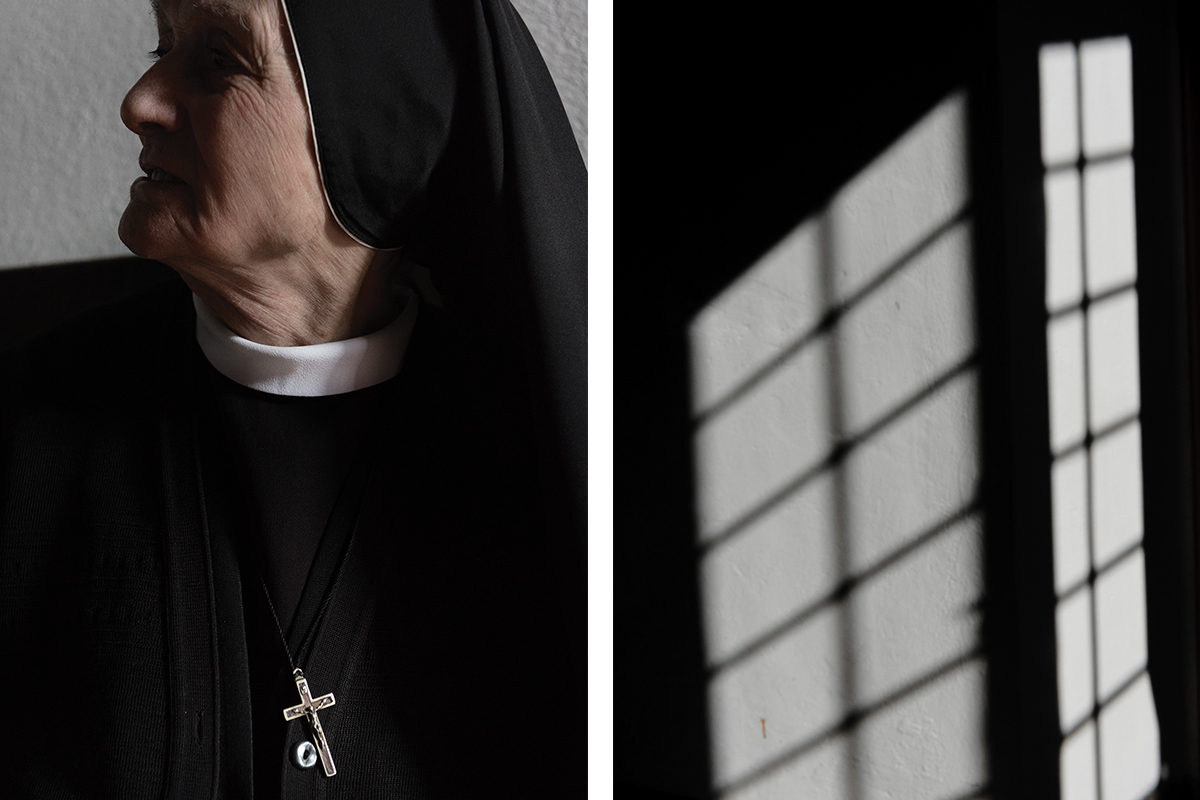
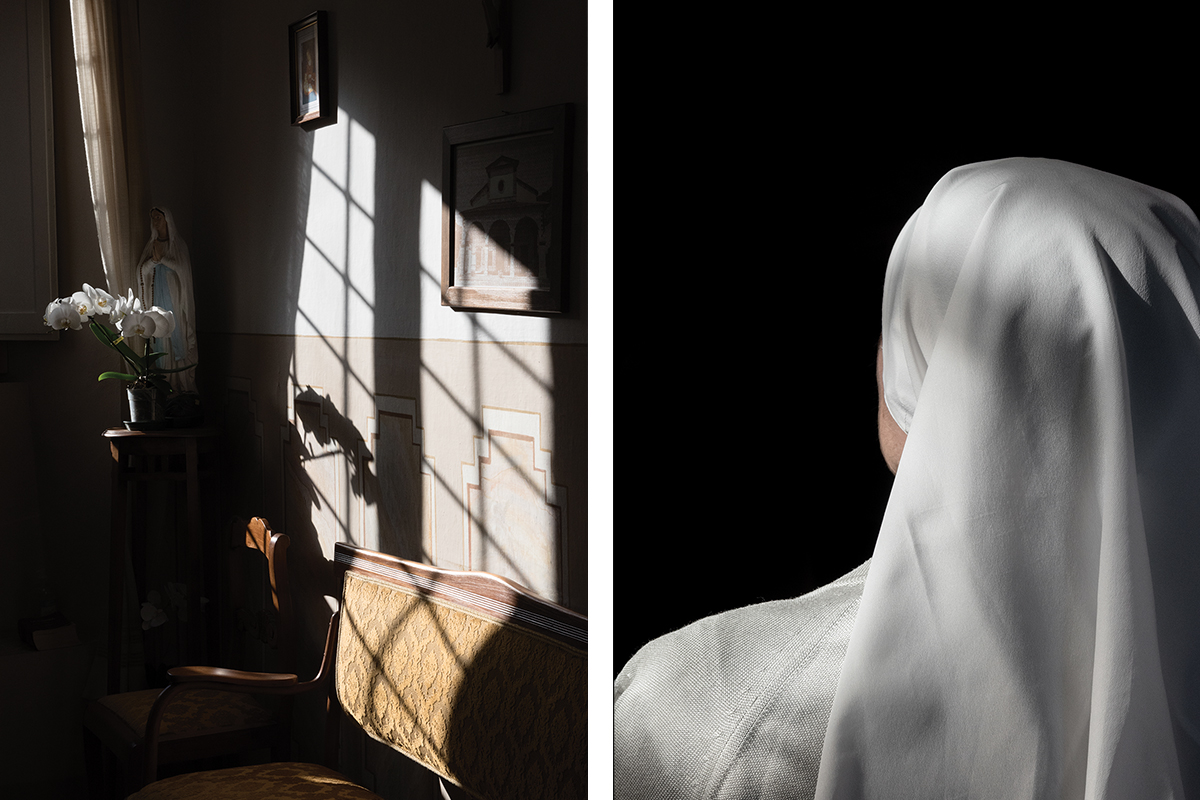
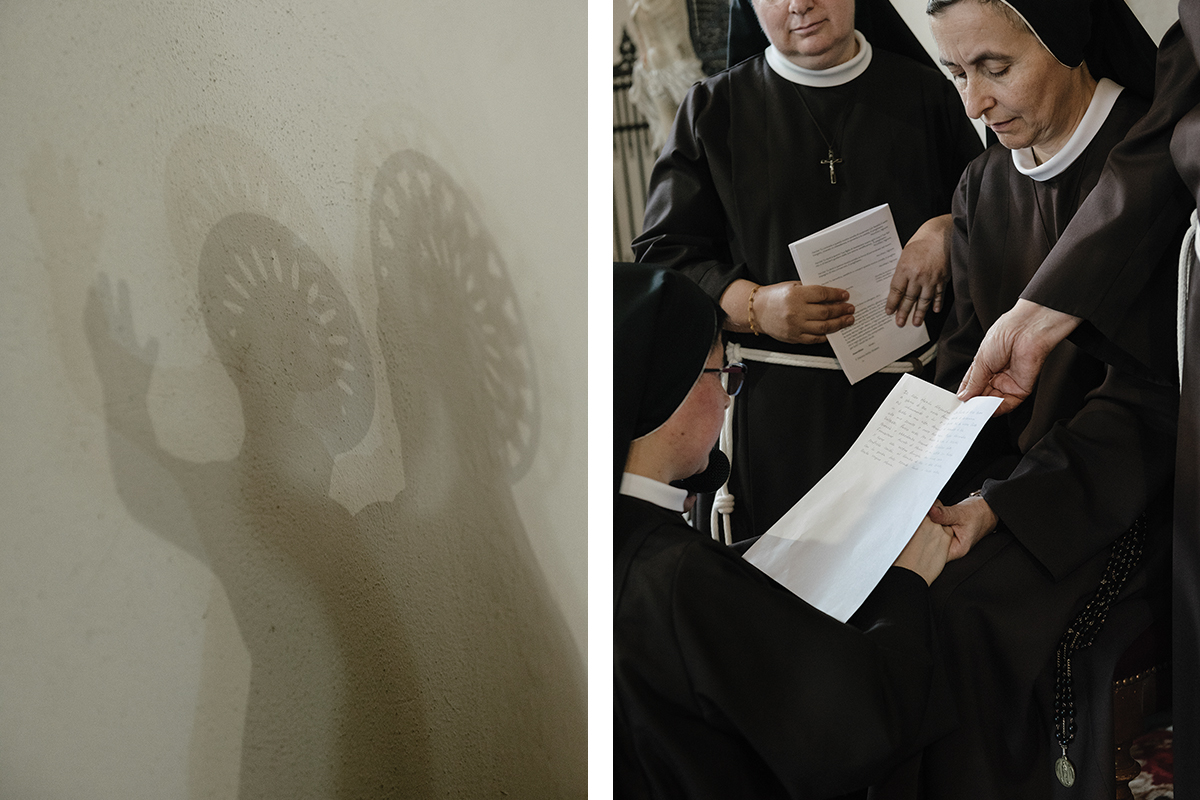
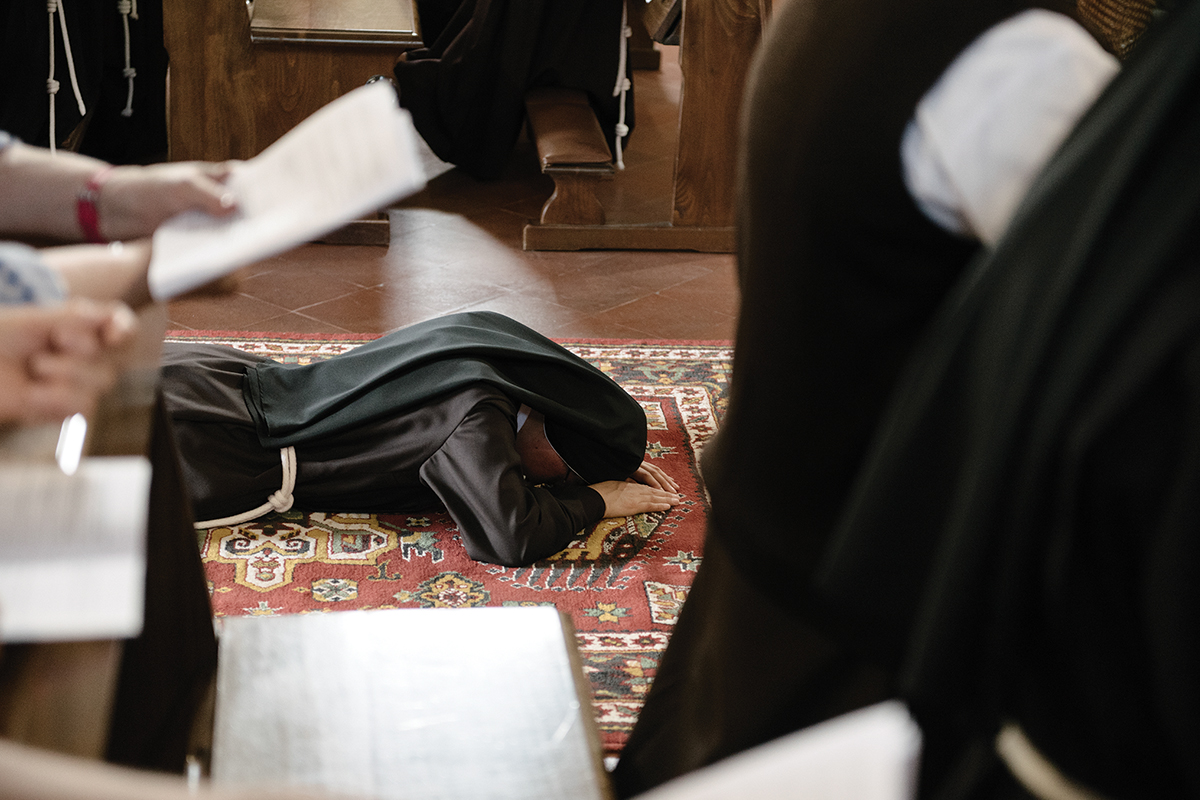
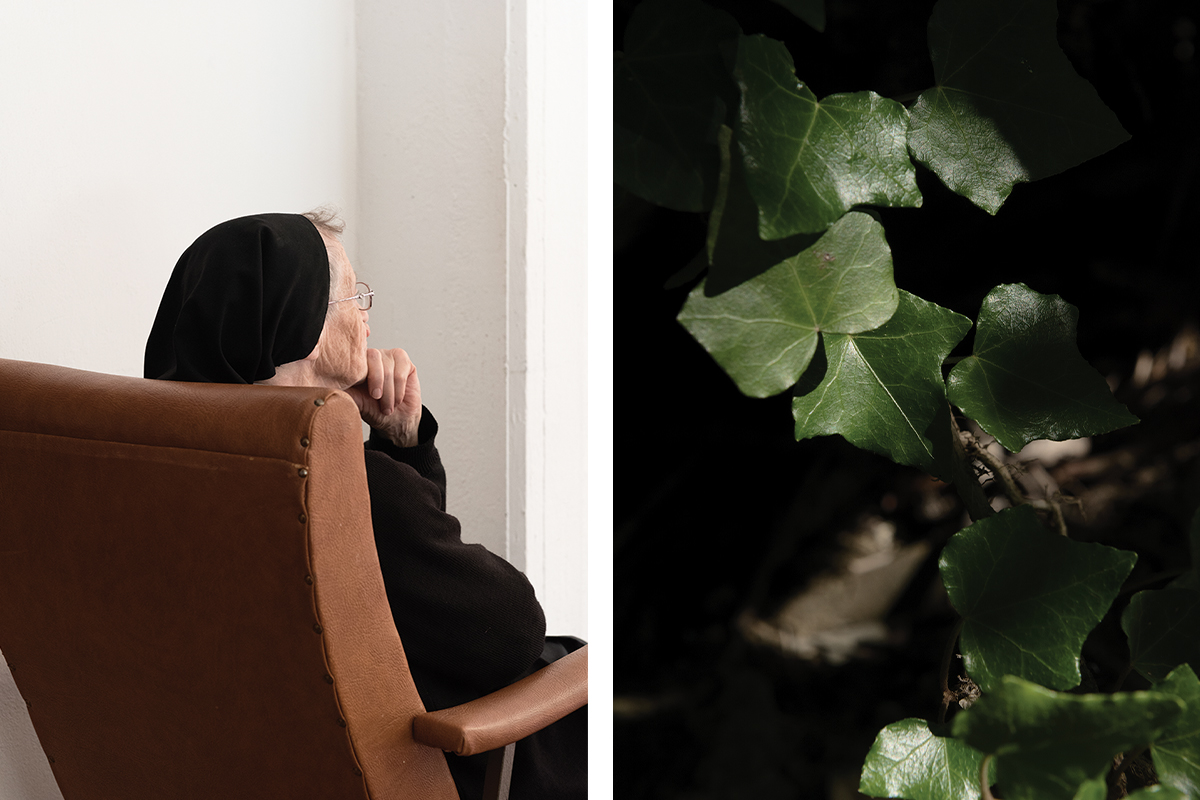
For a short time in early summer, I lived with ten nuns at the Sanctuary of Our Lady of the Snow in Palazzuolo sul Senio, in the Apennines near Florence, Italy. The nuns welcomed me with great generosity, even though for both parties this was something new: I had never experienced the reality of their life, and they had never welcomed someone to follow closely during their everyday routine.
The project was born, as is often the case in Italy, at the dinner table. A year earlier, I was participating in an art residency in the same village where the sanctuary is located. Giada Pieri (the residency director) and I imagined what it would be like to be hosted by the nuns of the local convent. I wanted to capture their silent way of living through portraits.
Giada talked to the nuns about it, and they responded enthusiastically. The next year I was in the sanctuary’s long, intricate corridors with my camera. The La C.I.A. Community Cooperative of Palazzuolo sul Senio and the CR Florence Foundation believed in the idea, and thus Silentium came to fruition.
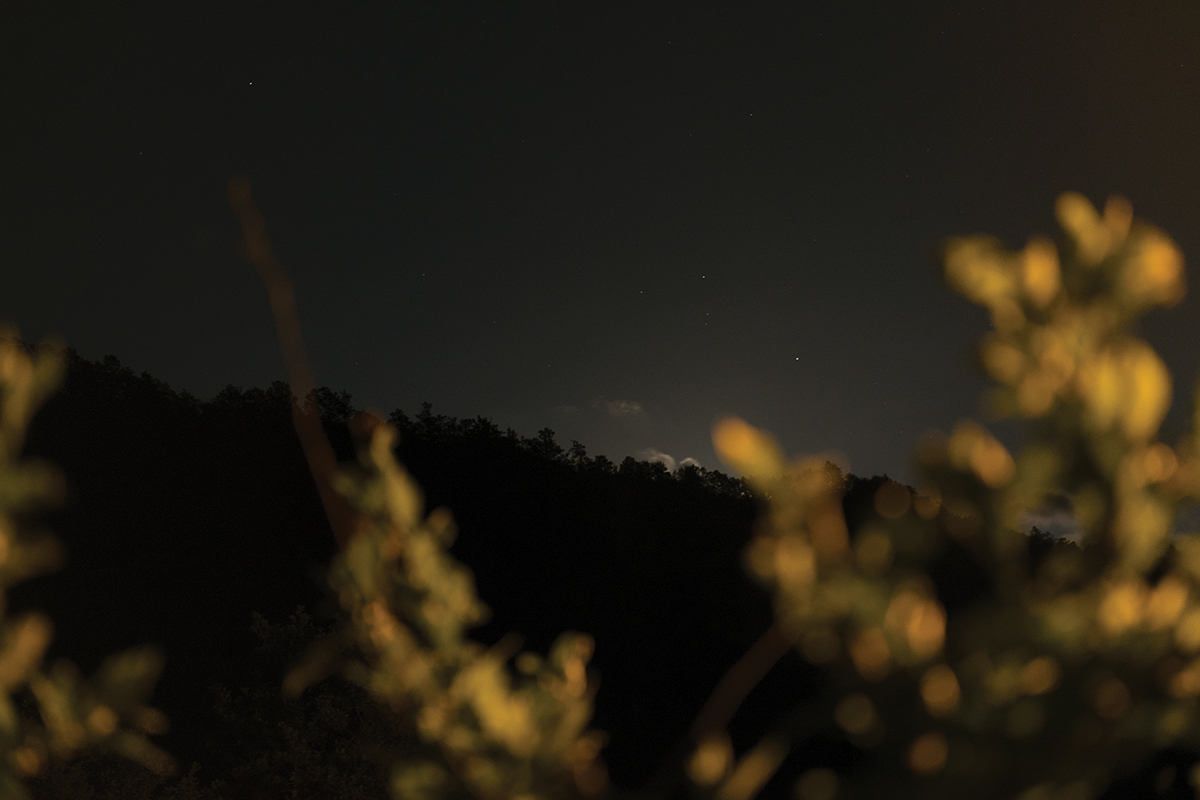
Heidegger theorized almost 100 years ago that “man caught up in the use of new technologies, would come to the point of giving up freedom.” Living with the nuns for a week helped me see how much our freedom is contaminated by noise—the noise of restless living that accompanies us from waking to sleeping. In those days at Our Lady of the Snow, it seemed I returned to noiseless time and an essential part of life in which, as philosopher Louis Lavelle wrote, “silence is a tribute that the word pays to the spirit.”
Ilaria Di Biagio
Ilaria Di Biagio
Ilaria Di Biagio
Ilaria Di Biagio
Ilaria Di Biagio
Ilaria Di Biagio
Ilaria Di Biagio
********************
The Century's community engagement editor Jon Mathieu speaks with Ilaria Di Biagio about what she learned from a silent convent.