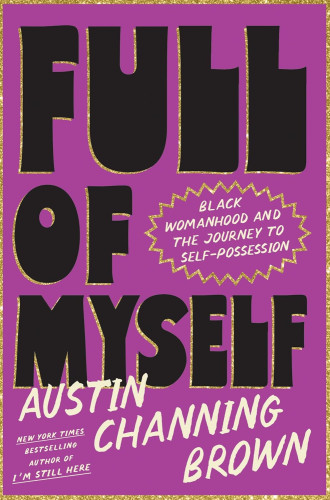
Full of Myself
Black Womanhood and the Journey to Self-Possession
“I love my work. And I am tired,” writes Austin Channing Brown in the introduction to her newest book. For anyone working at the intersections of organizing, justice movements, and faith, this phrase probably rings true. Black women, Brown notes, take on these burdens disproportionately. She describes an experience she calls “an emptying”: bearing the spiritual and emotional weight of justice work while battling feelings of overwhelm, exhaustion, and isolation. Full of Myself, which is part memoir, part declaration, and all heart, is a cry to claim a new vision of a fuller humanity “that exists not to save the world but to save ourselves.”
Those familiar with Brown’s 2018 bestseller I’m Still Here will recognize her unflinching articulation of the ways structures like White supremacy, patriarchy, and capitalism make the personal and political two sides of the same coin. But Full of Myself goes even deeper, as Brown writes about her encounters with these systems of marginalization in the most intimate of spaces. Taking readers from megachurch offices to the pharmacy hair care aisle, Brown expertly weaves together poignant social commentary and personal reflection, opening a window into the deeply vulnerable places of her life. She shares the painful, the mundane, and the joyful—all in celebration of the complexity of being human.
Read our latest issue or browse back issues.
Fittingly, each section of the book begins with the phrase “I love myself when.” This mantra serves as a kind of armor against a world that demands so much from Black women while often offering little, and sometimes causing harm, in return. By framing the book in this way, Brown showcases her own life story as an example of what radical self-love can look like through challenging times (“I love myself when I am falling apart”), joyful times (“I love myself when I am laughing”), and times that fall somewhere in between (“I love myself when I am healing”).
As much as this book showcases Brown’s personal processes of knowing and loving herself, it is also an ode to blessed communities. Warmth radiates from passages describing those who have walked alongside her in the journey to self-possession—including a love letter to her grandmother, glimpses of casual solidarity between Black women on social media, and poetic illustrations of female friendship. For instance, she writes of the memorable final days of a trip with a group of female friends:
For the next three days, this delightful group of women pastors, vocalists, writers, artists, and professors ministered to one another. We sang hymns while staring out at the sunset. We danced around the kitchen singing every word to Beyoncé’s “Sorry.” We practiced yoga together, cooked meals together, and cuddled together, whispering the secrets we could not publicly share—divorces and dating, children in crisis, new job interviews, plans for moving. Despite our titles, we were a collection of misfits for sure, and I loved every second of snuggling and sharing and praying and singing and eating and laughing . . . so much laughing with them.
Brown’s stories of community emanate the joy of being seen, understood, and uplifted by others. Our relationships are part of the fabric of being human, she continually reminds us. And we can’t save the world alone.
Centrally, as the title suggests, Full of Myself is a celebration of self-actualization. It is a treatise for a moment in history when authoritarianism, racism, empire, and injustice pervade at every turn. It is also an invitation into a world where justice-centered vocations need not come at the expense of spiritual, emotional, and physical well-being. “The work of self-possession is the justice work that we have been made to undervalue,” she writes. By sharing vignettes about friendship, motherhood, profession, romance, movement work, and healing, Brown exemplifies the notion that caring for oneself—or letting oneself be cared for—and working for justice are not at odds with each other but rather are necessary partners in building a better world.
This review was developed in partnership with the Narrative Project.