The beginning of the school year has its familiar rhythms. Students will pop up on my screen in little squares for an online course. They will slowly trickle in and take seats around tables. We will gather around a common text or share interpretations or experiences or questions. They will come with some paper or a computer, a few books, little tools to fidget with or doodle on.
They will also bring pieces of a haunted world. They may know people who have been disappeared; they may be trying to manage a constant fear of a doorbell or an unmarked car and masked men. Some will bring with them the pain of flooded streets or charred homes with no help coming. And of course there are the cancer diagnoses and the lost jobs. There is the feeling of a world teetering on the brink of something terrible, a feeling that pokes through every headline and every scroll on our phones.

Read our latest issue or browse back issues.
And somehow, we have to read a text. We have to wonder about who God is and how we recognize them in our midst. How do we participate in today?
As I look at my students, I recognize that I see only a fraction of their world, and I wonder if my words or teaching are sufficient for the moment we’re in. In the midst of this, most of my scripture reading has stayed within the gospels. It’s not the most disciplined practice, but something about reading about Jesus going from town to town—creating spaces of life, reminding people that they are seen—has been a solace to me.
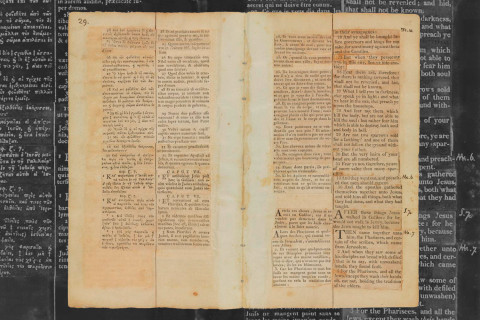
But one day I opened the Bible and fell upon the Psalms. It’s funny how you can sometimes forget about whole sections of scripture, the stories upon stories, the millennia of time pressed in the pages. As I read I felt myself swinging with the writers from lament to anger to praise and back again. From pleading to hope, from doubt to confession. I started to simply read through the Psalms back to back. And more than the words or the theology, I could feel the turbulence of the world that gave birth to these songs. Psalm 5 begins with a confession of the writer’s own sighs; then it calls out to God amid feelings of powerlessness in the face of powers and principalities. These descriptions feel familiar to me:
For there is no truth in their mouths;
their hearts are destruction;
their throats are open graves;
they flatter with their tongues.Make them bear their guilt, O God;
let them fall by their own counsels;
because of their many transgressions, cast them out,
for they have rebelled against you. (Ps. 5:9–10)
The more I read, the more solace I took in the ways the psalmist cries out without a need to explain or comfort. These words offer few easy answers. They are the words of people who are wrestling with the unrelenting violence of those with power—while still confessing, speaking with a God who sees them.
I realize, in a contemporary moment filled with such compelling theories of race or empire or gender or class or the history of community organizing, that returning to scripture might feel inadequate or unsophisticated. It might even feel too close to the cries of Christian nationalists that are at the root of so much pain these days.
But in our moments of unknowing, of feeling this world too deeply, I wonder if what we need are songs that do not have a takeaway or an action plan. Maybe we need to hear the murmurings of people who also lived in harrowing times and to let our voices ring with theirs.
Could our resistance to the rumblings of tyranny and fear begin with reading a psalm aloud each day, alone or in a group? When the silence falls, I wonder if hope might be a little easier to hold onto because we have been able to cry out with the community of saints. And then when we venture out or engage in our work or help a neighbor, we might be able to recognize what we can do along with what we can’t.
Through it all, I suspect we will see the rhythm of psalms in our lives and our world more clearly than that of the biblical stories of miracles or voices from the heavens. Yes, we will lament, we will scream out against the power of evil in the world, we will wonder where God is in all of it. And we will be reminded and remind one another, again and again, that God still moves—and that we are invited to move with her. And because we have heard the cries of those who called out so long ago, we might be able to respond to those who are crying out now.