Art Is
A Journey into the Light
How would we complete the thought, Art is . . . ? We might offer an academic definition or enthusiastically describe a favorite artwork. Then, perhaps, we would comment on how impossible it seems to place parameters on such a vast concept, so open-ended and mysterious.
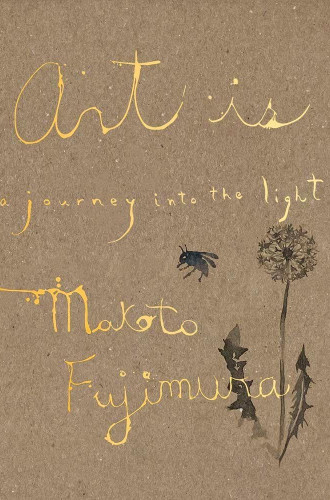
In his new book, visual artist and arts advocate Makoto Fujimura acknowledges the existential idea (art exists) and suggests several ways to elaborate on the aforementioned question. His primary suggestion is apparent in the book’s subtitle, A Journey into the Light. Given his esteemed career as an artist and his education at Bucknell University and Tokyo University of the Arts, Fujimura could have written from a more scholarly or critical perspective. Instead, he chose to write a memoir-like book that reflects on how artmaking draws us back to humanity’s original light—the light of God.
Chapters 1 and 11 bookend Art Is with a walk to and from Fujimura’s studio. He situates art in ecosystems, such as his farm garden, a cultural estuary, and the history of Japanese art and aesthetics. Throughout the book, he invites us to listen to the reflections he’s gleaned from his vocation as an artist. A range of topics arises: Christian theology, contemporary art, literature and poetry, Japanese aesthetics, nihonga (Japanese art techniques), sado (the art of tea), nature, intercultural relationships, and personal narratives about faith and the arts.
One of Fujimura’s key ideas, kindled with references to William Blake’s poems and illustrations, is slowing down to see through the eye: As we pay attention to the details, beauty, and trauma surrounding us (and as we pay attention to the materials or techniques in a studio), we may enter into a wider view of reality—of God. “Art is awareness,” he writes, and “art is the creation of meaning through our senses.”
Another key idea is the process within an artistic practice. Fujimura describes his encounters with God in the studio. A story from childhood—at age three, he sensed the spiritual energy of Creator God while painting—is particularly compelling because it captures the childlikeness of play, creativity, and faith. “Art is a path to receive and cultivate the gift [charisma] of life,” he comments. Applying adult words to a childhood experience is complicated, yet these words convey much alongside the image of young Fujimura’s painting.
He also offers compelling descriptions of his nihonga techniques: selecting minerals (or receiving them, as with the azurite in his Blueberry series), pulverizing them, preparing glue, building up layers, waiting for pigments to settle, reassessing, and gazing as the prismatic surface refracts light. Here, method speaks to life. Our experiences are replete with brokenness, trauma, and the impossibility—or miraculousness—of art. Fujimura is neither dismissive of pain nor flippant about healing. Rather, his works of art embody the lengthy process of journeying through both, as “Art is finding the light in the darkest of realms.”
Readers who are familiar with Fujimura’s thought will understand his references to culture care, theology of making, and Japanese Christianity. For new readers, he offers a brief glossary. Additionally, he includes an appendix that, overtly reminiscent of the revealing appendix in Shūsaku Endō’s Silence, offers further insight regarding seeing through the arts. His writing is thoughtfully footnoted. However, I would have appreciated citations to elucidate certain points. For example, Fujimura suggests that Sen no Rikyū, a 16th-century tea master, was a Hidden Christian and that the tea ceremony preserved the mass during anti-Christian persecution in Japan, yet he provides no scholarly sources to support this idea. This is, possibly, an exercise in seeing through the arts to the reality beyond.
Fujimura’s writing style may read as introspective, meandering, or poetic. His tone adds to the sense that he—together with us readers—is on a journey. If Fujimura’s life, as embodied through his artistic practice and exhibited in his portfolio, has been a journey into the light of our Creator, then what of our lives? We each have a “slice of expression” or a “soliloquy,” he writes. Furthermore, while artistic practice is deeply personal, it also has a public dimension. We can be peacemakers, he says, for “art is a liturgy of peace.” Artists and art enthusiasts may find this book honest but hopeful, a helpful testimony from a fellow creative as we make our journeys with Jesus, alongside our neighbors.
I read this book as though I were taking a studio tour, gazing at an array of Fujimura’s materials and paintings. I imagined each chapter and subheading as layers. The words became reflective mineral shards, bound with punctuation. The images invited me to linger. In slowing down, as when viewing one of Fujimura’s artworks in a gallery, I appreciated the depth of his written work. I also appreciated this book as an object. The jacket is constructed of humble brown paper, adorned with debossed golden inlay and ink drawings. The hardcover is sturdy. The pages feel smooth but not glossy, and the 79 images appear vivid. Holding Art Is, I glimpsed that “art is a mystery revealed” as well as “the gratuitous abundance of Creation flowing into our limited domains.”