Every semester the first class session begins with the usual boilerplate topics: assignments, readings, how we engage one another, and expectations around the use of AI. I have had to revise my policy and approach to student use of AI every semester, literally. Every three months it seems like there is more that AI can do or mimic. Every semester there are a few more weekly reflections that have that sheen of AI writing, words that fill a page but say very little.
My most recent iteration begins like this: “Recognize and embrace the image of God in yourself. You are creatures who can imagine and create new possibilities for yourselves and those in your world. But you can’t grow if you don’t try. You can’t make anything beautiful without first making something terrible. You came here to learn and to grow (I hope), don’t rob yourself of that possibility.”

Read our latest issue or browse back issues.
Over the semesters these instructions have morphed into a plea. I am practically begging. But this shift has less to do with my students’ work and more with the world that is taking shape around us. The stakes feel higher every day. It used to be that imperial machinations and political grift would require at least a veneer of legality or at least a decent effort to hide one’s misdeeds. Today we are flying past climate change tipping points. Presidential power and oligarchical consumption are paraded in the streets, in the airports, in the careless destruction of innocent life, in the violation of other nations’ sovereignty, in the billions of dollars spent to raze rather than build. Perhaps the only thing that has moved faster than AI’s nesting into our everyday lives is the Trump administration’s ability to obscure even the idea of a different future.
I suspect that the proliferation of AI in this new world is not coincidental. At the very least, I am sure that AI does not help us to conjure the practices we will need to cultivate a different future. This technology offers us only a collapsed imagination and a load of what an MIT study calls cognitive debt. (The study shows that increased use of AI degrades the user’s ability to do the relevant tasks on their own. It’s a familiar phenomenon: Has spellcheck made you a better speller?)
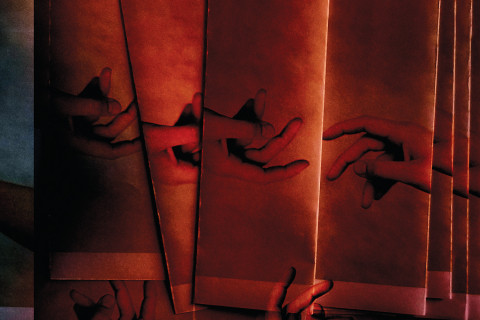
In the face of all this, I have asked my students to try a somewhat unconventional practice. Yes, they still read and write theology and theory. But I also have my students make art. Poems, collages, doodles. I don’t know how we invite our students to imagine another world without inviting them to make something, anything. It doesn’t need to be beautiful, or “good,” they just need to make it.
In fact, I think it’s the bad art that might save us. Maybe when we risk the vulnerability of not knowing and of not being able to create with ease, when we try to mimic the music, the poetry, the films we love, we will be confronted not with what we can never be but with what we aren’t yet.
With this admission (or maybe confession) we may sit down to create another bad piece. We might even find that the second one isn’t quite as awful as the first. This time, at least it looks like an animal. With even the most modest improvement, the shimmer of possibility flickers. Something new can come into the world through our hands. It does not require the perfect tool or a mentor or a class or even a YouTube video with one million views. It only requires hope for something different, a willingness to learn, and the courage to keep trying.
We have to keep trying to make things, because beneath AI’s veneer of ease in creating a perfectly rendered self-portrait of me on the moon herding cats is a real world of data centers sucking up clean water, warehouses turned concentration camps, fields of oil on fire, and men making plans to build stadiums in bombed-out Gazan streets. With every turn to AI to make, to write, to solve a problem we could learn to solve on our own, I wonder if we lose just a little of the very power we possess to resist the world that is violently coming into being.
I suppose my greatest fear is that the more we depend on AI, the more we will simply be unable to imagine a world that was or could be different, much less how to create it. For the love of God, for the love of each other, make something today.