
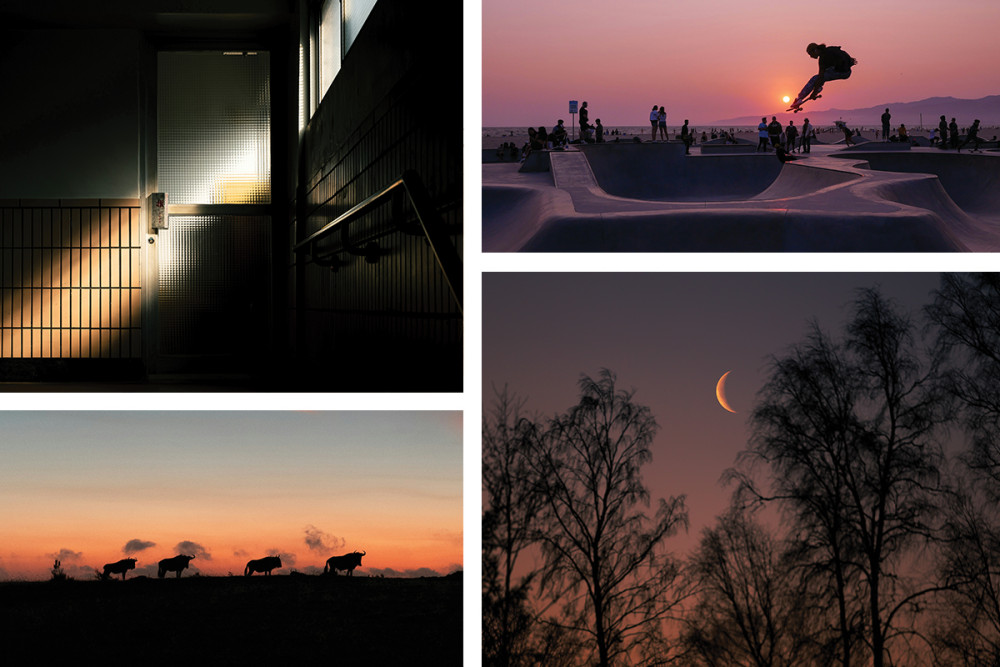
The gods of this world are sick unto death. . . . And where are they now? They are dying, dying, and their twilight thickens into night. Where is the security that they promised? Where is the peace? The terrible truth is that the gods of this world are no more worthy of our ultimate trust than are the men who created them.
—Frederick Buechner, The Magnificent Defeat
In my late 20s I received an email from a friend I hadn’t seen in ten years. “Do you remember me?” she asked. “Do you remember Death and the Maiden and Dvorak’s American?”

Of course I remembered. Those were our quartets, the pieces that we four overly ambitious string players set out to conquer during our last semester of high school. The solo pieces our fingers forgot by the following year. But the quartets were conversations, scripted and repeated together once a week on Wednesday afternoons, with notes scribbled above the staff lines: This is where you come in, this is where you whisper, this is where we all speak quickly at the same time.
The pieces stay with you after the rehearsals and performances are over. You’ll hear one on a car radio or in a bookstore, maybe in a concert hall. And though you may want to nudge the person next to you and whisper, “I played this piece,” it may be better not to say anything at all, because what you’re trying to share is something that has been lost. Not the enjoyment of the piece, but your enjoyment of it; not its history, but its history with you: the smell of the room where you practiced, the sight of the faces around the semicircle, and the emotion in the auditorium on performance night. These are the things that move us years later as we sit alone in our rooms trying to reprise our favorite parts of the conversation. It may seem like we’re talking to ourselves, but in our minds we hear the others on their parts, polished and perfect.
It’s not unlike our attempts to show our kids, on a driveway basketball hoop after dinner, what we used to be able to do on the court. In the waning light, we see what we’ve lost. Movements that were fluid are now stiff; what used to be instinctual is now effortful. And in other ways, it’s like a reunion with old friends. The anticipation is built up by memories that are replayed and over-buffed—so much so that even the sweetest conversations end with a hug underneath a parking lot lamp and an ache as we drive away.
The year before I turned 40, I auditioned for my community orchestra. I landed in the middle of the pack. Those in the front stands led by posture—brisk and purposeful from the time they unpacked their instruments to the time they rushed out the door, alarms set for work the next morning. Those sitting behind me brought their own seat cushions. Heads grayer, instruments drooped lower, and the tempo a hair slower than what was being played up front. These players would linger in the pews of the church where we rehearsed, in no hurry to get home.
The result’s not the thing. It’s not a question of whether we’ll ever play as well or talk as intimately as we once did (we probably won’t). Rather, what has us picking up our instruments and driving to our rehearsals and reunions in the first place is a longing to be caught up in something that, in our memories, has become grander and deeper than it actually was. And here is the audacious hope of redemption: that after a long twilight, we’ll awake to see what was lost and find it an eternally more glorious thing than we left it.
Stephen Chen
Wellesley, MA
Every evening, as daylight thins, my wife and I take the dogs for a walk. Wesley is our red golden retriever, all heart and drama; Annie, a wiry cairn terrier, is a small bundle of insistence. They begin their chorus the moment they hear any word that sounds like walk, circling the door in joyful anarchy while we reach for the leashes and the small roll of little black bags.
Christy calls it our “dog-walking date.” The day has usually stretched us thin by then with emails, meetings, meals, dishes, children tumbling through showers and homework and bedtime negotiations. My instinct at that hour is to collapse. But Christy is already by the door, with a knowing look, smiling like someone who understands the secret of resurrection. The dogs press close. The evening calls.
We step outside, and the air changes everything. Fall in Missouri has a texture—a crispness that wakes you, a smell that carries woodsmoke, damp leaves, and something faintly metallic. The light at twilight can’t seem to decide what it is. Not day, not night, but a tender in-between, soft and slant and full of mercy.
At first, I’m still half in the day. My body walks, but my mind replays. I think of the sermon that’s unfinished, the conversation that went sideways, the list I’ll never finish. But the rhythm of walking begins to do its work. One step, then another, like beads on a rosary. Thought by thought, I return to my body, to the cool air on my face, to the ground beneath my feet.
We move through the neighborhood, past porches where candles flicker inside carved pumpkins, past the low hum of a television behind thin curtains. The dogs stop to investigate every fallen leaf and fence post as though each holds its own gospel. We let them, mostly. Annie’s nose never tires of learning, though ours grow impatient. There’s a metaphor hiding somewhere in that.
We talk about the kids, about tomorrow’s logistics, about whose Halloween decor walks the fine line between clever and terrifying. Or we walk in silence, the kind that feels like prayer. Our breath rises in small clouds. The pavement glows faintly under the streetlights. Somewhere nearby, a car horn sounds.
The walk isn’t long, but it’s enough to reset the soul. Something happens between the first steps and the last. The day loosens its grip. The world grows larger. I start to see again. The moon climbs over the trees. The color drains gently from the sky until what remains is silver and shadow. Every scent sharpens: the sweet smoke of a fire pit, the tang of wet stone, the faint must of fallen leaves.
Walking, I remember that meaning isn’t something we build from scratch each day. It’s what waits to be seen again once we slow down. This is the hour when life feels most honest, when the earth exhales, the light softens, and everything ordinary turns luminous for a moment.
Twilight has always been my favorite time of day, maybe because it feels like faith itself. A little light, a little dark. Elizabeth Barrett Browning wrote that “Earth’s crammed with heaven,” and I find myself believing her most fully when the light begins to fade. God feels near in this hour in the simplest of ways: my wife’s hand brushing mine, the dogs’ steady panting, the long shadow of a tree stretched across the sidewalk. I’ve come to think the Divine prefers the edges of things: dawn and dusk, laughter and lament, the ordinary in-between where we live most of our lives.
When we turn toward home, the sky has deepened to indigo. Porch lights come on one by one like small benedictions. Wesley presses close again, ready for rest. Annie still scans for rabbits. The street behind us hums with crickets and the faint whisper of leaves.
This, I think, is what salvation feels like—coming home to the world as it is. The rediscovery of what has been waiting here all along: breath, love, the good ground underfoot. Every night when Christy says “walk,” I rise, even when I don’t think I want to. The dogs spin, the leashes jingle, and we step into the light between—where the day exhales, and everything feels whole again.
Jason G. Edwards
Liberty, MO
The mid-August sun was just slipping below the horizon as I took one more look around the kitchen of the old stone house. Satisfied I hadn’t left behind anything that I might regret letting go, I placed the keys in the lockbox and pulled the door shut for the last time.
I’d met the home’s owner more than 45 years earlier when I was engaged to her brother. After he and I divorced, she and I remained friends. And when I remarried, she readily befriended my new husband. When we saw each other, it was generally at her parents’ home on Lake George where my children (her niece and nephew) spent a good deal of time in the summer. Sometimes she visited us in our home to attend a nearby sheep and wool festival. Yet not once in the more than four decades we had known each other had I visited her home.
But that changed three months after her death. On a frigid March morning, my grown children—her heirs—my husband, and I stepped over the threshold of what had once been a house that teemed with happiness and life. Now it had grown cold and yearned for care.
Houses want to be lived in, and all the evidence suggested that my friend and her house had settled in with each other. She had lived comfortably in her 200-year-old house, surrounding herself with well-worn antique furniture, pieces of hand-thrown pottery, and a stash of yarn and raw wool that rivaled the inventory of any high-end knitting store. Her bookshelves were laden with works that ranged from the academic volumes you would expect of an environmental studies professor to science fiction and fantasy series. It was easy to imagine her sitting in one of her rocking chairs, happily knitting in front of a toasty fire in the woodstove as the house sheltered her from a nor’easter hurling ice pellets against its windows and doors.
When her body was ravaged by a neurological condition, she was forced to leave her house and spend the last three years of her life in a nursing home. Believing she would get well enough to come back to her cozy home, she had refused to sell it. Her end came quietly and peacefully in the wee hours of a frosty December morning. Now someone had to pick up the pieces of a very different time in her life.
You never quite know a person until you’ve come face-to-face with what they’ve left behind. Sorting through my friend’s belongings introduced us to the fullness of who she was. We stumbled upon articles of clothing, old family photos, and some of her most personal items. And we surmised that she had secrets, most of which her house refused to surrender even after she departed this earth.
Working our way through room after room stirred up a bittersweet cocktail of mirth, pain, and sadness. It left us longing to spend more time with this person we were coming to know in a way we hadn’t before.
Now, after traveling back and forth across the state line to New York for half a year, I was saying goodbye to a house that I had just become acquainted with. The work of cleaning it out had come to an end. And as the remnants of a life fully lived faded in my rearview mirror, the last pink glow of daylight rapidly gave way to darkness. Twilight is a liminal time, both an ending and a beginning.
My husband observed that the first time we entered the house it was cold and uninviting. It felt like we were part of an ending, like we were end-of-life doulas. But cleaning it out to pass it on to someone else made us feel like midwives to a beginning. In a few weeks the house would belong to new owners, a young couple who would make their own memories in this place that steadfastly sheltered its residents through two centuries of sunrises and sunsets.
Deadra Bachorik Ashton
Tunbridge, VT
As a young girl I waited for twilight—for release and freedom from homework. Each evening, a few feet away from my desk, the onset of evening presented itself at the front door. I slowly opened the gateway and leapt into a world of shadows. The fireflies lit up the thick, humid air before me like rescuing stars, a galaxy, a world away right in the middle of my parents’ lawn and gardens. I caught some in old jars and released them. A juvenile cottontail nibbled slowly, its treasure trove of blooming clover cooled by the early evening mist.
Twilight was the promise of mystery and a future. There were no clear silhouettes; all was grainy gray, and I felt it envelop me as the fronds of setting sun streaks held me close, reminding me I need not worry anymore about my daily toils. Twilight was the elixir promising rest and possibility. Twilight was the closest I ever felt to the natural world around me. Our Creator had designed a refuge for me as a child, a world of mystery and silence.
My days as a child folded into a career, two careers, three, and I never again embraced the healing of twilight. Now I stare down 75 years, and suddenly twilight returns to me at the age of impending loss. Outside my home of 40 years, I search in the earth for the firefly larvae and pray I can sit and join them alight on my porch once again. They elude me, except for one lone straggler who whispers from her beating heart, “We were always here; you never looked for us again.”
Beverly Bell Winslow
Locust Valley, NY
I was sound asleep when I awoke to find Jawas (short, hooded Star Wars creatures with glowing red eyes) running to and fro under my hospital bed at the Mayo Clinic. They were screaming and screeching in an unknown but frightening language. And I was indeed afraid—I had no idea why they had invaded my sleep. Had they come to take me away?
They were not the only visitors I had in the twilight hours following my prostate cancer surgery. The little Star Wars creatures had just left the room when suddenly all the people I had ever wronged filled my room, some trailing off back into the hallway. So many people, so much sadness for my sins of omission and commission. I knew most of them well: family, friends, seminary students who had not received my best efforts in teaching and grading, colleagues with whom I had not carried my fair share of the weight. To all of them I shouted, “I am sorry, I’m so sorry, please forgive me!”
They did not linger, and as they departed a third group came to visit me. These were students, staff, and faculty who had come all the way from the Chicago seminary where I taught. They formed a large U shape round my bed, and they each held a small Methodist communion cup with a wafer balanced on top. I fluffed my pillow and sat up, motioning for them to come and commune with me. But no one came forward. They turned around and left as quietly as they had come, and I returned to my troubled sleep. When the nurses made their rounds and I asked about my visitors, they suggested the mushroom soup I had eaten had probably given me gas. The surgeon arrived a few minutes later and told me, sternly, “You were overmedicated, but trust me, that will not happen again.”
Who were the visitors who came in those twilight hours? Maybe the nurses were correct when they suggested Ebenezer Scrooge’s suspicions of his own visitors: “You may be an undigested bit of beef, a blot of mustard, a crumb of cheese, a fragment of an underdone potato.” Or perhaps the surgeon was correct: too much painkiller! I dismissed those two explanations because I knew, somehow, that these visitors were real, that they were angelic expressions of God. But that kind of language might gain me entry to a different floor of Mayo, so I needed the ear of a man who spoke my own language. I phoned my colleague, Dwight, who taught theology and liturgy. To this day, I honestly believe I called him at 10 a.m., after the medical staff had made their visits, but he insists I called at 3 a.m.
I remember how carefully he replied on the phone. “I know nothing about Star Wars characters, and I have no idea about all the visitors who came for forgiveness. But I do know quite a bit about the Eucharist. When we came to visit you, we formed a U shape around your bed. But the body of Christ was not in the little cups we held; rather we were the body of Christ surrounding you, and the reason we did not give you communion is because it is now time for you to return to us and share the Eucharist with us in our chapel.”
These words gave me the courage to sleep again, courage to admit that my treatment program had consisted of me receiving, receiving, receiving. It was time for a healing that would come by returning and giving to others. I sometimes refer to this experience as the Night of the Mushroom Soup or the Night the Visitors Came. I understand how medication, fear, and food can cause our dreams to take us to strange places. But I also know that I entertained three groups of angels who taught me not to fear, to forgive myself and others, and to acknowledge that healing happens in acts of receiving and giving. And I now believe that angels make their appearance not in blinding light but in the dimness of twilight.
Alva R. Caldwell
Waukegan, IL
I can no longer see dirt. That’s perfectly OK with me. After all, I am still able to clean. I know where the dirt is hiding. After more than a half a century of dusting and mopping and vacuuming, I know all its secrets. Dirt dwells in the crevices between the knickknacks. It rests in the folds of the lampshades. It scampers under the heavy furniture and nestles along the baseboards, the corners especially. So, I can still clean—or so I thought, until my husband showed me the dead mouse I missed while sweeping.
I also mismatch colors as I get dressed in the morning. I think I have selected well-coordinated tan slacks alongside my green blouse. It’s not until I step outside into the sunlight that I discover the blouse is blue and the slacks are green. That can be embarrassing. I now label my measuring cups and spoons with bright stickers so I can continue to cook and bake. I’ve served no disastrous meals as yet. I can do most things I have always done (except drive at night—never). It’s just that I do them in continual twilight.
It’s called age-related macular degeneration. When I was first told about it 25 years ago, I called my mother for sympathy. “Oh, that,” she said. “Lots of people have that.” Living in one of those retirement places, Mom had heard about it regularly. But now, a quarter century later, my AMD has become life-changing.
I entered a clinical trial at a major eye hospital in Philadelphia. The basic theory of the experimental drug is to deny the eye vitamin A in order to slow the progression of the disease. It’s vitamin A that helps the eye adjust to changes in lighting and see where dead mice are hiding. For 18 months now, vitamin A has been missing from my system; so has the ability to see across a dimly lit room.
I am not complaining. I have not lost my ability to read (with the help of a spotlight)—the one skill I would grieve if I ever lost it. I kind of enjoy the twilight. Every dinner is in an atmosphere of candlelight romance. The merchandise on the shelves of department stores no longer interests me. I have a legitimate excuse to skip out on evening meetings. And there is something spiritual about dwelling in the twilight. It’s calming. It forecasts mystery. It pulls me inward, as if my soul and I are aggressively communicating. I feel like I know a little of what it’s like to dwell on an alternate plane. I’m in the in-between.
Did the apostle Paul suffer from AMD? Did those scales that fell from his eyes leave a residual haze? Was this the thorn in his side? Was it why he needed the help of a scribe? Is this what he meant when wrote about seeing in a mirror dimly?
I don’t know, of course. What I do know is that despite the severity of all his suffering, the apostle to the world kept going, traveling, witnessing, correcting, testifying to the truth, and rejoicing. So, we do not lose heart. Though our outer nature is wasting away, our inner nature is being renewed every day.
Dirt? I don’t see dirt. Life is better this way.
Deborah Rahn Clemens
Dingmans Ferry, PA