In a New Yorker cartoon, two self-contented businessmen relax in wingback chairs. One says to the other: “I, too, longed to find a cause greater than myself. Fortunately, I never did.”
The roots of selfism run deep in American life. Much of our meaning seems to be made within the context of the individual self. Culture preaches the self as the center of existence. We use the words I and me more frequently than we realize. Might there be a hardwired default setting within us that encourages us to see life primarily through the optics of self? Is the Enlightenment to blame for lending us such a high view of selfhood that prompts so many of us to believe we are whole and complete in ourselves?
Read our latest issue or browse back issues.
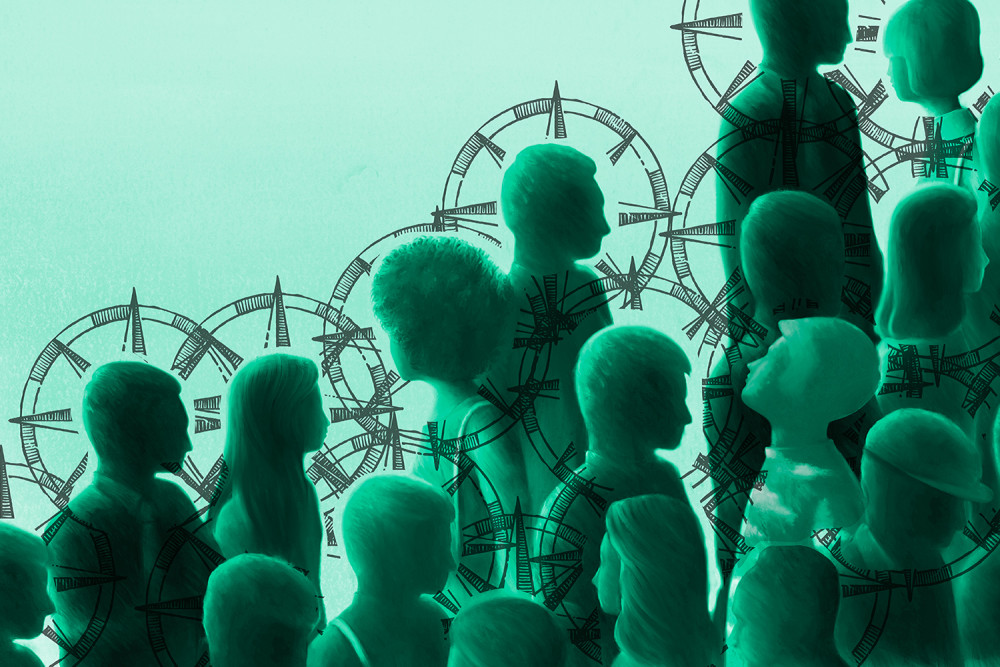
In a recent NPR interview, motivational speaker, media personality, and New York Times best-selling author Mel Robbins was asked, “Who or what is your moral compass?” Robbins’s answer was immediate: “Me. I’m my moral compass.” When the surprised interviewer asked whether religion or literature or anything else external to her life contributed to her moral outlook, Robbins doubled down on being her own wellspring of morality.
Her self-confidence reminded me of Watergate conspirator G. Gordon Liddy’s famous line: “I have found within myself . . . all I shall ever need. I am a man of great faith, but my faith is in George Gordon Liddy. I have never failed me.” We might also note our 47th president’s recent declaration when asked, also by the Times, whether anything could constrain his brazen pursuit of unfettered power: “My own morality. My own mind,” said Trump. “It’s the only thing that can stop me.”
Trump’s response has a Nietzschean ring to it. It was Friedrich Nietzsche who coined the phrase “God is dead,” which was his barbed way of saying that religion had ceased to be a source of authority. Essentially, each of us must become our own gods, our own source of moral authority.
But if we limit our moral imagination to our own self-autonomous discretion, we cut into the heart of the very resource that makes our communities flourish. “Morality is all we have left to bind us into shared responsibility for the common good,” writes the late Jonathan Sacks. “Morality is our oldest and most powerful resource for turning disconnected ‘I’s into a collective ‘we.’ It’s the alchemy that turns selfish genes into selfless people, egoists into altruists, and self-interested striving into empathy, sympathy, and compassion for others.”
Trust begins to disappear within a free society whenever we substitute personal interest for the public good. And since we create who we are through the commitments we make, just as we shape our moral character through a vast web of relationships and influences, we ought to be honest about the problems with pretending to be our own moral compass. Let’s not forget how much of our life we owe to others.
Christian living, similar to patterns evident in other religions, is not a self-project. To be spiritually alive involves placing our dependence on God, not just rolling in the ocean of the self. It’s exalting others, not celebrating personal grandeur. It’s enjoying a life that pulsates with the whole human family breathing through us in all kinds of ways. That’s Howard Thurman’s way of describing a deep collective vitality we must cherish. “If I am cut off so that only my little life breathes through me,” writes Thurman, “only my little hopes course through my mind and spirit, only my little thoughts penetrate my brain, then life for me is not worth living.”
Self-confidence is wonderful. But pretending that moral authority is of our own making is a myth that needs to summon the prayer of the young Flannery O’Connor: “I do not know you God because I am in the way. Please help me to push myself aside.”