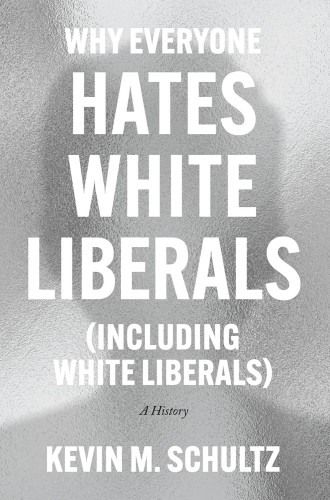
Why Everyone Hates White Liberals (Including White Liberals)
A History
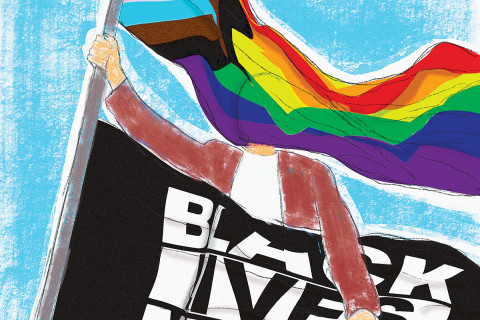
The great spiritual luminary Thomas Merton once alluded to the image of a person who spent a lifetime climbing the ladder of success only to discover, at the top, that the ladder was leaning on the wrong wall. It is an apt metaphor for the experience of those of us who are generally categorized as “White liberals” and who have built our life’s work on an array of moral and political assumptions that are being systematically disassembled before our eyes. There is an alarming and disorienting sense that the ladder on which we stand is leaning against thin air.
In his new book, University of Illinois historian Kevin Schultz takes on the task of understanding the reasons for this disorientation and offers some perspective on the deterioration of liberal idealism in our political culture.
By the author’s own description, this is a history book, not a polemic or a political manifesto. It is a concise overview of the many and various understandings of the term liberal. In a tone that is persuasive without being combative and a style that is conversational rather than pedantic, Schultz nimbly traces the evolution of the concept of liberalism from its 18th-century application as a spirit of rebellion against European monarchy, through the 19th-century construct of a laissez-faire capitalism that maximizes economic freedom, to the early 20th-century progressivism that, ironically, rebelled against the tyranny of laissez-faire capitalism, to Franklin Delano Roosevelt’s codification of liberalism as the distinctively American, democratic, “middle way” between communism on the left and fascism on the right.