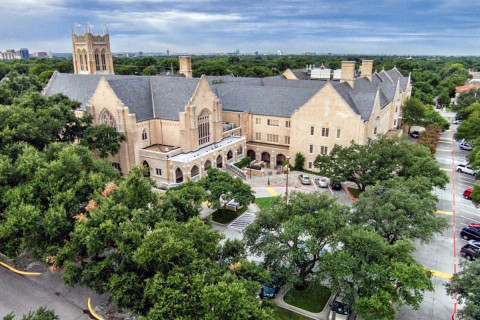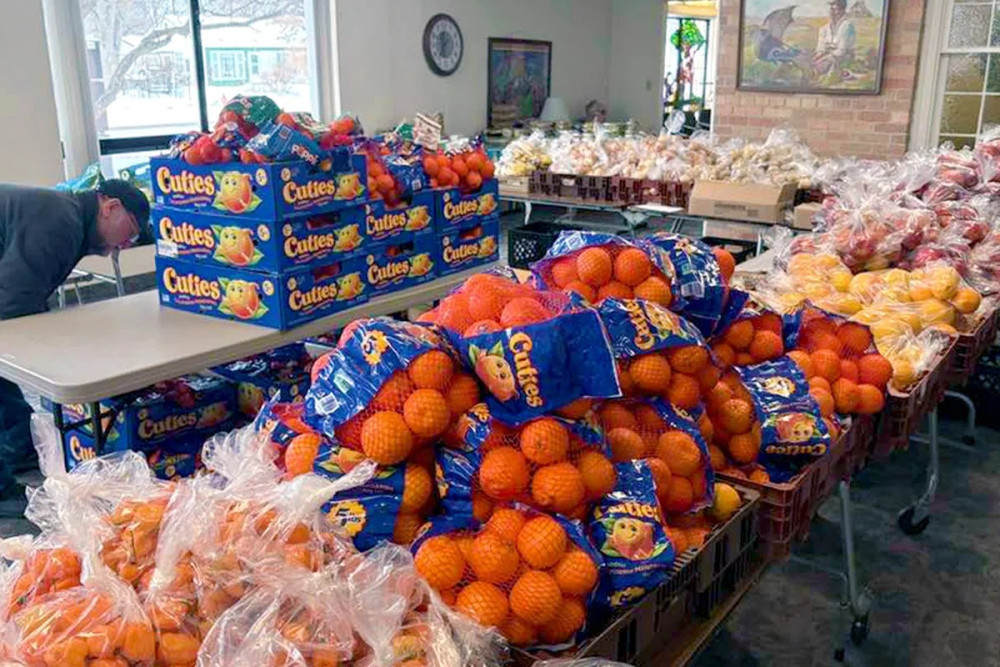
Casa Maria, a food pantry and ministry of St. Nicholas Episcopal Church in the Minneapolis suburb of Richfield, Minnesota, was used to providing food boxes to about 100 mostly immigrant families every Saturday. But by mid-January, as more people in the communities it serves stayed home, fearful of being swept up in aggressive Immigration and Customs Enforcement raids, requests for food help skyrocketed.
During the week of January 24, requests came from 500 families. And with the help of volunteers and an increase in donations, Casa Maria was able to fulfill all of them.
Cyara Carabarin Carretero, Casa Maria’s manager, said that the pantry’s original model had been to pack boxes of food—either donated or purchased by the pantry—that people could have delivered or could pick up. But they quickly shifted most of the requests to a delivery model, aided by monetary donations that the pantry used to purchase gift cards.
Staff members also are exploring partnerships with immigrant-owned markets that can deliver food that Casa Maria purchases.
Rena Romero, a deacon at St. Nicholas, said lots of people have come forward to help, which has required some creativity. People in the neighborhood have volunteered, along with parishioners from area Episcopal churches and others who aren’t Episcopalians. She said a group of women from St. Bartholomew’s Episcopal Church in Estes Park, Colorado, is driving to Minnesota next week to help, and a group of people from Chicago, Illinois, is coming on January 31.
“It’s pretty amazing,” she said. “You can feel the solidarity.”
Financial donations also have poured in, with over $200,000 contributed in the past two weeks, said Rob Cavanna, St. Nicholas’ rector. In addition to helping the pantry provide food for more people, these funds will also allow Casa Maria to help people with rent and insurance payments that will come due on February 1. That is a special need, Cavanna said, for households with two wage earners who both are staying home out of fear.
Volunteers have also been standing watch outside Casa Maria’s doors when it is open. Romero said a group of people take turns watching the door and that they all have some training in how to interface with ICE. They also have a plan for where everyone would go and who would be in charge if ICE happened to enter the pantry.
Part of what helped Casa Maria be flexible in meeting these new needs stems from its origins during the early days of the COVID-19 pandemic, Carabarin Carretero said. As a teenager then, she and other members of St. Nicholas’s Spanish-speaking congregation helped put together small grocery bags for parishioners.
As the need continued, the church opened its doors to people in Richfield and nearby Bloomington who needed help, “and we have been growing ever since,” she said. Calling volunteers the foundation of Casa Maria’s work, she noted that many are immigrants themselves who are helping other immigrants.
Even as leadership of the Minneapolis ICE operation shifts from Gregory Bovino to Tom Homan, there is no indication of a pullback in ICE operations. But that won’t deter Casa Maria from working to care for their neighbors, Romero said.
“We’ll be feeding people, body and soul,” she said. “This is our way of resistance, trying to meet people in this really quiet, hidden human suffering that’s happening. Because that’s the story, and it’s part of the strategy—how long can people keep that up?”
“The question for a follower of Jesus is always, ‘What does love look like?'” said Craig Loya, the Episcopal Bishop of Minnesota. “In a painful season for Minnesota, love looks like Casa Maria.” —Episcopal News Service