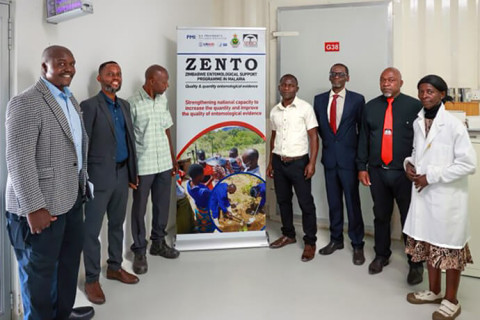
The United Methodist-affiliated Africa University in Mutare, Zimbabwe, has reopened its malaria program months after a US executive order abruptly froze funding to the US Agency for International Aid, forcing the research center to suspend operations.
The UMC’s board of global ministries is providing emergency funding for the program, which Sungano Mharakurwa, the program’s director said will return hope to the 70 percent of Zimbabweans at risk of contracting falciparum malaria.
“I am glad that Global Ministries is able to assist Africa University in restarting this program, which is necessary work in responding to this devastating disease,” said Roland Fernandes, top executive for Global Ministries and the United Methodist board of higher education and Ministry.
The reopening of the program, called ZENTO, highlights the vulnerability of African health initiatives to foreign policy shifts and the critical role of faith-based partnerships in helping to fill the gap. When the Trump administration disassembled USAID’s infrastructure and cut foreign aid earlier this year, ZENTO lost more than $900,000 in support and years of progress hung in jeopardy.
Launched in 2021 with support from USAID, ZENTO has become Zimbabwe’s leading malaria surveillance center. Its scientists identify mosquito species, track insecticide resistance, and guide the use of insecticide-treated nets and indoor spraying campaigns.
In 2023, ZENTO became the first private institution in Zimbabwe permitted to enter entomological data into the national and global District Health Information System—a milestone in disease surveillance.
The program operates in seven districts across the Manicaland and Mashonaland East provinces, including the Mutasa District in which Africa University is located. For communities there and across the country, ZENTO’s data informs frontline interventions that prevent infections and save lives.
The freeze on funding forced Africa University to cut staff, threatening its ability to maintain research labs and train the next generation of scientists.
The timing proved especially devastating. Heavy rains since the cut in funding created ideal breeding conditions for mosquitoes.
Mharakurwa said the developments have allowed malaria “to rebound with a vengeance and reverse considerable gains.” The renewed support from Global Ministries, he said, “restores real possibility to turn the tide against the devastating illness, mortality and economic impediment exacted by malaria on humanity in Zimbabwe and beyond, and to eventually eliminate the disease.”
At the rededication ceremony, Africa University’s chaplain led attendees in a call-and-response dedication, grounding the moment in faith, lifting up the United Methodist connection and shared mission.
Guests toured the entomology labs, where scientists demonstrated mosquito-rearing units, surveillance tools and the data systems once again operational. ZENTO staff emphasized the importance of their work to Zimbabwe’s national malaria elimination plan.
A visiting team of United Methodist missionaries from Costa Rica and Paraguay and members of the Holston Conference in Tennessee attended the event, underscoring the church’s global reach.
Malaria still claims nearly 600,000 lives worldwide each year, most of them African children. For Zimbabwe, ZENTO’s work is critical to national elimination goals. For Africa University, the program reinforces its role as a pan-African institution of excellence, training the next generation of scientists and public health leaders.
In a press release announcing the partnership with Global Ministries, Africa University vice chancellor Peter Mageto praised the collaboration.
“This partnership is a powerful testimony of what Africa University represents—hope, resilience and possibility. At a time when many doors have closed, Global Ministries has continued to invest in African solutions, led by African minds,” he said.
“With this support, our faculty and students can continue doing what they do best: shaping knowledge into action, and action into lasting change. The future is calling, and together, we are answering it.” —UM News