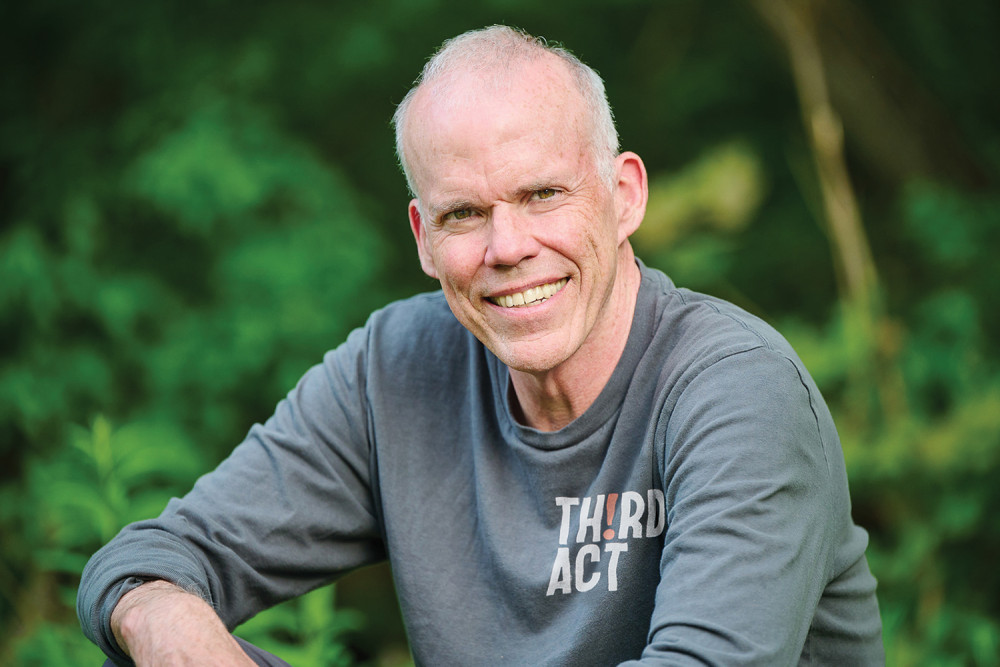
Bill McKibben is a longtime environmental activist, the founder of Third Act, and a distinguished scholar in environmental studies at Middlebury College in Vermont. His most recent book is Here Comes the Sun: A Last Chance for the Climate and a Fresh Chance for Civilization.
You were one of the first people to sound the alarm on the climate crisis—your 1989 book The End of Nature is on the subject. In your latest book, Here Comes the Sun, you state that writing The End of Nature represented a turning point for you. Could you say more about that?
The sad part is that the things I warned about in The End of Nature have happened. We’re now in the midst of full-blown climate change. It’s happening more violently and more quickly than expected. But, as my mother used to tell me, there is no use crying over spilt milk. There is no use moaning about that which we failed to prevent.
We can’t stop global warming at this point, but it is still possible to at least begin to limit its damage. And we finally have a tool that makes this beautiful and relatively easy: the sudden rise of cheap, clean energy. We fail to see that rise sometimes, because we’ve been living with solar panels most of our lives—but they were always marginal. We always referred to solar as “alternative energy.” In the last three or four years, it has become the obvious way to power the world. We now live on a planet where the cheapest way to make power is to point a sheet of glass at the sun. That has revolutionary implications.
Did you anticipate this shift?
Sort of. I could see us getting closer and closer to the point we’ve now passed, at which sun and wind became the cheapest ways to make power. Once that happened, the door was opened to really dramatic change—and China decided to step through that door. A few other places, too—California is one—but China, more than anyone else, made the conscious decision to take advantage of this new reality.
How did that happen?
It turns out that the better you get at building solar panels, the cheaper it is to do. Oil and coal don’t get cheaper—they’re not on a learning curve. In fact, you have to go farther back in the mine now to get the coal, because you got the easy stuff in the 19th century. And you have to work harder to find an oil well now than you did when the Beverly Hillbillies were at work. So all else being equal, it’s a little more expensive than it used to be.
But it’s just the opposite with sun and wind. Each year, human intelligence makes new iterations of the things that we have, and they become more efficient. I put solar panels on my roof 25 years ago, when they were expensive. They work fine, so there’s no reason to take them down. But eventually they’ll degrade, 30 or 40 years in. If we took them down now and recycled them, which is increasingly easy to do, the materials in each one—the boron, the silver, the other things—would now make six. So it’s not even a circular economy as we recycle this stuff—it’s a kind of mobius strip. The God-given gift of human ingenuity is on a par with the God-given gift of sunshine and wind.
Why can’t the United States become a leader in developing this technology? Is capitalism an impediment?
Well, in this case capitalism works in both directions. On the one hand, the fact that energy from the sun and wind is very cheap means that we’re eventually going to adopt it—that’s how markets work. On the other hand, there are fewer people lining up to do the work, because you can’t make Exxon-scale money from it. While there are billions to be made from putting up solar panels, once you’ve put them up, the sun delivers the energy for free. That’s the exact opposite of the model that drives our form of capitalism.
So if you are currently making a lot of money selling oil and gas, there’s a huge incentive to try to block this transition. That’s hard to do in most of the world but very easy to do in our country, where our political system allows those with lots of money to game that system spectacularly.
What’s really remarkable is that the United States invented these technologies. The first solar cell was made by Bell Labs in 1954. The first industrial wind turbine was installed in my state of Vermont in 1941. We’ve long since been passed by the Chinese because our political system has been effectively gamed. Joe Biden, to his credit, tried to let us start catching up. That’s what the Inflation Reduction Act was about, with its big spending on batteries and related technologies. And that’s why the oil industry instructed the Republican Congress to gut the IRA as job number one in 2025.
Tapping into the power available in solar and wind is less about piling up profits and more about tapping into God’s bounty, freely given.
When it comes to mobilization around climate change, you’ve put a focus on the so-called graying population. Yet in mainline congregations, there is a tendency to have a very diminished view of our older members.
Right, everybody is bemoaning the fact that it’s all old people who come to church on Sunday. I understand that; obviously we need to build institutions that survive into the future. But let’s also celebrate the extraordinary power of the people who have been steadfast.
How do we do that?
About five years ago we started Third Act as a way to organize Americans who are over 60. If you’re in your third act now, your first act was in that period of extraordinary ferment in the 1960s and ’70s. So you have real generational DNA, a kind of muscle memory of how change happens. That’s what we’ve been summoning to the foreground.
One of the truly horrible things about US politics over the last ten years is the level of cynicism that comes when young people have to watch what’s been happening. But if you’ve been to any of the No Kings rallies, you will have noted that there are a great many people there with hairlines like mine. I think that’s in part because our particular period of time in this country has taught us that change is possible when people come together.
That perspective creates a different framework for understanding how congregations get mobilized.
Exactly. There’s a caricature that older people are just angry because things aren’t the way they used to be. But that’s not been my experience. I find that most older people are extremely eager to help in the work that younger people are undertaking. They understand that it’s time to pass physical political leadership on to younger people. Third Act’s 120,000 people around the country are united by the belief that it’s ridiculous to have the gerontocracy in Washington that we have at the moment. But we also think it’s very important to be involved in pushing, shaping, and helping in that process. And we older types have a lifetime of skills and connections to do this. We also have time, which in organizing is the most important thing there is.
How does theology play into all this for you?
Over the 40 years that I have been doing this work, I have watched—and I hope to some degree helped cultivate—the development of a theology related to the environment. There was a time when liberal churches viewed the environment suspiciously as a distraction from dealing with poverty and war, while conservative churches viewed it suspiciously as a waystation on the road to paganism. Things have shifted—across the spectrum—and concern for the environment now plays a central role in the mainline Protestant tradition.
Catholics have perhaps surpassed Protestants in this regard. Pope Francis’s encyclical Laudato si’ is in many ways the most thoroughgoing critique of modernity in this millennia, and its central focus is climate change. Both Pope Leo and Ecumenical Patriarch Bartholomew are doing groundbreaking work as well.
Christians talk about the sins of commission and the sins of omission. A friend of mine says it’s time to talk about the sins of emission.
That’s very good. I may steal that.
You’ve talked before about Christian resources that offer some real theological heft on the subject of the sun.
Francis of Assisi’s “Canticle of the Sun” may be the single most beautiful artifact in Christian liturgical history. And the story of creation in Genesis begins with the sun and the wind. That should be a clue.
I was speaking at a Southern Baptist seminary and debating some extremely conservative folks on some of these questions. One of them kept saying, “Well, if God hadn’t wanted us to use all that oil and coal, why did he give it to us?” I said, “Just think about what you’re saying for a minute. If God hadn’t wanted us to use all that sun and wind, why did he bother?” And it’s a lot easier than digging up seams of coal—that’s hard, dangerous work, very different from relying on the sun to get things done. So the sun really becomes an image of divine gift.
Sometimes people who are sounding the alarm about climate change will cast the Industrial Revolution in a wholly negative light. But it seems like you have less of a problem with the Industrial Revolution itself than with the fact that we stalled out there.
Absolutely. In 18th-century Britain, the ability to burn coal turned out to be, on balance, a remarkable thing. It came with problems, obviously. But around the world, it’s allowed for mobility. It’s allowed people to be lifted out of a certain kind of poverty.
Now we can do those same things without the downsides of burning fossil fuel. It’s not a completely free lunch; we still have to mine cobalt and lithium and other things. But the amount is small compared to what we do at present. The Rocky Mountain Institute estimated that the entire volume of minerals we’d need to mine between now and 2050 for the renewable battery revolution is less than the amount of coal we mined last year on this planet.
So we should continue the work of the Industrial Revolution. What we’re doing in this country right now is instead to short-circuit it and just stick with what we’ve got.
The same human ingenuity that brought about the Industrial Revolution is now leading the way into this revolution of harnessing the sun’s energy. That’s part of the same humanity, right? Oftentimes it feels like humanity gets completely encased in a narrative of destroying the earth.
It’s easy to see why we think that; we are actively raising the temperature of the planet. That’s the most devastating thing we’ve done as a species, and it is threatening to bring about the sixth great extinction crisis our planet has experienced and the first one driven by us. But that doesn’t need to be the story. Human minds have come up with all kinds of remarkable things. We’ve talked a lot about solar energy generation here, but humans have also increasingly figured out how to do things more efficiently, so that we need less energy to begin with.
And there’s always the testament of our religious traditions, in particular, that remind us that we need less than we insist on grabbing all the time. That’s a part of the human story. But greed and domination are too, and at the moment in this country we’ve let them take control. Our president talks constantly about how he wants energy dominance through oil all around the world. This year we’ve invaded both Venezuela, which has the second-largest oil reserves on earth, and Iran, which has the third. This is not OK—and it’s been a pleasure to watch the pope explain to our leaders why.
What would you say to pastoral leaders?
We have to figure out how we manage to survive this century with as much intact as we can. At this point, each tenth of a degree increase in the earth’s average temperature moves about 100 million people from a relatively safe climate zone to a relatively dangerous one. If your pastoral leadership has something to do with the gospel call to love your neighbors, well, this is the most important way of loving them that we have at the moment—to not drown them, starve them, or burn them out.
This can only come if we figure out how to get our act in order. That is inherently political—we can’t do this short of changing how we behave in the world. And it’s hard work, undertaken without a guarantee of success. The physical forces in play already here are large enough that there are scientists who think we’ve waited too long to get started. Climate change is affecting the great currents of the Atlantic, the jet stream, the stability of the ice sheets. I think the best science indicates we still have a narrow window through which to make at least some change—but that window is closing fast.
That’s hard news for people to hear. But it should be a little easier for people of faith. It strikes me that we’re allowed to believe that there are other forces at work on the planet, and that if we do everything we can do, then it’s OK to have some hope that those forces will meet us halfway. Now, this is very different from simply saying that God is going to take care of this for us—that strikes me as the stupidest theology possible. But a theology that expects us to do all that we can and then assures us that the Holy Spirit is at work in the world as well—I think we’re entitled to that much comfort if we’re willing to do the work.
Any talk about hope has to have that framework. We’re not a fated people; hope calls us into meaningful participation in the unfolding future. I think what you’re talking about here is a very concrete way that our participation can take shape.
Absolutely. And we’re quite lucky to be at the moment when that’s possible. Without that, this work would be that much harder, because it would rely entirely on our moral sense of what we should and shouldn’t do. That moral sense is there, but it’s hard to summon. Now that we can link it with a clear economic motive, it gets easier.
Now the main job is to overcome the somewhat devilish forces of greed and domination on the other side of this equation. And that’s serious theological business, too.
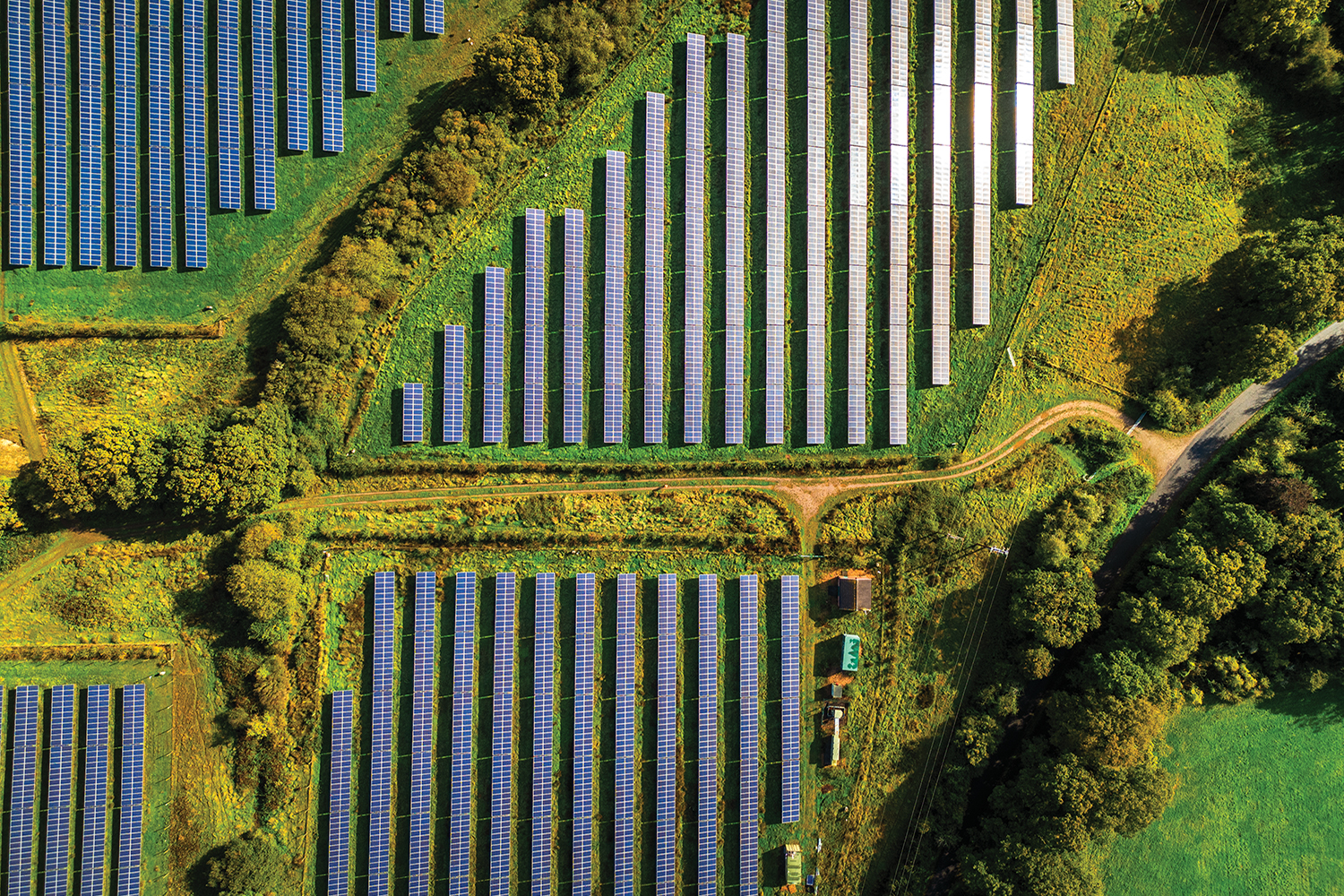
Photo by coldsnowstorm / iStock / Getty