The Sisterhood
How a Network of Black Women Writers Changed American Culture
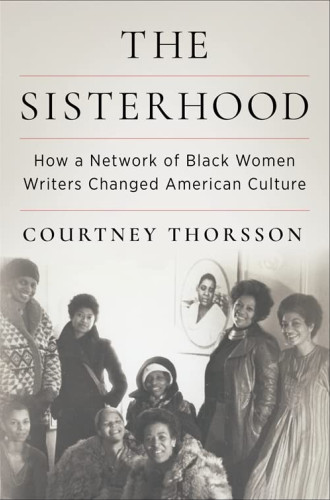
In February 1977, a group of Black women writers gathered for the first meeting of the Sisterhood, a space to share camaraderie and good food and to feed their intellectual and writing lives. Alice Walker, Toni Morrison, and Ntozake Shange were among the first members who met in June Jordan’s Brooklyn apartment that Sunday afternoon. The collective would later be joined by Audre Lorde, Paule Marshall, Jessica B. Harris, and other luminaries whose work would help champion other Black writers to follow. In her chronicle of the incredible impact this two-year-long coalescence left on the US publishing landscape, academia, and cultural institutions, Courtney Thorsson re-creates the wide web cast by the Sisterhood and reveals the ways in which its members’ legacies are still provoking, stirring, and beckoning us today.
Amid the current zeitgeist of resistance, a steady stream of biographies narrating the lives of Black women writers have recently been released. They remind us of the far-reaching, creative power of the collective.
Read our latest issue or browse back issues.
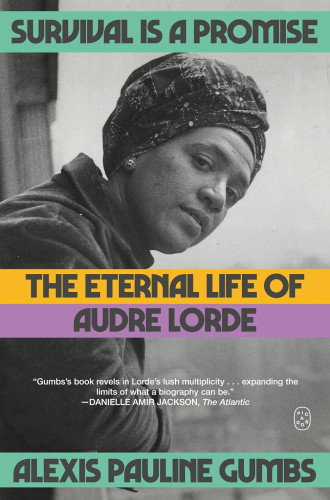
Survival Is a Promise
The Eternal Life of Audre Lorde
I can think of no better writer to hold and tend the work of Audre Lorde’s life than the virtuoso poet and queer Black feminist scholar Alexis Pauline Gumbs. Gumbs herself could be considered a direct descendant of the Sisterhood’s legacy—in the opening chapter, she describes the moment someone mistakenly assumed she was the granddaughter of Gloria Joseph, Lorde’s partner in life and in activism. That sense of familial ties, which connotes a respectful knowing, is present throughout Gumbs’s narrative and lends to its intimate tone. Simultaneously, her lyrical attention to the earth draws the reader from the intimate to the cosmic, broadening our sense of scope.
Only the second full-length work to explore Lorde’s abundant outpouring, Survival Is a Promise plays with the limits of what biography can be, diving deep into the archives and expanding them with the truth of poetic imagination. Here, Lorde breathes beyond the page.
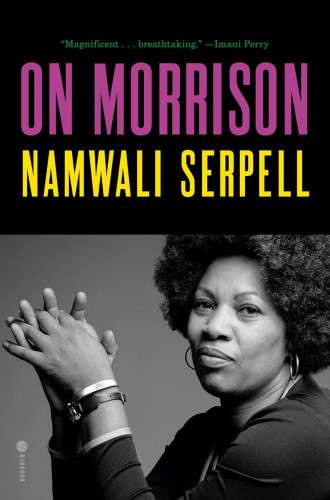
On Morrison
While Toni at Random, another recent Toni Morrison biography, focuses on Morrison’s influential career as an editor at Random House, Namwali Serpell takes a somewhat different approach. On Morrison crafts a picture of Morrison the writer, through a close reading of the Nobel laureate’s canonical, sophisticated, and difficult oeuvre: “The ultimate source of Morrison’s famed difficulty . . . was [her] commitment to plumbing the depths of black aesthetics,” Serpell writes. Morrison is not easy reading, but Serpell, like Morrison, is devoted to plumbing the depths.
From excavating the lexicon of signifying banter in Song of Solomon to exploring the relativity of language and race in Morrison’s only published short story, “Recitatif,” Serpell’s background as a Harvard English professor (and award-winning writer) is a noticeable asset as she interrogates the texts with both reverence and prodigious tenacity.
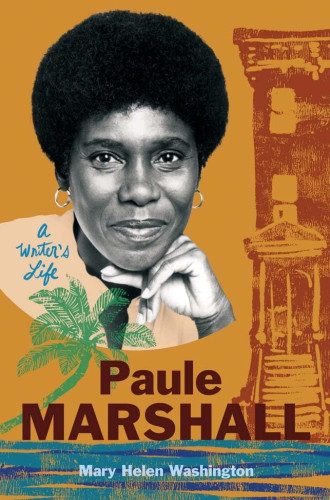
Paule Marshall
A Writer’s Life
Mary Helen Washington, quoting fellow literary scholar Deborah McDowell, notes that the 1970s and ’80s were “an epochal moment in U.S. publishing and intellectual life,” and Paule Marshall’s writing was enfolded into this generative time of widespread recognition of Black women’s writing and editorial direction. Though Marshall published her debut novel Brown Girl, Brownstones in 1959, Washington asserts that she did not receive the attention she so well-deserved. Marshall was mentored by Langston Hughes, and she served as a bridge between the Harlem Renaissance and a newer wave of Black feminist writers, helping to build a necessary foundation for this epochal moment. By centering the experiences of women from across the African diaspora, Marshall’s work also played a role in expanding the sense of what it means to be a Black woman in the United States.
Markedly private, Marshall embodied a contained public persona. As her biographer, Washington creates a fuller picture of this writer’s life. Marshall emerges not exposed but revealed under warm light.
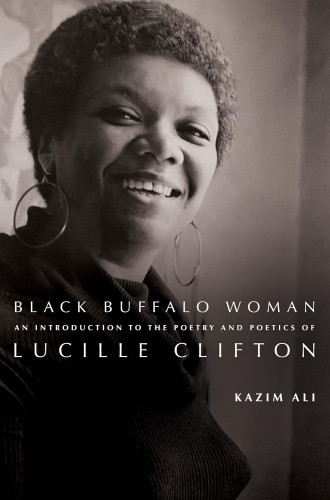
Black Buffalo Woman
An Introduction to the Poetry and Poetics of Lucille Clifton
Black Buffalo Woman joins Hilary Holladay’s Wild Blessings as a fresh, critical look at the poetics of Lucille Clifton, and it sings with the joy of language itself. In his introduction, Kazim Ali writes that the book “aims to look at Clifton as a poet, a thinker, even as philosopher and theologian.” Ali, also a celebrated poet, is an adept guide on this journey through Clifton’s work and life. He examines her prolific collection of poetry, her prose memoir, and several of her unpublished works with the careful eye of an ally. He opens a doorway into deep appreciation for Clifton’s overall skill and the deft economy of language she often employs to create a resounding emotional tenor.
“The Light That Came to Lucille Clifton” is one of my favorite chapters. Delving into Clifton’s conception of Christianity and Black spirituality and her engagement with scriptures from other traditions, it’s a rich elucidation of the various streams informing Clifton’s poetry.
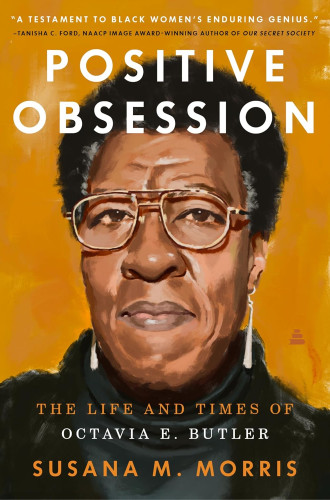
Positive Obsession
The Life and Times of Octavia E. Butler
The renewed interest in Octavia Butler sometimes uses the language of spiritual gifting to describe her role in US culture, dubbing her an eerily prescient prophet speaking to our current environmental, political, and social crises. Indeed, Butler was a trailblazer in science fiction. The future was her business, and she wrote with a propulsive, cartographic impulse—to chart the worlds she envisioned as possibility and warning.
This is the element biographer Susana Morris elevates in her exploration of Butler: the historical and social contexts that drove Butler’s positive obsession. While other Black feminist writers in the late ’70s gathered in New York for community, Butler’s experience in the boys’ club of science fiction and her location in Southern California were, as Morris notes, “somewhat singular.” Nevertheless, Butler is unmistakably tied to the Sisterhood and their widespread contributions that make good on America’s illusory promise to be “the land of the free and home of the brave.”