


Isn’t it possible for both Israeli and Palestinian narratives to be true? Dialogue ends when each side demands that the other “let go of past suffering” and “get over it.”
In a booklet titled Zionism Unsettled, a group of Presbyterians has issued a blanket denunciation of Zionism, terming the Jewish quest for a homeland in the ancient land of Israel inherently racist, exclusionary, and devastating for non-Jewish inhabitants.
Jewish and Christian groups have rightly criticized the booklet for its sledgehammer one-sided approach, theologically and politically.
The Friends of the Earth Middle East scored a victory this summer when some 9 million cubic meters of fresh water per year started flowing into the Jordan River.
The Six-Day War, as Caitlin Carenen argues, represented a turning point in American Protestant views of Israel.

Netanyahu's fragile new coalition government reflects gradual but steady changes in Israeli society.

"I am more hopeful about the Iranian future than the Israeli one. The Iranians are at least willing to admit there is a problem."
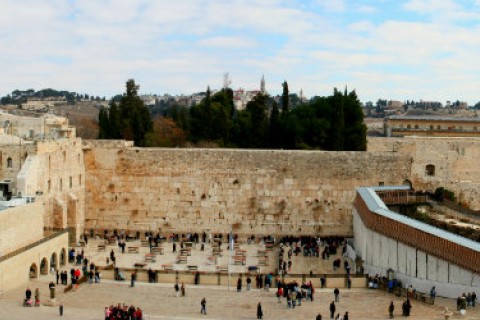
There's a broad consensus that peace between the Israelis and Palestinians depends on a two-state solution. So why doesn't it happen?

Is the goal of Zionism a democratic Israel with a Jewish majority? Or rule of the entire land, from the Mediterranean to the Jordan?
In Jordan, reports are mixed as to just how good relations are between the Muslim majority and the Christian minority. What's clearer is that the stronger divide is between native Jordanians and the many Palestinian refugees.
The two locals we spent the most time with, our tour guide and our bus driver, represent both differences.

The Jordan River is too shallow for Michael to row across, and the shore is a stinking pile of sludge. But something redemptive is happening.

Israelis take great interest in archaeology, as findings can validate Jews' ancient claims to the land. Of course, Palestinians have similar claims.

A rabbi and strong advocate for Palestinians’ rights told me this: "When you Christians start talking about divesting from Israel, it sounds to us as if you are undermining Israel’s economy and thus Israel’s existence. We close ranks."

Boycott and divestment aim to punish Israel. A more constructive strategy is needed.
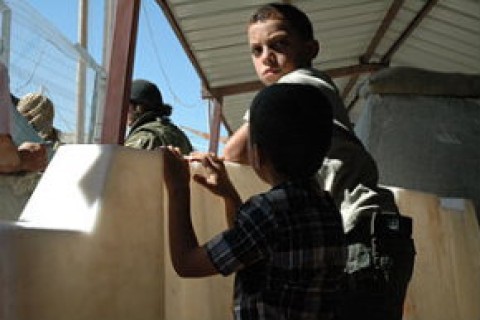
Palestinian parents don’t fret about drugs or drunk drivers. They worry that the Israeli soldiers will use their M-16s.
Michele Chabin reports that Israeli postal workers are refusing to deliver Hebrew-language New Testaments. Mark Silk asks an interesting question.

The Christian population in Israel has begun to swell again, drawing on wholly different sources than in the past.

At American synagogues, Israeli settlement leader Ron Nachman gets a lot of questions. At churches he gets big checks.
With his imagination in overdrive, Bruce Fisk has created a fictional character to guide readers through the Holy Land and the thickets of New Testament scholarship.