When my daughter was in college, she spent a couple of summers working at an upscale resort. This resort was so fancy that it had a dress code: after 6:30 p.m., guests in all public areas of the main hotel were to dress in “elevated evening attire.” No shorts or denim permitted.
I visited my daughter on one of her days off, and we decided to enjoy a fancy, upscale dinner in the dining room where she worked so hard the rest of the week. We donned our appropriately elevated evening attire and headed to the lobby, where we noticed a tall man in an intense conversation with the maître d’. The tall man was wearing blue jeans, and it was clear that “no denim permitted” was about to be strictly enforced. The maître d’ shook his head. The tall man heaved a sigh and turned to leave.
Read our latest issue or browse back issues.
When he turned, my daughter recognized him immediately: He was a moderately famous Hollywood actor. Clearly, this dress code was strict—a real live celebrity could not even get a pass. My daughter and I, appropriately attired, swanned our way into the dining room, feeling very pleased with ourselves, our clothing choices, and our windowside table. We never knew where that moderately famous actor ate dinner, but he did not eat with us, oh no. Not in jeans.

Sewer rats and scofflaws. That’s what Brené Brown calls folks like that actor. In Rising Strong, she describes them as people who are out to break the rules—or who think the rules apply to everyone else but not to them—and who are profoundly irritating to all the “good people” of the world, all the rule followers and checkers of the right boxes. Trouble is, Brown notes, eventually everyone turns out to be some kind of sewer rat or scofflaw. Because no one is perfect, and everyone messes up, and all of us will sometime or other find ourselves standing at a metaphorical maître d’ stand in a metaphorical upscale dining room, about to be rejected for wearing metaphorical blue jeans.
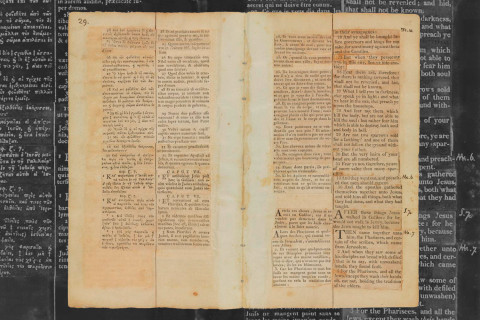
Matthew’s version of the wedding banquet parable is unsettling because it is hard on the scofflaws. In Luke’s version (14:15–25), when the original guests spurn the host, the servants are sent out to bring everyone—poor, crippled, blind, lame—to the party. But in Matthew’s telling, the host is not so inclusive or welcoming. When one guest is discovered violating the dress code, the king has that scofflaw, that sewer rat, bound and tossed into the outer darkness.
We are not told if the guests in the parable feel vindicated as they watch the man cast out. We don’t know if they—“the good and the bad alike,” swathed in appropriate wedding garments—see that one guest tossed into the outer darkness and think, Good. You have to follow the rules. There’s a dress code here. But I do know from my own experience teaching and preaching this parable in community that no one ever feels good about it. No one ever puts themselves in the place of those vindicated guests. Almost always, they see themselves as the man without the wedding robe. Almost always, they fear that their own scofflaw, sewer-rat nature is going to be exposed someday and that God will punish them for it.
Brown’s research shows that the antidote to hating others, or one’s own self, for being a scofflaw and a sewer rat—a sinner, really—is to honestly believe that people are doing the best that they can. That on any given day, each person is offering what they have the capacity to offer. That we can never know anyone’s deepest struggles, or deepest strengths, or deepest weaknesses. That people—including each of us—will falter and fail, sometimes in profoundly destructive and hurtful ways, but still, everyone is probably doing the best that they can.
There is tremendous grace in that thought for ourselves and for our fellow humans. There is room then for forgiveness and second chances and repentance and restoration. But Matthew’s parable does not give the reader that option. There is no second chance, no forgiveness, no “you did the best you could.” There is a dress code. It is violated. And there are dark consequences, weeping, and gnashing of teeth.
I do not enjoy this parable with the same glee I felt when I sat down to the fancy dinner with my daughter. I wish there was more grace in it. I wish there was room for repentance and return. Because I realize now that the moderately famous actor probably had no idea that this resort would have such a strict dress code. He was probably just doing the best that he could.