In his 1891 essay “The Critic as Artist,” Oscar Wilde notes that anonymity through disguise offers a certain freedom to be honest. Genuine convictions emerge when we’re insulated from having our reputation or vulnerability exposed. “Man is least himself when he talks in his own person,” writes Wilde. “Give him a mask and he will tell you the truth.” In our day, we see this idea play out on social media. People might curate idealized or fanciful versions of themselves—or they might mask their identity behind a pseudonym and drop their guard in order to share raw and sometimes toxic thoughts.
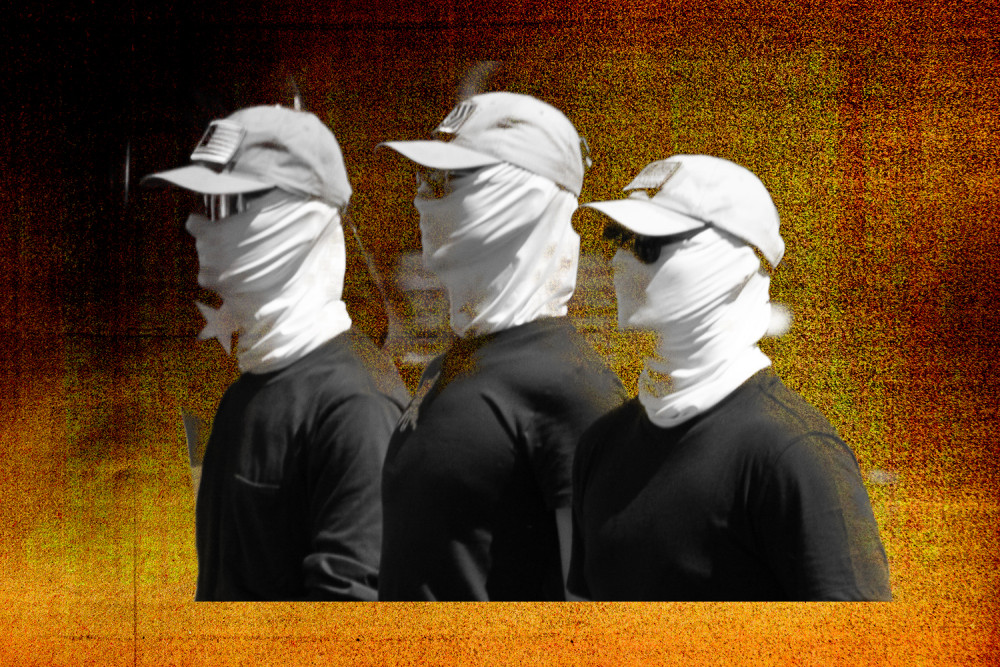
It happens offline as well. On July 4 of this year, about 400 men descended on the Capitol Hill neighborhood in Washington, DC. Dressed in matching khaki pants, navy shirts, white ski masks, and sunglasses, they might have been mistaken for a team of paintball enthusiasts. In fact they were members of the Patriot Front. Like other White ethno-nationalist organizations whose members like to hide their identity behind masks, gaiters, and balaclavas, the Patriot Front designs its pop-up protests to create a visual threat of intimidation. Going viral online is their dream, fulfilled this time by a Reuters photograph depicting a lone Black woman surrounded by masked Patriot Front members on a DC Metro train.
The mask is the message: the performance of an identity, a choreographed display of power, a visual cue of contempt for Black and Brown people, migrants, Jews, Muslims, and the LGBTQ community. The mask provides the silent voice for broadcasting a deep inner hatred for all who don’t fit a particular White vision of America.