
Books

Thirteen seasons

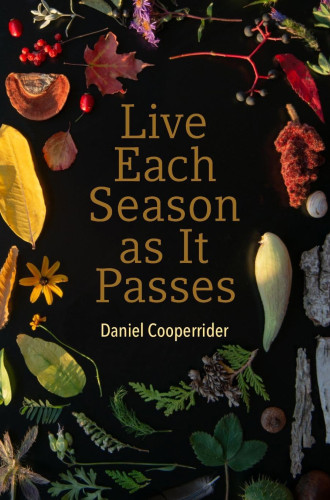
Daniel Cooperrider trades the four seasons for the less familiar lunar calendar, stepping into the rhythm of creation.

Seduced by the spirit of our technological age, we often find ourselves drifting farther and farther from the embodied realities of creation. To ground ourselves and to develop the capacity to resist such temptations, we need habits of unplugging and intentionally spending time with the humans and nonhuman creatures that surround us daily. For those who desire this sort of grounding—or at least acknowledge their need for it—Daniel Cooperrider’s new book is an exquisite gift.

This is a “let us slow down” book, Cooperrider begins, quoting Nigerian theologian Bayo Akomolafe:

Let us slow down, lest whatever spiritual, theological thinking or liturgical, ritual meaning-making we do risks re-inscribing the goofy and fateful human-nature divide that stupefies us and severs us from the rest of life. This is a let-your-hair-down book; a take-off-your-shoes-and-feel-your-feet-on-the-cool-moss book; a go-outside-no-matter-the-weather book; a stop-whatever-you’re-doing-now-and-look-at-the-clouds book.


The means to slowing down that he offers us is the practice of paying attention to the seasons. Indeed, the seasons he identifies—not the four familiar ones, but the thirteen seasons defined by the moons of the lunar calendar—give structure to the book’s meditations.

Cooperrider, a UCC pastor and convener of Flicker Wild Church, takes us along as he walks amid fields and forests throughout the year. As he goes, he tunes our attention to facets of the natural world that might have gone unnoticed, leaves and mushrooms and clouds and many creatures. Foraging is one vital thread that winds through Cooperrider’s expeditions; he explains in detail, for example, the harvesting and finishing of wild rice. God’s abundant provision throughout creation and our embeddedness in it, through food and other means, are key themes that Cooperrider highlights over the course of the book.   

In writing about streams and rivers, Cooperrider asks the question: “Why does God inspirit and incarnate such a beautiful world?” He posits that perhaps beauty serves as instructive for us: “Beauty is the great instructor, and our appreciation of beauty, along with our readiness to become smitten with it, is the schooling of our lifetime.” The beauty of creation and humanity’s deeply intertwined connection with it, he maintains, disciple us in the ways of our Creator.

In addition to pointing our attention to the beauty of the natural world, Cooperrider connects the natural world to human wisdom from a broad range of traditions, not only scripture and Christianity but also wisdom from Indigenous people, Eastern traditions, and philosophers like Henry David Thoreau.

Toward the end of the book, Cooperrider gives an introduction to the rhythms and worship of his wild church (one of approximately 300 churches that comprise the Wild Church Network). The liturgy of his church is, not surprisingly, intimately linked to the seasonality of the natural world. “We understand what life is and how life lives,” he writes, not just by “companioning life in its more-than-human variety” but also by “linking our liturgy to the liturgy of the land and of the season, re-weaving ourselves into the geo-­choreography of praise.”

Live Each Season as It Passes is a delightful addition to the long and rich tradition of nature writing. The stories that Cooperrider recounts from his neck of the woods will resonate with readers who desire to live in closer harmony with the whole of creation. They also will inspire readers to undertake similar explorations in their own places, which will unearth their own new and wondrous connections with the natural world.

Coincidentally, at the time I started Cooperrider’s book, I was also reading Jarod Anderson’s Something in the Woods Loves You, which turned out also to be structured around the seasons and strikingly similar in its themes, as Anderson narrates his own journey of finding healing and comfort in the natural world during a time of mental health struggles. Readers who find Live Each Season as It Passes compelling may also appreciate Anderson’s book. 

C. Christopher Smith

C. Christopher Smith is founding editor of The Englewood Review of Books.

All articles »