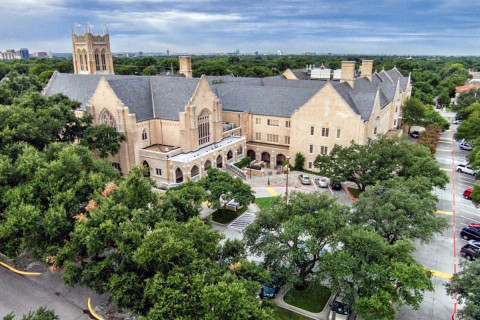
On a brisk Sunday morning in Charlotte, North Carolina, I sat in the pews of a grand sanctuary. It was founder’s day, and the pastor, Ben Boswell, reflected on the church’s evolving identity: “There was a time when we were not open to all races or ethnicities . . . a time when we were not open to LGBTQIA+ people receiving the sacrament of marriage.” The congregation leaned in as he continued: “Everything about living in an inclusive community of faith is easier said than done, easier written than lived.” As the sermon ended and the pastor stepped down, the sanctuary filled with polite applause—reverent, affirming, yet restrained.
This rhetorical performance—looking back at a regrettable past to celebrate a more righteous present—is common among White progressive churches. But after four years of ethnographic research across the United States and Canada, I’ve come to see that such celebrations often obscure more than they reveal. For many congregations, inclusivity is not merely a moral value but a theological horizon—one that shapes everything from sermons to programming to committee structures. Yet there is a shadow side to the posturing of inclusivity. Indeed, the pervasiveness of this theology of inclusivity, for all its moral appeal, can become a barrier to the very transformation it promises.

Read our latest issue or browse back issues.
Inclusivity is a flexible term that incorporates notions of welcome and acceptance but also the pursuit of relational harmony, and therefore avoidance of conflict. Across more than 120 interviews and dozens of site visits, I encountered a revealing paradox: Inclusivity serves as both a moral compass and a theological ceiling. It enables churches to feel virtuous while insulating them from hard choices. Empathy is prized, but confrontation is avoided; sermons and study groups multiply, but protest and institutional change remain rare. As a result, White progressive churches today struggle to do something they profess to be called to do: confront racism—to take one leading example—within their congregations and beyond.
In the churches I studied, the word inclusive is everywhere. A pastor in Colorado described their motto—“Open to All, Closed to None”—as their “three-line inclusivity statement put into six words.” In interviews, congregants repeatedly cited a version of the golden rule as the heart of their theology. As one longtime member in Utah put it, “Our church’s identity, number one, is very inclusive.”
This inclusivity is usually sincere and rooted in scripture. Yet over time, it has become a moral framework centered on affective warmth rather than structural change. One music minister in North Carolina summarized the ethos: “We are the church for those least invited to the table.” But the table, however welcoming, is rarely rearranged. In these churches, inclusivity offers belonging without redistribution: of leadership, budgets, or decision-making power. It extends affection but demands little institutional risk.
Members describe their congregations as “safe,” “loving,” “accepting.” But when applied to racism, this ethic of care becomes incoherent. The focus shifts from dismantling systems to managing discomfort. Racism is reframed as a personal failing—something to be resolved through goodwill, reflection, and conversation. Inclusivity works well as an affect. It falters as a strategy.
In one Virginia church, a minister described anti-racism as “committing ourselves to being radical like Jesus—that we love that radically, that we are that inclusive.” Another pastor spoke of “an inclusive Christ” as central to the church’s theology. But such statements, however heartfelt, reveal a theological outlook more invested in comfort than confrontation.
Inclusivity, after all, is not merely a spiritual sentiment—it is an organizing logic. It shapes liturgy, informs committee structures, and defines member expectations. Yet, in the churches I studied, this emphasis on inclusion often translated into institutional caution. “Everybody’s got to buy into it, so that’s the tough part,” a lay leader in Kentucky explained, noting why, after years of meetings, programs, and congregational votes, truly bold anti-racist action stalled. A commitment to implement financial reparations in response to the congregation’s embeddedness in a slaveholder past remained unfulfilled.
As one pastor put it, “We don’t just include—we see Christ in every person who walks through our doors.” But when I asked about structural decisions—budgets, hiring, partnerships—he paused before admitting, “That’s where it gets harder.”
The roots of the theology of inclusivity in these progressive congregations lie in the success of LGBTQ inclusion. In many churches, becoming “welcoming and affirming” followed a recognizable script: small-group discussions, educational programming, personal testimonies, and eventually a congregational vote. These efforts required real courage and often brought painful ruptures. But they also succeeded—they defined the church as a safe and open space for LGBTQ people.
Now, churches are trying to apply the same framework to anti-racism. Several people described LGBTQ inclusion as a defining congregational moment—a process of group dialogue, emotional testimonies, and ultimately a vote. “It was a vote. We became welcoming and affirming,” a woman in Massachusetts recalled. Then she made a point of adding, “We haven’t voted to become anti-racist.”
In many churches, LGBTQ inclusion arrived through the lived presence of gay members who openly shared stories in small groups. Visibility mattered. But, as one North Carolina pastor noted, “We don’t have enough Black people in our congregation” to replicate that model for race. A person’s race cannot simply “come out.” It is already visible, entrenched in history, and weighted with structural consequences. One pastor told me bluntly, “We had stories for sexuality. For race, we just have silence—and suspicion.”
Unlike sexuality, which could be gradually disclosed in trusted relationships, race is always already public—marked, politicized, and inescapable. It implicates more than identity; it implicates power. It is not a difference to be embraced but a system to be confronted.
When action stalls, churches turn inward. Programs fill with book clubs, webinars, racial audits, guest speakers. Conversations orient about Whiteness, privilege, and fragility. The guiding assumption is that internal work must precede collective action—that everyone needs to be “on the same page” before the church can move forward.
This is what I call the awareness trap: the conviction that learning about racism is the same as opposing it. Week after week, congregants “educate themselves,” while the question of what the church should actually do keeps getting deferred. The process becomes the point. As one lay leader put it, “Every time we name a next step, someone reminds us that we haven’t finished the reading list.”
The result, as members report, is a pattern of overthinking that keeps the church from moving forward. A Black gay man reflected on his church’s dilemma: “It’s a socially liberal environment of intellectuals. . . . These people are progressive, but I find they are no more able to do it than any other White people.” Then he laughed and added, “White people just don’t have the skill set to deal with racism.” One woman from the East Coast named her church’s pattern plainly: “We process everything to death.”
Congregations with more than a handful of people of color often form race-based affinity groups, recognizing that clergy, staff, and members are keen to share their distinctive experiences and process uncomfortable encounters—and often outright discrimination—within their own churches. Yet such efforts are cast by White members and lay leaders as a form of “segregation” that violates the ideal of inclusivity their church is trying to implement. Leaders of these groups are pressured to educate and guide the White majority, detailing their racialized experiences to provoke the need for inclusivity that the majority claims to value already.
The emphasis on internal work has led, in many congregations, to a kind of paralysis. “We went through a period of extreme democracy,” one woman told me, “where everything had to be decided in congregational meetings that went on forever.” A Canadian staff member confessed, “We want to learn what diversity, inclusion, and equity mean—but we haven’t agreed what those words even mean.” The result: circular conversations that exhaust rather than equip.
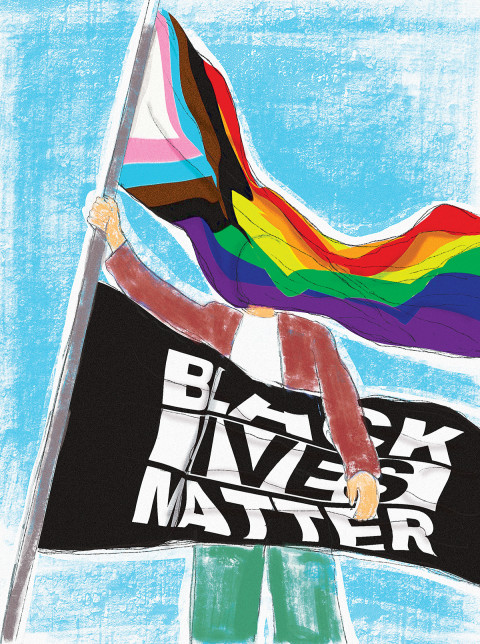
Another pastor in the South described how plans to install a racial justice banner on the church lawn led to weeks of meetings—not over the message, but over the font and color palette. “The real issue,” she said, “was fear of upsetting our neighbors.”
Beneath the endless deliberation lies the burden of consensus. Shaped by democratic polity, these congregations require broad agreement before acting collectively. But anti-racist initiatives often demand positions that not every member supports—positions that provoke discomfort and risk division. In one church, a proposal to join a local housing coalition stalled for 18 months as members debated the language of its statement of solidarity. The demand for agreement on details consistently accentuates the level of disagreements on approaches to racial justice, disagreements that usually go unstated. Too many members are “not on board.” This is especially evident once alternatives for action are interpreted as “political,” effectively shutting down any idea perceived as a plausible violation of the separation of church and state.
For churches built on inclusivity, conflict doesn’t just feel risky—it feels like failure. As a result, far more energy goes into avoiding disruption than committing to action. Threats to the flow of financial giving are pervasive. “It’s hard to be prophetic,” reflected one pastor, “when you’re worried about who’ll stop pledging.”
To avoid that failure, congregations shift the focus from “us” to “you.” Anti-racism is increasingly framed as an individual responsibility. Members are encouraged to act as agents of change in their workplaces, neighborhoods, and professions. A teacher who revises her curriculum, a lawyer who offers pro bono help, a social worker who mentors youth—these actions are celebrated as the church’s anti-racist witness, even when the church neither coordinates nor sustains them.
This turn to the individual reflects the real influence churches have on personal ethics. But it also functions as a theological sleight of hand: Individual actions get counted as collective witness, and personal conviction substitutes for institutional change. As one pastor admitted, “You can see it in what our people do Monday through Saturday. But not as a church.”
This diffusion of responsibility allows churches to claim moral credit while avoiding organizational cost. The church remains intact—but the systems that sustain inequality remain untouched. As one pastor put it, “You and I both know the real power is the one layperson who runs the bank office, the one who heads a university system. Then things really start to change.” Such efforts, of course, happen outside the church.
One Tennessean put it bluntly: “The church recharges us so we can do our thing.” But that thing, however righteous, rarely loops back into the congregation. The private virtue of members becomes the church’s public witness—even when the church itself remains inert. Touting what members do in the world often masks the church’s collective inaction on the very same issues.
Guided by a theology of inclusivity, many churches aim to be a beacon of niceness. But racism is not nice. It cannot be resolved by compassion alone. It is sustained by power—and it will be undone by action that disturbs, disrupts, and demands.
Much of our Christian tradition understands this. Its emphasis on the common good, on the social nature of sin, and on the preferential option for the marginalized all point to the necessity of systemic change. The gospel does not call us simply to include. It calls us to repent, to relinquish privilege, and reorder our common life.
A theology of inclusivity leads to an impasse for the White progressive church: It wants to be prophetic without being disruptive, just without being divisive, welcoming without ever being uncomfortable.
So the church retreats into values. It adopts aspirational language. One congregation declared in its vision statement: “We strive to be a beacon of compassion.” But when its anti-racism team proposed reallocating funds from building maintenance to equity partnerships, the discussion sputtered for over a year. Here and elsewhere, when niceness governs, institutional structures remain largely unexamined, and thus unchanged.
Not all churches succumb to the inertia of inclusivity. Across the communities I observed, congregations are organizing racial audits, launching civil rights–themed pilgrimages, and experimenting with reparations. These efforts are often led by small volunteer groups—what one member called “our church’s conscience.” Their initiatives are modest but persistent, signaling a genuine desire to move beyond symbolic gestures. They face resistance and often struggle to move from consensus to action. But their persistence matters.
Pastors faithfully lead and preach alongside these efforts. When they are entrusted to implement values articulated by the congregation, initiatives gain far more traction. Nevertheless, behind closed doors, the arguments are fierce. “What happens in our deacon meetings would stun our members,” one pastor told me.
The pressures are not abstract. Many ministers describe the emotional toll as unrelenting: navigating private confrontations, defending public stances, absorbing the grief and anger of divided congregants. They may face donor backlash and dwindling attendance. Some pastors have paid dearly: One was forced out after members complained, “I’m tired of being indicted for being White.” Another said simply, “I knew the moment I preached that sermon, I’d started the clock.”
These moments reveal that the Spirit is stirring. But this stirring will stall if churches mistake inclusivity for progress or confuse affirmation with transformation. Without courage from the whole body, even the most faithful witness can be sidelined. In an era of rising backlash and retreat from equity, the church cannot afford to settle for symbolic gestures. Until congregations move from polite applause to prophetic action, “Open to All” will remain a door with no destination.