
When Donald Trump first came to power, critics of his “America first” agenda often noted a silver lining: at least he didn’t seem interested in the sort of military adventurism that defined the last Republican administration. This argument always required a selective look at the evidence; in 2026 it sounds flatly ridiculous. On January 3, on the president’s order, the US military again invaded a sovereign, oil-rich nation and deposed its corrupt, authoritarian leader.
Meet the new GOP hawks, same as the old ones—except that the differences are important, too. For one thing, George W. Bush’s efforts to sell the Iraq war included framing it as a campaign to spread democracy. Trump, on the other hand, hasn’t really tried to put much spin on the abduction of Venezuelan president Nicolás Maduro, nor on the ensuing shakedown of his administration for oil. After all, Trump is himself a corrupt authoritarian, and there’s little evidence that he cares much about democracy, not in Venezuela, the United States, or anywhere else.

Read our latest issue or browse back issues.
During Trump’s first term, his evident affection for Russian president Vladimir Putin raised a lot of questions, even provoking cloak-and-dagger speculation. The reality turns out to be pretty straightforward: Trump genuinely shares much of Putin’s view of the world. Both men are anti-democratic, intolerant of diversity, and brazenly corrupt. Both are also unapologetic nationalists—but decidedly not of the isolationist variety, as many observers once thought Trump to be. Instead, they are quite bellicose on the global stage—in service of self-interested, expansionist goals, not ideological ones.
Which brings us to another major difference between 2026 and 2003: the new so-called Donroe Doctrine. Venezuela is much closer to home than Iraq is. So are the other sovereign states Trump has been openly threatening. Since the Maduro abduction, Trump and his advisers have been increasingly open about their imperious view of the entire Western hemisphere: they see it as theirs for the taking, whether it’s Venezuela’s oil, Greenland’s minerals, or Panama’s canal. It’s the “spheres of influence” argument Putin often makes: Russia gets Europe, China gets Asia, and the United States gets the Americas. Within this framework, Trump and Putin are neither adversaries nor allies but simply counterparts, emperors in parallel.
Since World War II, the United States has positioned itself as the world’s primary guarantor of stability, prosperity, and peace. This Pax Americana has a mixed legacy, to put it mildly; for every global health initiative there’s a bloody interventionist war. What’s so alarming isn’t that Trump is challenging that legacy at all—it’s that he’s blowing up the wrong part. He’s doubling down on American exceptionalism and hubris but discarding the part where we see the world as a community of nations in the first place, the hard-won baseline assumption of a mutual investment in the wellbeing of all. It’s what Christians and Jews might call taking the imago Dei seriously at scale.
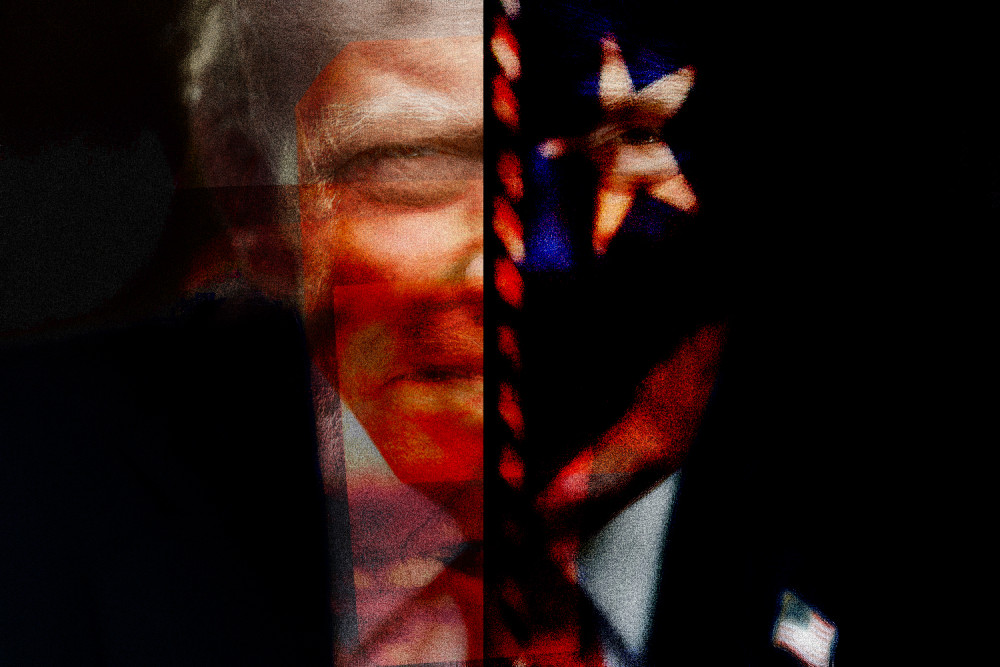
“This is our hemisphere,” said a January 5 post from the official State Department X account. Its background image—a photo of Trump making his toughest tough-guy face—removed any doubt as to who us refers to. It’s not all people on this side of the world, just those of us in the United States. Or rather, it’s just the anti-democratic gang of bullies that persists in speaking for us without our consent, terrorizing us in our city streets, and telling us with a straight face that they’re making us great.