I went to Jordan, more than ten years ago now, to explore biblical and monastic wilderness as part of a pilgrimage group. One evening, the 15 of us were watching the sun go down, perched on a low cliff with a view of red rock formations, desert sands, and a simulated Bedouin camp where we would spend the night (and where I would get bitten by a feral cat at dinner, but that’s another story).
One of our leaders had gathered us for evening devotions and, after a prayer and with a lingering, purple tone in his voice, asked us the question: What is sacred ground? I’m not sure if our group of seasoned clergy and other church folks were tired and hungry or had reason to be a little fed up with this leader or just wanted to be asked a different question. But What is sacred ground? somehow made everyone very cranky. Half a dozen voices took turns piping up to explain that there is no such thing as sacred ground, that all ground is sacred, that we can encounter God anywhere, that worldwide ecological disaster meant we could not consider some ground holy and other ground profane.
Read our latest issue or browse back issues.
I think our leader was a bit bewildered by this fierce response to his lyrical question. Later, I found myself wondering, if there is no such thing as sacred ground, what are we all doing on this pilgrimage?
Jacob marks the ground where he encounters God with a stone and oil and gives it a name: “Beth-El,” the house of God. Perhaps he is marking the spot because that is where he heard God’s voice, and he thinks he might need to return someday for further direction or assurance (God does send him back there, much later). Perhaps he is blessing the land that God has promised him and his people—in fact, marking his property claim. But when Jacob is an older man, when he wrestles with a mysterious figure who changes his name to Israel, he does not mark that ground or change its name.
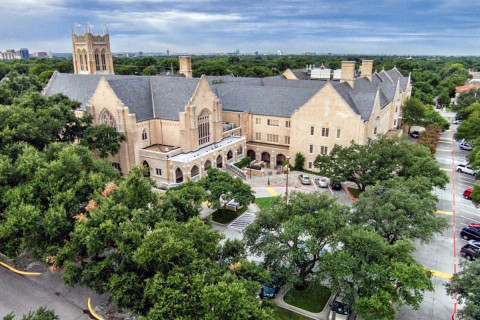
We have relationships with places and land in the same way that we have relationships with other people. We have a history with particular places, landscapes, and even buildings that fill them with heightened significance and emotion for us, positive or negative. We are drawn to certain kinds of places or geography because of who we are, how we grew up, and the way we associate place with who we do and do not want to be. This includes our spiritual autobiography, the places we have met God or encountered the holy in some way.
We can meet God in any kind of place, and all places belong to God. And yet, some places are part of our story and the story of our faith with greater power and particularity. Just as there are people who are special to us (and people who are particularly painful for us), we all have places marked with a sacredness, awe, or dread, not because they are universally more sacred or terrible than other places but because of our relationship with them, either as individuals or as a community.
Unfortunately, humans like to own the things that are special to them, to build fences around them and say, “This is my sacred ground.” In the Holy Land, Christians seem to have built a church on top of any and every place where something holy could possibly have happened. My friend Megan is a ranger at a national park out west and tells me she and her fellow rangers are forever knocking down cairns, or stone towers, that people make, trying to leave their own personal mark on a landscape. We all want to be Jacob, it seems, tagging the places we have been—whether with rocks, a Sharpie in the bathroom stall, letters carved in a tree trunk, or a selfie to post for the world to see.
Some faiths do not allow people of other faiths to come inside their special buildings or holy places. We all have ways we try to keep the wrong kind of people from treading on our sacred ground, people who might see it differently or as less holy than we do. We may want to keep these places from changing in any way, even when they need upkeep or repair. We want to hold onto something in them that perhaps cannot actually be held onto.
And yet, we humans have deep and meaningful relationships with buildings, landscapes, places, and ground, relationships that cannot be dismissed as silly or wrong. We are incarnate creatures. We are animals, with habitats and ecosystems that have formed and sustain us. All places and people belong to God, but there are some that are special and sacred for us, as parts of our story or our community’s story in particular. If we don’t make idols of them or focus on them for their own sake, they can be portals to the Spirit. They can be gates of heaven and houses of the holy, for us and our neighbors.