
Every so often in life we meet an individual, seemingly through serendipity, who is so genuine in character or so inspirational in outlook that we end up reexamining major pieces of our own life. After such encounters we wonder if we might’ve missed something crucial in our development or schooling that would’ve made our kindness toward others more beautiful. We toy with the idea that perhaps God blesses people quite unevenly..
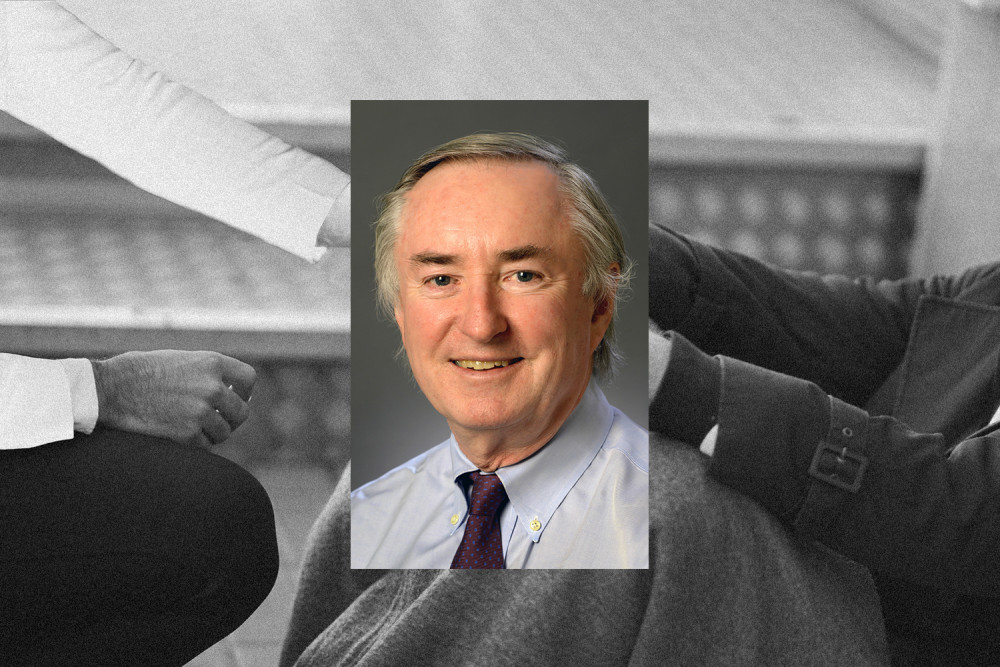
When I first met Jim O’Connell some years ago, I did some of this internal assessing as I was sizing up his nature. Here I was sitting across from a guy who seemed like one of the best listeners I’d ever met. He was clearly secure enough to set his own ego aside and listen patiently, curiously, and with a kind of nonjudgmental attentiveness. If the first duty of love is to listen, as Paul Tillich once proposed, then Jim was full of love for this latest stranger in his life.
Read our latest issue or browse back issues.
Dr. Jim, as many people call him, is a smart man with an agile mind. He’s quiet and self-effacing, almost to a fault. His energy is high, his manner gentle. Even when he gets angry at a societal injustice, his voice rarely climbs above the whispery tone that reveals his calm center. For more than 40 years, this Harvard-educated physician has practiced what he calls “upside-down medicine” on the streets of Boston. It’s not a practice built on a revenue-generating model but one that provides patients with whatever time they need. He is founder and now, four decades later, president of Boston Health Care for the Homeless Program. It’s the largest and most comprehensive enterprise of its kind in the nation, serving upward of 15,000 unhoused people.
Tending to a person lying on the ground in ragged clothes, often with open sores, infected feet, and a significant odor, isn’t everyone’s cup of tea. It requires a dose of listening love—and another BHCHP physician claims that Jim is the most powerful example of this he’s ever seen. In Rough Sleepers, Tracy Kidder describes this colleague commenting on Dr. Jim’s approach as something like the opposite of prejudice: “Jim [has] a knack for ‘pre-admiration’ . . . an attitude of pre-admiration for the people he doesn’t yet know. His presumption is, ‘Oh, I’m eventually going to like this person. I will probably find some reason over time to like them. I just happen not to know it yet.’”
This nonjudgmental quality not only offers a marvelous approach to life, it’s the best way to win the trust of people who make their home under bridges and in vacant doorways. Trust is exactly what Jim has earned through his consistency of care, following patients wherever they go. When I had lunch with him recently, he had come from the housing authority apartment of a woman who had just died. He’d known Linda for 40 years, many of which she spent living on the banks of the Charles River.
In reflecting on her death, Jim said something I wish every pastor who questions the importance of making pastoral calls would take to heart: “The homeless people on our BHCHP board tell us the most important thing we ever do is visit them. We’re present for them. That’s what they need, and that’s what they deserve. Linda had no family. No support. What she had were the relationships with people in our program. That’s what sustained her. People are looking for others to visit and care and accompany them through anything.”
I asked Jim how he hoped to be remembered someday. There was a long pause. “He may not have succeeded,” Jim said of himself in a self-deprecating way, or perhaps recognizing the persistent sadness that homeless people die at four times the rate of other people the same age. “But he went about doing good.”