
I pause on the railroad crossing at the center of town and hold a yellowed postcard up against the horizon of track. In the picture, a train platform brims with travelers as a locomotive arrives. Cargo is neatly stacked in the shade of the canopy. Porters await in the parking lot, alongside a row of Model T touring cars. Just behind the platform stands a brick station with waiting rooms labeled White and Colored. It would be 40 years before Rosa Parks sat to oppose segregated transit in another southern city. Many of the leaders who would organize the alternate transportation systems that drove the civil rights movement had not yet been born.
I wonder where the passengers in this picture are going. Perhaps they’re bound for New York, Baltimore, or one of the many villages that adorn this Shenandoah Valley. Whatever this northbound train’s route and its passengers’ destinations, when it departs Harrisonburg, Virginia, I know it will follow the valley downriver. Though the only visible water is light clouds in a bright sky, the image seems to evoke a river’s freedom. Deed plots reveal that a stream ran beneath the station, and as below, so also above: People leave and return from beyond the horizon, changing yet constant. Life flows with them in a process as essential as the water cycle.
Today, as in the century-old photo in my hand, the rail bends out of sight just beyond a wooden bridge. A brick warehouse still flanks the right side of the track, though offices now peer through its rows of windows. To my left, the changes are starker. Where the train platform once extended welcome and permitted leave-taking, the blank face of the local jail looms overhead. Razor wire and surveillance cameras stand vigil. The pride of the city at its inauguration in 1911, Union Station is now a faint memory. In its place stands a depot of another infrastructure project: our national network of prisons, jails, and detention centers.
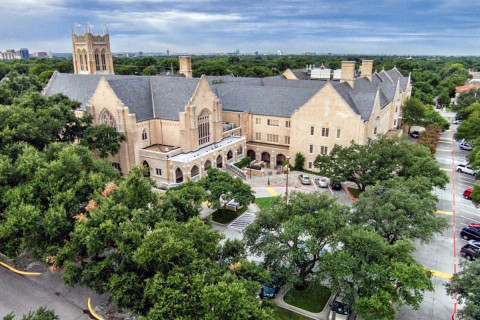
The silence on the street belies the hundreds of people housed in this building. The jail is often overcapacity, though most inside have not been convicted of a crime. Nearly a decade ago, the city and surrounding county began leasing beds in a new regional jail to meet rising demand. The second facility is also overcrowded. It has been since it opened.
New prisons and jails are built and filled. Throughout the postwar era, constellations of local, state, federal, and private carceral institutions have blossomed across the country. Five times more people live behind bars today than did 50 years ago, though the overall population has yet to double. This carceral archipelago warehouses more people in the United States than live in public housing. Take a step back and the crowd swells: More than 30 million people live under correctional control or are disenfranchised by this system, with a felony conviction or otherwise lacking legal authorization to make a living and a life here. More perspective only makes the picture more alarming. The carceral justice system directly constrains the life prospects of one in four people who live in this country.
This construction boom is by design and not necessity, says abolitionist geographer Ruth Wilson Gilmore. In an essay in her recent collection Abolition Geography, Gilmore notes that crime rates were falling before the surge began, but the postwar economy sagged with surplus labor. A social world shaped by slavery, the plantation, and Jim Crow offered ready solutions. They merely asked for the continued belief that some lives are more disposable than others.

A residential neighborhood on the north side of Harrisonburg, Virginia (Photo by Aaron Harper Johnston)
How we structure our environment reflects and reinforces our values, and these institutions disproportionately incapacitate racialized, minoritized, and poor people. Gilmore notes that for much of modern history, “their unfreedom was guaranteed by other means,” but as Black and Indigenous people, new immigrants, and women extended their legal and economic rights, criminalization also expanded. Mass incarceration recalibrated the economy and stabilized the social order by exploiting and further entrenching old patterns of supremacy.
I remember Gilmore and the jail’s residents as I walk toward Court Square, at the heart of this small city. A domed pavilion stands on the corner. The waters that flowed from a spring here made this a place of gathering and relief long before any dream of a city or courts. For generations, many Indigenous peoples, including the Monacan, have made the Shenandoah Valley a place of dwelling and struggle, provision, and exchange. Though European arrival transformed land into possession and fixed new boundary lines upon it and upon our hearts, ancient routes still guide our movement through this valley. Early roads followed the trails of Indigenous peoples, as did the railways. Today, a federal interstate channels commerce and transit along similar paths.
I am slowly following these millennia of desire lines. I left this town more than a decade ago for study and work. Returning now, I see America. Swiss-German Mennonites and other European immigrants began arriving in the Shenandoah Valley 300 years ago. They wanted land to own and followed the promise of economic and religious freedom. Over the past half century, they have been joined by immigrant communities from the rest of the world. Open the door of a public school today and you might hear any of the 60 languages spoken there. Add the churn of a large public university, and the community flows with a certain effervescence that keeps people coming back.
Here on Main Street, there is a kindness on the surface of things. Yet like anything, the quality of an object emerges as life rubs against it. Pay attention to this place, walk its streets, and all-American stories cry out to be heard. I glance at a new historical marker as I turn the corner. It honors Charlotte Harris, a Black woman lynched here 150 years ago for alleged incitement of a property crime against a White farmer. News of her death appeared in the local newspaper alongside the daily train schedule. Those years would come to be known as the Redemption Era for the convulsion of White Christian violence that accompanied the dawning prospect of Black political and economic freedom.
These spasms are more than historical artifacts or chance misfortunes on the road to progress. They shape our national history, the places we live, and how we move. Nearly a century after Harris’s death, the civil rights movement challenged Jim Crow laws and won significant advances toward desegregation and legal equality. Meanwhile, racial and class separation were being further inscribed upon the land itself. Three signature construction projects characterized this reactionary spatial reordering of the postwar and civil rights era: the suburb, the interstate highway system, and the carceral archipelago. Together with their complementary social and physical infrastructure, these institutions map an enduring moral geography that guides how we live and move in the world.
We cannot survive in isolation, let alone be free. The worlds we build should remind us of this fact.
The built environment shapes and reflects the ways we think, feel, and relate. As we design and fashion the places we live, these arrangements become what Gilmore calls our “infrastructure of feeling.” Our cities and towns, neighborhoods, transportation networks, and everything in between do not reflect some ordained, natural order. They are the result of choosing and choosing again which of our ancestral lineages to maintain and venerate. They are the material form of tradition.
Theologian Willie James Jennings made a similar case in his lectures at Oxford on “Jesus and the Displaced.” Our modern crises of housing and mobility are enfolded within the ways Christians have imagined life in the land. Reflecting on the life of Jesus alongside the writings of Howard Thurman, Jennings observes a uniquely Christian delusion: We have seen ourselves not in the land, but on it. Land and creatures have been understood not as mediators of divine presence and love, but as property.
Jennings reminds us that our dreams and designs for the world are formed together. The interior life and the built environment are inseparable. The places we shape with other creatures shape us. The worlds we build either open toward the freedom of life together or they insulate and isolate, taking us captive to “destructive forms of habitation, constituted through fear.” Jennings counsels that to distinguish our liberatory possibilities from their distortions requires attention to place and history. We must learn to see how ownership and control of both bodies and land have structured the modern world since its colonial origins.
Just northeast of Court Square, I’ve now passed three churches, three courthouses, and the police headquarters. Around me stretch city blocks defined more by parking lots and overbuilt roads than by the buildings that dot the landscape. Negative space yawns around me. Within it reverberates a history of racial dispossession and displacement both particular to Harrisonburg and resonant with so many other American cities.
Seventy years ago, this place where parking lots and government administration buildings echo was the beating heart of Harrisonburg’s Black community. Newtown elders recall the solidarity and mutual aid that characterized and sustained the community of their childhood. Neighbors helped each other with rent and shared meals. They cared for each other’s children. “We rode our bicycles all over town,” historian Ruth Toliver says. “Everybody knew everybody.” Matriarch Doris Harper Allen remembered how residents cared for the land—and how it cared for them in return, with gardens and fruit trees. The neighborhood flowered with lawn parties and street concerts. “We were poor and didn’t know it,” Allen wrote in her memoir.
Urban renewal projects swept the nation in the postwar era, with a flush of federal funds. In city after city, the residential core was sacrificed to make way for muscular automobile infrastructure and commercial projects. Harrisonburg was no exception. As construction began on the interstate highway over the hill, city planners dreamed of progress for Newtown. The neighborhood was razed, then sold to private developers. Community elders recall the sound of the machines and the smell of smoke as their homes were destroyed. Toliver remembers the day her family home was burned to make way for an auto parts store. The family gathered that evening in a spontaneous wake where they shared tears, stories, and silence “as though a family member had died.”
A decade later, similar public funds were used to build a park and community center in a new neighborhood on the other side of town. Planners, politicians, and developers dreamed and designed a new Harrisonburg. Like those constructed since, the neighborhood was built on the suburban model pioneered by Levittown and similar White supremacist enclaves. Walk these neighborhoods now and their original animating visions endure. Single-family homes preside over spacious lots. There are few sidewalks. Instead, cars on their way elsewhere speed along wide roads lined with ample parking. Insulation and isolation guide movement and living.
These new mechanics of segregation bore down on Newtown residents. Redlining excluded them from new neighborhoods. Even public space was effectively privatized. Roads designed for the rapid passage and easy storage of private motor vehicles put Black and Hispanic residents at unique peril. At the same time, impoverished public transportation infrastructure has kept the city—including its flagship park and recreation complex—inaccessible to many community members.
While these changes were technical innovations from smart planners, this reordering had a familiar character. Facing pressure from rights movements, a White supremacist social order ceded legal ground but retained its structuring power over mobility and habitation. This distorted creativity marks the modern world and divides us from one another, the land, and ourselves. Its signature underwrites the formation of what Jennings calls “priestly enclosures” on the land. Jennings diagnoses these counterfeit sacred spaces, forged through exclusion, as a symptom of a distorted Christian imagination. Christianity does not labor alone, of course, yet it has played an essential role in the transformation of body and land into property to be partitioned and exploited. Possessed by a spirit of ownership of the earth and life itself, this delusion of separation structures where and how we live and move—whether we can, cannot, or must.

A mixed-use trail in Harrisonburg, Virginia (Photo Aaron Harper Johnston)
Traversing parking lots and hopscotching across disjointed sections of sidewalk, I pick my way northward toward the edge of downtown. The theologian and geographer work in parallel here to describe this structuring reality, each narrating in different language how its terrain shapes our consciousness. This infrastructure of feeling is not solely defined by homeownership, private motor vehicle usage, and the prison, but these institutions are central to our traditions of separation and exploitation. A diseased Christianity naturalizes our disfigured relationships to bless the dominant political and economic order.
Yet both Jennings and Gilmore remind us that the way things are is not the way they must be. They invite us to join them and the many others tending a new world. This is an invitation to faith in our shared humanity and what we can do together. If, in Gilmore’s words, “freedom is a place,” what would it mean to make our common home there? Or, to paraphrase Jennings, how can we build environments that materialize the perfect love that casts out fear?
To do so would be to shape places structured for care and sharing. Political philosopher Olúfẹ́mi Táíwò outlines the task of building this shared life in his book Reconsidering Reparations. In the wake of history and amid ecological catastrophe, Táíwò suggests that the work of repair invites us to imagine and build a world where advantage and disadvantage flow with equity. It is an invitation to join a new reconstruction. Designed with care, the places we live and the ways we move can pattern our lives to remind us that our futures are bound up with the futures of all other creatures. We cannot survive in isolation, let alone be free. The worlds we build should remind us of this fact.
One need not look far to understand the urgency of our crisis. We can and must work with all deliberate speed. But this project is impossible for any one generation to complete. Like Jennings and Gilmore, Táíwò knows this. Yet despair has no constructive use, so he invites us to think in terms of generational time. By imagining ourselves within future history, we can cultivate a revolutionary patience that neither succumbs to despair nor rests in complacent indifference. A child of the Black church, Táíwò follows this with a second gospel word: the biological family, like the nation that builds upon it, draws too firm a border around our belonging. We are defined, he reminds us, by the kind of moral ancestors we choose to be.
Continuing in the direction I began, I’ve now covered some distance. Lanes of traffic and industrial plants for agriculture have given way to green space in a residential neighborhood. The path I am walking now was built after community members campaigned to add it to the municipal plan a dozen years ago. We saw that this part of the city had long lacked public investment, parks, and safe routes to school and downtown by bike or foot—so we talked with community stakeholders and built public will to change that reality. While this remedial project is incomplete, some sections of the linear park are already in use. Today, a family spreads out beside the path at a meadow’s edge. A couple on bicycles ride by.
The greenway empties onto a two-lane street flanked by parking. There are no sidewalks. Someday, the path will follow the woods’ edge opposite me, but for now signage points me into the roadway. I pass a temporary shelter for people experiencing housing instability. The housing crisis is as acute here as anywhere in the country and local groups are pursuing a range of public and private responses. Yet the intimate relation of class and race paired with the common regard for housing and land as commodities impede real progress. The success of technical solutions will depend on new visions for how we relate to each other and the land.
If we’re willing to dream new dreams together, there are tools we can learn to use to refashion the places we live into places of shared thriving.
There are no quick fixes or universal remedies. But if we’re willing to dream new dreams together, there are tools we can learn to use to refashion the places we live into places of shared thriving. In the Shenandoah Valley, we are reckoning with our liability for supremacist land use planning and the historic destruction of housing. Community groups are participating in comprehensive zoning and regulatory reviews in hopes of spurring affordable housing and increasing neighborhood economic integration. Networks of mutual aid and community safety are warming up to keep immigration enforcement from tearing us apart. Families are organizing bike buses for schoolkids. Cooperatives, cohousing, bail funds, and community land trusts are forming to practice new ways of being free together in the land. Everyday people are taking risks and making sacrifices to redesign our lives in this place for connection, care, and joy.
This “shared project of living,” as Jennings calls it, harbors neither nostalgia for a simpler life nor idealism that technological advances will solve our problems. Its dreams are neither libertarian nor progressive, rural nor urban. Instead, it envisions abolitionist futures, built through the reconstruction of the political, economic, and physical infrastructure of our lives. Speaking from experience, Gilmore testifies to these futures when she says that “abolition is about presence, not absence. It’s about building life-affirming institutions.” This is the path toward our common freedom. We build and walk it together.
Soon the path draws me through the edge of the neighborhood and into a protected fringe along a stream. An adolescent thicket gives shelter to songbirds while pollinators do their work in the sun. The waters of Blacks Run flow toward me into the heart of Harrisonburg and beneath the courthouse where I began. When it storms, this stream often overflows its banks in the city. Urban development has constricted its channel, and extensive pavement reduces the land’s capacity to retain water. Further repair is needed, but today this riparian corridor eases the stream’s flow and its waters sing in open air.
Bigger storms are coming. There will always be more to repair. Our reconstruction never ends. Pausing here at the edge of the city, I wonder how the waters of change are also the waters of life. How might these waters and this land draw us into life as creatures in this world, held within ecologies of care? How might we tend our environments and fashion new patterns of living in the land so that it becomes unthinkable that we might be better off apart?