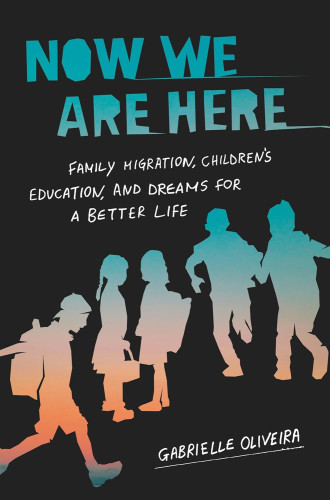
Now We Are Here
Family Migration, Children’s Education, and Dreams for a Better Life
“Who gets a chance to live a life of dignity?” This question posed by a young woman in Gabrielle Oliveira’s study echoed through my mind as I encountered stories of migrant students and families throughout the book. At a time of increasing violence against migrant communities and constant violations of their dignity, Now We Are Here offers a space for bearing witness to the journeys of migrant students and families. Oliveira invites readers to an active witness—one that stands in solidarity with families who migrate as a bold venture of care and seek education for their children as a path to hopeful futures.
Now We Are Here traces the stories of 16 migrant families from Latin America who experienced detention and/or separation at the US-Mexico border between 2018 and 2019, following them through to the COVID-19 pandemic in 2020 and 2021. Oliveira bases her ethnographic study on the premise that “to migrate is to care.” She describes her own relationships with the students, families, and educators in her study and the various ways that families and educators show care through the education of youth. Likewise, she interweaves a keen analysis of the barriers to care in US migration policies, both on a broad policy scale and in the particular experiences of each of the students and families in her study.
The centering of children’s accounts of their own migration stories is an especially powerful characteristic of this book. Ironically, children’s voices are often excluded and marginalized in educational research. Oliveira’s inclusion of their stories prioritizes deep consideration of children’s experiences and dignity in conversations regarding their education and care.