Five Manifestos for the Beautiful World
The Alchemy Lecture 2023
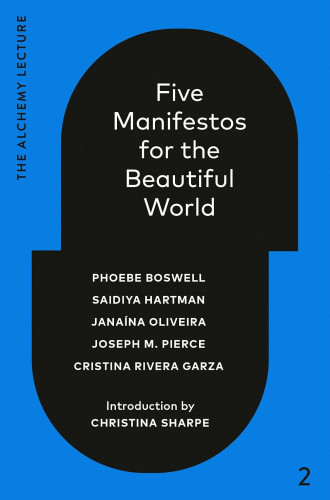
I found myself unable to paint for weeks this winter, haunted by a question as I watched federal agents terrorize migrant families across the United States: What good is art in a time like this? In Five Manifestos for the Beautiful World, I found a resounding response. This collection of essays, which were delivered as lectures in 2023 at the second annual Alchemy Lecture at York University in Toronto, urges readers to engage in alchemy, a creativity akin to magic that imagines our world beyond its current situation of empire. At the same time, the authors remind us that alchemy does not come easily. Undoing oppressive realities requires all of our collective energy, power, and imagination.
This commitment to collaboration is built into the Alchemy Lecture—a celebratory event that gathers speakers from various disciplines to address a common theme—and is mirrored in the structure of the book. Five voices, each in a different register, resound together to proclaim a new reality.
Read our latest issue or browse back issues.
The book begins with Joseph M. Pierce’s “A Manifesto for Speculative Relations.” Pierce, a member of the Cherokee Nation and professor of Hispanic languages and literature at Stony Brook University, proposes the return of Indigenous land by way of “speculative relations”: storytelling grounded in the ethical engagement of land, humans, and other-than-human beings. Language “stories” us into the future, explains Pierce, so we begin our work by metaphor. But we do not end there. For “land back” to become a material reality, both land and humans must be given back to themselves through right relationality. This return restores us to our very existence, as “there can be no life without relation.”
In “A Manifesto for Curation,” Janaína Oliveira offers the alchemy of curation as care. A Brazilian film scholar, independent curator, and professor at the Federal Institute of Rio de Janeiro, she notes a recent shift in approaches to art curation due to technological advancements. Insider industry figures complain that “now everyone is a curator.” Oliveira does not lament this change; instead, she critiques the protection of hegemony by the old guard. She invites us outside of this rigidity and into curiosity and respect for the rights of oppressed people to create works that may not be legible to the eyes of those in the majority culture. Approaching art with care means refusing to turn away from the creative works and lived reality of artists whose images, metaphors, visual scope, timelines, and languages confound or trouble us. Care in transmission means attending to the inseparability of art and artist by protecting the uniqueness of the work while contextualizing it within the precarity of the people whose stories it tells.
Phoebe Boswell adds to the chorus with “Manifesto of the As Yet Unlived Thing,” which pushes us to imagine past existing structures. The UK- and Kenya-based multidimensional artist reflects upon being invited to participate in a virtual art museum during the COVID-19 pandemic. She was initially delighted at the possibility of this animated virtual world, unfettered by institutional politics and the limits of physical space but was quickly disappointed. As she navigated the museum, she noticed reproductions of oppressive systems—stairs that were difficult to climb, walls to get around, and her art’s placement in an annex at the back of the building. As an act of resistance, Boswell worked with software developers to create an animation of the museum burning down. She invites us to imagine what it would look like to start from ground zero in our own oppressive world, creating more inclusive realities from the ashes.
Alchemy does not come easily. Undoing oppressive realities requires all of our collective energy, power, and imagination.
In Saidiya Hartman’s “Crow Jane Makes a Modest Proposal,” we find an anatomy of a compromised Black woman who soothes White guilt in the halls of power and silences the voices of her people, yet still believes that she does good. Hartman, a professor of English and comparative literature at Columbia University, haunts us with the image of Crow Jane being unendingly flexible and chameleonlike but ultimately being left empty and unprotected. She leads us to wonder: In what way does the oppressive system twist each of us into something unrecognizable, rendering us powerless too?
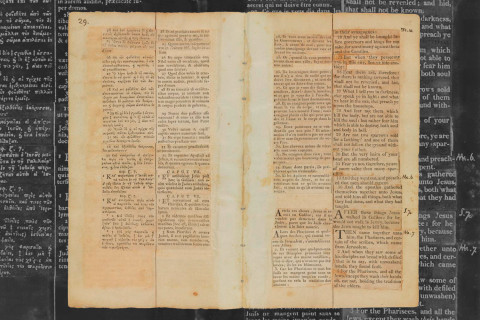
In the collection’s final rally call, “Subjunctive: A Manifesto About Language, Territory, and the Yet to Come,” Cristina Rivera Garza thoughtfully considers the migration of her paternal grandparents seeking better lives throughout Northern Mexico circa 1905. A US- and Mexico-based professor of Hispanic studies at the University of Houston, Garza weaves together images and stories of her grandparents, archival documents on the creation of the US-Mexico border, poetry, apocalyptic fiction, and reflection on the possibilities and limits of the Spanish and English languages to imagine a better future, one in which our diverse languages cocreate an uninhibited earth.
So, what good is art in a time like this? Five Manifestos for the Beautiful World demonstrates that creativity is the alchemy necessary to create a new world. We have the ability to imagine new ways of relating to one another and to put language to the world we desire. Still, the authors warn us, there are limits to this creativity. To imagine something new, we must reject the tools of the present and work with the other members of our community, both human and nonhuman. This renders a creativity that does not stagnate in sentimentality but is grounded in our material existence. We must alchemize together as we will need a whole new host of words, grammar, relationships, visions, dreams, metaphors, and courage to create the beautiful world.
I am struck by the unexpected places from which these five authors draw their analysis. I, for example, have never imagined how climate change may be addressed through language, or how film festivals may be places of radical healing. The breadth of visions often feels like stepping into a surreal dream, yet the text still manages to give a cohesive call to action. The message is clear: our time to innovate is now. Not at the end of racism, capitalism, or imperialism. Now. These alchemists are like elders calling to us, “Come, let us plan together.” While the text at times feels dense with metaphor, this collection of manifestos will be treasured by anyone grasping for inspiration to rail against the machine.
This review was produced in partnership with the Narrative Project.