This summer, following a multistate protest campaign led by multifaith organizations, Citizens Bank announced it was ending its financial relationships with CoreCivic and GEO Group, the two largest operators of private immigration detention centers in the United States. Citizens had been one of the last major banks routinely lending to the two companies; in 2019, eight banks, including JPMorganChase and Wells Fargo, moved to stop most of their financing of private prisons and detention centers.
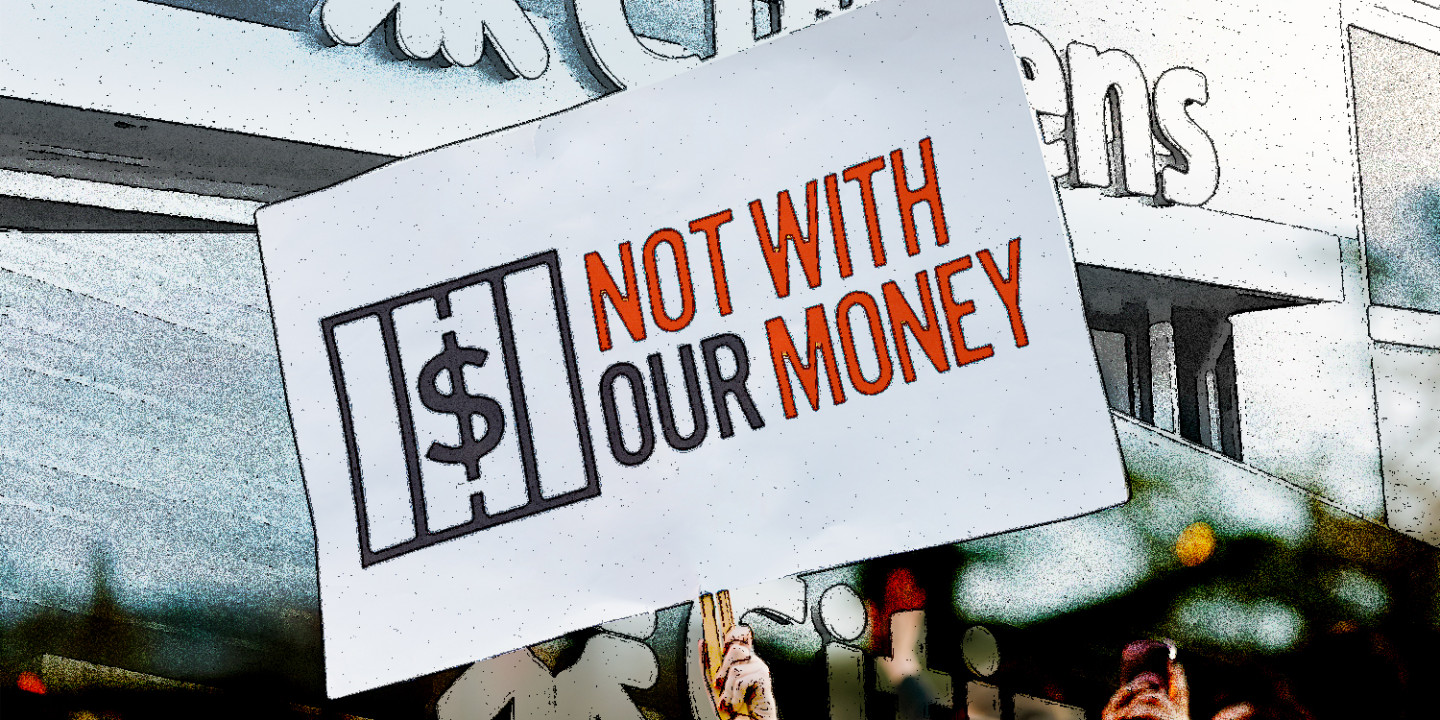
While a secular pro-democracy group had been pushing for Citizens to follow suit since January, pressure began to mount this spring when Greater Cleveland Congregations and the Greater Boston Interfaith Organization formed an alliance, launching an “organized money campaign” called Not With Our Money. On scheduled days, campaign participants would withdraw their money en masse from Citizens, no matter the amount.

Read our latest issue or browse back issues.
“Your amount may seem too small to matter, but movements are not built by a few large gifts,” the new faith-based partnership wrote on its campaign website. “They are built by many people deciding enough is enough.”
The first collective withdrawal, in May, was for $1 million. Then, inspired by the group’s action, two New Jersey municipalities withdrew a combined $365 million from Citizens in June and July. In the meantime, Not With Our Money gathered another $25 million in pledged withdrawals—but they never had to execute them. On July 17, just two months after the campaign began, Citizens cut ties with CoreCivic and GEO Group.
Though the bank lamented that “activists” had “dragged” them into a political issue, it declined to credit the divestment campaign for its decision. Rather, in a press release, it said that the federal government’s purchase of several detention centers from CoreCivic—and stated plans to buy a few from GEO Group—had simply reduced the two companies’ need for a bank “with Citizens’ full range of capabilities.”
The deflection did not faze organizers. “Regardless of the rationale, this is the outcome that was needed,” said Ray Hammond, pastor of Bethel African Methodist Episcopal Church in Boston and a former board member of Citizens Bank of Massachusetts, in a statement.
There’s a lot of hope to be mined in Not With Our Money’s victory. In the last year, many people of faith have been praying and protesting outside detention centers and monitoring ICE activity in their own neighborhoods—sometimes to the detriment of their own safety and usually without any immediate confirmation that it’s doing any good. This win is concrete evidence that people power works. Any system can be dismantled when enough people work together toward a common goal.
We’re going to need that kind of hope in the coming years. The president has openly shared his goal of increasing the number of immigration detention center beds from 70,000 to 100,000. Along with its plans to build new detention centers, the federal government is buying existing facilities from private companies. Under the current administration, this is unlikely to improve oversight.
As Christians, we have an obligation to stand up to this new iteration of evil. As the collective body of Christ, we have reason to hope this will make a difference.