A week before I taught my first class on comparative religion at a Jesuit middle school in New Haven, Connecticut, my 80-year-old coworker turned to me and said, “The students will not know who you are. They will not know what to think of you. But if you roll up your sleeves and they see your tattoos, they will want to know who you are.” My students were all local Black and Brown children living at or below the federal poverty line. Should they eventually attend college, many of them would be the first in their families to do so. By contrast, I’m a biracial, Taiwanese-White Texan in the process of getting my third graduate degree—from an institution my students know mostly for its notorious exacerbation of wealth disparity in their city. My coworker knew teaching these students would require me to speak across chasms of difference, so she advised that my first words be spoken by way of my tattoos, my ink-scarred skin.
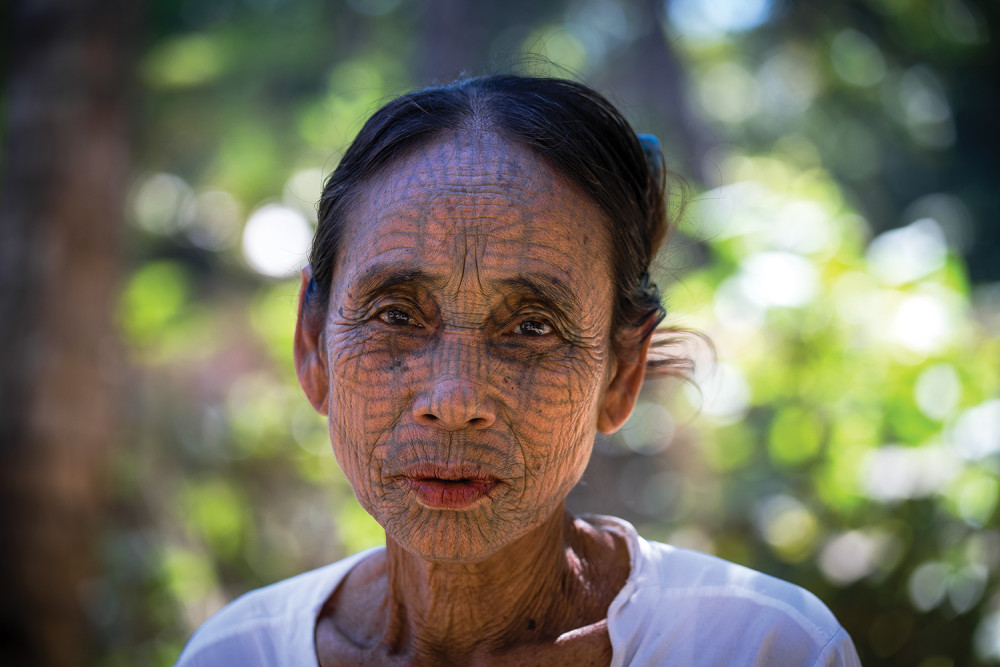
It is not a novel proposition that trauma and tattoos are therapeutic companions, with the latter functioning (somewhat paradoxically) as a somatic balm and identity re-narrator for the pain of the former. My students did seem to recognize my tattooed arms as a bridge between their own identities and whoever I may be, and recent social trends praise tattoos along these lines. In the arena of Christian theology, however, such praise is rare, especially when tattooing is treated as a culturally contextualized self-scarring practice akin to extreme fasting or self-flagellation.
As a pastoral caregiver who is both heavily tattooed and a sufferer of self-injury, I am deeply invested in understanding how tattooing and self-scarring narratives can proclaim life—when told not only by those who “read” our skin but also by those of us whose own skin tells our histories of tragedy and triumph. Scars profess the stories and identities of oft-overlooked, oft-silenced communities and individuals, one of whom was a Middle Eastern Jew with holes in his wrists and a gash in his side.