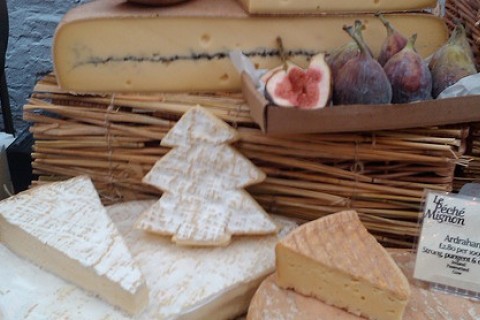

I have lived in the U.S. for nearly three years now, and there is so much to love: the beauty and the grandeur of the landscape, the welcome and hospitality I’ve found in one city after another, and so many new friends.
But there is one thing I don’t love so much.
Some news in the world of sustainable food: Chipotle is responding to beef supply shortages by considering looser standards. Instead of aiming to avoid all beef treated with antibiotics, the burrito chain and sustainable ag advocate may start accepting cows treated for illness, while still avoiding those given antibiotics as a matter of routine.
It's a defensible place to draw the line.
When Rachel Marie Stone offers homilies of food redemption rather than damnation, it may feel like a lovely if disorienting kind of grace.
A recent report from PLOS One finds that growth in global agricultural yield is not projected to keep up with growth in demand. Brad Plumer picked it up, and someone gave his post this blog-snappy headline: "This terrifying chart shows we're not growing enough food to feed the world."
Well, not exactly.

Staring down the barrel of another Chicago winter at age 40, I was a little freaked. Then I started to serve soup.
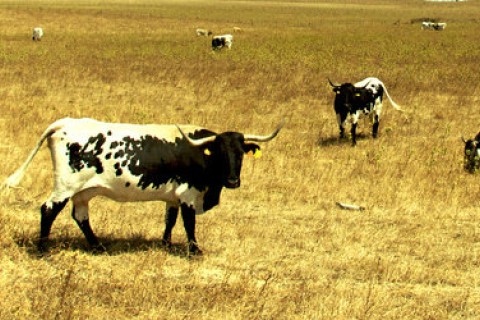
U.S. farm policy badly needs an overhaul. But first, amid the worst drought in decades, Congress needs to pass an uninspiring farm bill.
Joel Salatin's new book offers a full banquet of opinions, prescriptions and rants. How does the man find time to farm?
I'm as down on big organics as the next guy who makes homemade sauerkraut out of cabbage grown by his farmer wife. As Stephanie Strom details, the standards of organic certification could be much stronger, and most national organic brands are owned by the very mainstream companies they're standing in implicit objection to. Not exactly a recipe for systemwide reform.
Still, I think Tom Philpott's right: Michael Potter of the independent holdout Eden's Organics, Strom's primary focus, goes too far in slamming the certified-organic label as a "fraud."
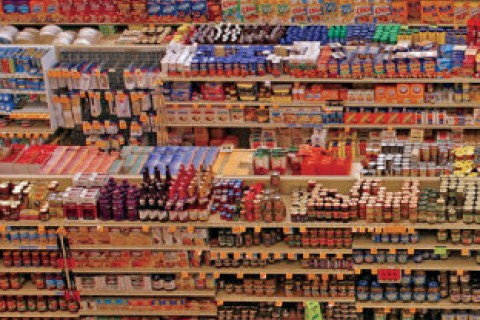
Reconciliation requires relocation. To see the effects of our food choices, we have to get close to the land.

Late in life, my mother confessed that she never enjoyed cooking. "But," she said, "I did take satisfaction in serving simple meals to my family." Well, there's no such thing as a simple meal anymore.
"We often have the idea of the feast appearing magically from the kitchen without labor. But the participatory aspect is the most important part of the feast."
About ten years ago I started to become vegetarian. But although my menu shifted, my Christian observance continued pretty much the same. A cradle Anglican, I was a graduate student at King’s College, Cambridge. Evensong in chapel was a staple of my spiritual diet, often followed by dinner in the hall. Although physical sustenance came right after spiritual sustenance, I had little sense of a link between the two beyond the notion that sharing food with others was a good thing to do and that one should not take too much food in order to leave plenty for others. As a Christian, I was not unusual in failing to make connections between faith and food.
A breakfast frequently served at my son’s school—where over half the children receive government-supported meals—consists of commercially produced French toast sticks and syrup. The list of ingredients on the package for this meal is as long as this paragraph. It includes not only partially hydrogenated soybean oil and high fructose corn syrup, but also more mystifying additives like gelatinized wheat starch, calcium caseinate, lecithin, guar gum and cellulose gum. The story of how these items arrive at a school cafeteria and are designated as food is a long and complicated one involving the interaction of farmers, government policy makers and the food industry. The modern story of why we eat what we eat begins in the 1930s, when President Franklin Roosevelt faced the challenges of the Depression. He saw that many farmers were poor and that one in every five people in the country was undernourished. Farmers and other Americans were too vulnerable, he believed, to the cycles of boom and bust.