
A landscape scarred by the trauma of eugenics
Elizabeth Catte traces the haunting history of forced sterilizations in Central Virginia.
What Amy Coney Barrett’s nomination doesn’t mean
Don’t bother looking for the political significance of the Supreme Court nominee’s Catholicism. There isn’t any.
Ruth Bader Ginsburg saw the biblical Deborah as a role model
When I asked her why, she talked about another role model: Pauli Murray.
The law in our lives
David Opderbeck’s book about theology, the law, and how we engage with both
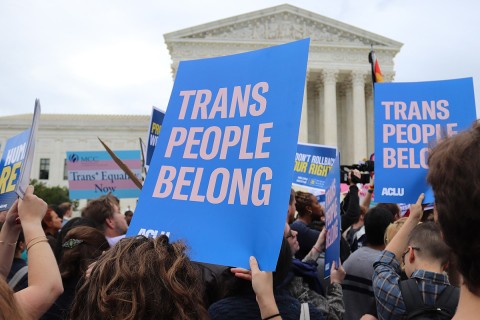
Gorsuch’s textualism promoted justice for LGBTQ people—this time
Why we can’t rely on this or any other hermeneutical principle
Tracing the racist history of the death penalty in Georgia
R.J. Maratea argues that lynching declined when white people began to realize that the courtroom would work just as well.
A civil debate about religious freedom
John Corvino, Ryan Anderson, and Sherif Girgis agree: religious liberty is good, discrimination is bad, and the clash between these values is complicated.
At his inauguration on January 20, 1953, President Dwight D. Eisenhower took an unprecedented step: after taking the oath of office, he led the nation in prayer. During his prayer, which historian Kevin Kruse notes helped make Eisenhower’s inauguration as much a “religious consecration” as a “political ceremony,” the new president asked God to “make full and complete [the executive branch’s] dedication to the service of the people.”
Eisenhower’s professed dedication to serve all the citizens of the United States and his willingness to rely upon God’s help were not entirely new.

Amid the chorus of Facebook likes and rainbow images, it was easy to overlook a third critical SCOTUS ruling.
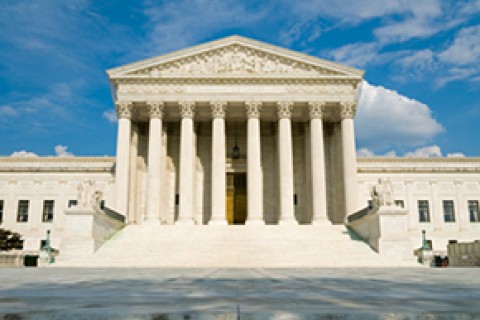
The Supreme Court reflects the politics of the moment. And two recent decisions are in line with a shift of the current court toward the right.
If you haven't read Justice Kagan's dissent to the Supreme Court's pro-governmental-prayer decision in Town of Greece v. Galloway, you should.
Last week's Supreme Court decision in McCutcheon v. FEC, which lifted aggregate limits on how much political donors can give, was not the most clear-cut conservative victory ever. Elected Democrats are officially unhappy, but their fundraisers won't mind the extra cash.
Yet the decision is clearly a setback for liberals—as distinct from Democratic party interests—and not just because other people don't tend to be rich people's top policy concern.
I am a woman of faith who longs for the reduction of poverty, the empowerment of women, and an individual's right to practice religion—and an individual right to practice religion ought to be protected from corporate personhood's religious whims.