

Our teacher cautions us that the corpse pose is the most difficult of all yoga postures to master, but after an hour’s exertion in warrior pose, downward-facing dog and cobra, the prospect of relaxing horizontally on one’s yoga mat brings both relief and the impertinent question, “How hard can it be?” Fascinated, I report to my husband, “Every day at the conclusion of yoga class we practice dying.” “That’s interesting,” he says, trying to share my enthusiasm. “It’s kind of like Lent,” I venture. "Lent is when we’re supposed to practice dying, right?”
When I was a child, I loved Palm Sunday because we got to act out the biblical version of a ticker-tape parade. Later I learned of the ephemeral quality of stardom and parades and decided that Palm Sunday and Passion Week belong together. As a pastor, I have accepted the dismal fact that most of our people skip Thursday, Friday and Saturday, slipping from parade pandemonium to Easter ecstasy with none of the suffering and pain.
Look, people are sinking under the waters. Here in this wilderness, people are perishing.
In the synoptic accounts of the cleansing of the temple, Jesus is being provocative. In John, he is provoked.
For the people in Noah’s day, there was no scientific warning of a natural disaster, just a crazy man building an ark.
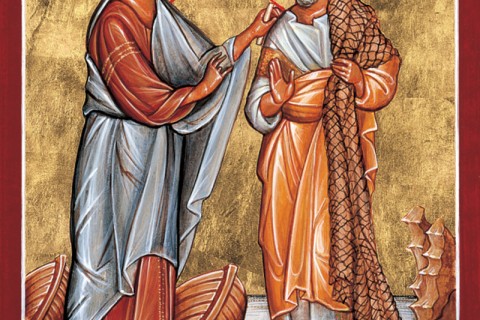
Jesus and Peter care about each other enough to call each other out.
At one end of Matthew, Jesus goes free. At the other, cruel, ritualized slaughter befalls him.
Respectable women made their trips to the well in the morning, not at noon.
As we move deeper into Lent and its emphasis on repentance, spiritual introspection, self-examination and self-denial, many of us choose to practice Lenten disciplines. If we have become involved in the season’s imagery and expectations, we may find ourselves reading biblical texts from a spare and minimalist perspective.
The prominent place of food and meals in the Bible may be surprising to us fast-food and take-out eaters. Back in biblical times, gathering and preparing food took time and occupied a significant part of Israel’s life. The danger of famine (due to natural calamities or crop failure) gave special importance to food. Water was drawn from a well or spring, not a faucet or commercial bottle. Bread was baked from scratch, and beans and lentils simmered for hours.
I was at a class reunion with several former classmates when one of them, a professor of philosophy, asked an unusual question: “What fears have you conquered over the years and what new ones have you acquired?” Not eager to make our private fears public, each of us waited for someone else to open up the discourse. One person finally listed some familiar fears, including “mice,” “being left out or abandoned” and “the dark.”
As I write this, the kitchen table is shaking. If our table is shaking, I worry that the church’s beautiful stained-glass windows, desperately in need of repair, are also shaking. The parsonage is attached to the church and shares the same foundation. Seven feet away all hell is breaking loose. Several blocks of businesses that have served this neighborhood are being knocked down by giant backhoes and inflated real estate prices to make way for towering apartments.