

When I saw the headline in the New York Times—“The Hidden Prosperity of the Poor”— I thought of something very different than what Tom Edsall’s commentary is actually about.
Edsall highlights an insidious and specious argument about income inequality made on the right. In essence, the cost of basic human needs has gone down in relation to income, while consumer goods have become cheaper and cheaper.

Humans can't flourish without institutions, flawed as they are. Holding them accountable, and increasing their capacity, enhances human life.

Monastic vows sound familiar to anyone who's been to a wedding. In both marriage and celibacy, we promise to be faithful.
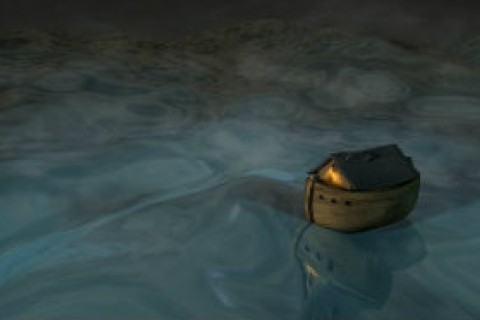
The church is not an ark floating on the top of the waters. It lives and breathes within the waters.

To build stronger communities, we need to get in the habit of recognizing what undergirds our relationships. We can't afford to take it for granted.
Every pastor needs to address the issue of freedom and accountability. It's part of the pastor's role in nurturing a church community: neither a laissez-faire atmosphere nor a judicial one helps people grow as disciples.
As pastors, we spend a great deal of time sharing in the
ongoing lives and adventures of our congregants and community members. We are
also called, literally, to come to love and suffer with them when
disappointments, disasters or deaths occur.

If we got all these spiritual-not-religious people together, they might find out that most of America agrees with them. But getting them together would be way too much like church.

Peter Lovenheim and Tom Montgomery Fate are both suburban dads on spiritual quests. In different ways, each of their books hits close to home.
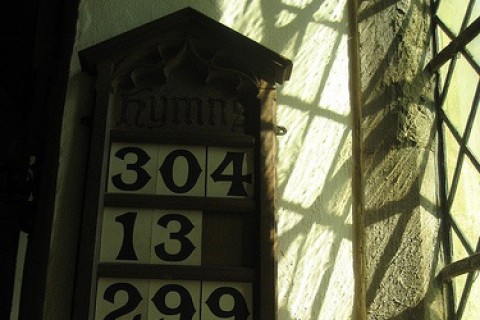
Early Christian writers recognized music's emotional power. Just as often, however, they commended it for its powers of harmony--in both the musical and extramusical sense.
When Jim Douglass graduated from college, his father sent him a life insurance policy. Jim thanked his father but returned the policy. He could not accept the gift, he said, because he wanted to understand the truth of an “economics of providence” that he had read about in Matthew 6. Rather than pay premiums on a life insurance policy, Jim said he would store up treasure in heaven by sending a monthly payment to provide basic care for a little girl in France. I’m convinced that Jim is right.
A friend once described me as “charmingly eccentric.” I’m not sure about charming, but I can’t deny the eccentric part. I’m not eccentric like Howard Hughes or the Rain Man character—just a wee bit short of completely normal. In fact, two experts on autism have told me I have certain “autistic characteristics.” Weird though it may seem, while the Myers-Briggs Type Indicator lists me as an introvert, I instinctively act like an extrovert around people. I genuinely love people and love being around them—in limited doses. After any prolonged social interaction, however, I have to retreat into my cave.
There were 15 people in my house when the well ran dry. It was Thanksgiving, and everyone knew that they did not have to flush every time. Those who were spending the night had learned how to take navy showers: turn the water on long enough to get wet, turn it off, soap yourself, turn the water on long enough to rinse, and turn it off again. If the water ever gets really nice and hot, then you know that you have left it on too long.Everyone knew this, but we still ran out of water. When I turned the kitchen tap to fill the coffee pot after Thanksgiving dinner, all that came out was a long airy gasp. “We’re out of water!” I yelled.