A story of survival in the face of termination


A story of survival in the face of termination
September steals in on tiptoe—
a shy child, clutches August’s hand,
conceals her face. Her lustre’s up
before sunrise, though—silken breeze,
glossy darkness, full moon. By day
she grows bold, and throws down
sky-fulls of rubies, topaz, gold-leaf.
Pines lean and bristle dark whiskers,
pop vaulting cones that skitter and roll,
tumble somersaults, scramble off.

It’s not because we don’t believe in grace.

In the HBO reboot, even the deacons and the police are corrupt.

The Black church isn’t in the pot; it is the pot.
If you study the leaves
each is a little book,
and the stems of grass
are lines of poetry.
Where is the patience
to hear what the wind
keeps telling us?
The blackbird in the bush
sings a psalm of summer.
Listen.
Four generations assemble for a picture: a baby, his mother, grandfather, great-
grandfather, and what none of them notice is the other picture of four generations on the
wall just behind them. The almost-ninety-year-old man in today’s picture is the baby in
the other picture, being held by his father, while his grandmother and wizened great-
grandfather look on. That kindly old gentleman fought against Lee at Gettysburg, took a
rebel bullet in the shoulder outside Antietam, and was there at the end near Appomattox.

A growing number of Malayalam-language films feature Christian characters or themes.
He said he was a fallen catholic, lower case, and smiled.
Said he didn’t intend to be, often pretended not to be,
but was. Said that God for him was like the guy next door,
a retired cop who packed a .38 and a billy club wherever
he went, but was nice as Hell. Insisted that the only Jesus
he ever really knew was his best bud, who lived across
the street, and on the other side lived the Holy Spirit,
a loving little old lady of ninety who made the best
sweet potato pie with toasted meringue he ever tasted.
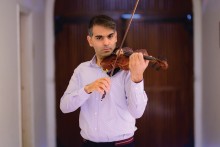
Nabeel Ashkar has worked for years to bring Western art music to Arab young people in Galilee.