Going through the motions together can move us toward healing.
We need ritual for our collective grief
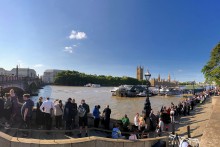


Going through the motions together can move us toward healing.
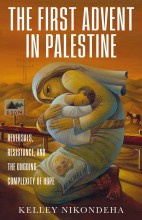
My husband and I traveled to Bethlehem. My first vivid memory of the place is of Star Street, which is traditionally acknowledged as the final portion of Mary and Joseph’s journey into town. As Claude and I walked the Advent road, we were met by a local man carrying a round brass tray, offering us hot tea with a fierce and repeated insistence. Uneasy at first with his incessant hospitality, we swerved up limestone stairs to sidestep him. Later, however, we returned to sit in the alley by the blue metal door of his kiosk.

Too many powerful people in public positions today refuse to repudiate the language of threat.

Jerry Falwell wanted to prepare America for the end of the world. Ted Cruz’s evangelical backers want to take America over.
Fifty years later, Wendell Berry revisits the themes he introduced in The Hidden Wound.
Bill McKibben recalls his suburban childhood without a hint of nostalgia.
I visited a church where large courtyards and breezeways create a protective haven for a handful of people experiencing homelessness who sleep there each night. Nestled alongside walls in the cold months and in the shade in the summer, the small community seems to find a measure of comfort. By an agreement forged with the church’s leaders, they arrive after the workday ends and leave the next morning before it begins. As they gather their few possessions each day, a church member distributes simple bag lunches to carry with them.
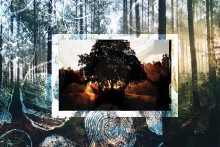
In 2005, Australian philosopher Glenn Albrecht published a paper naming a new emotion: solastalgia. The word describes the pain we feel when we see environmental change in the places we call home. In justifying his decision to make up a new word, Albrecht pointed out that English has very few words that connect emotional and environmental states. Albrecht found plenty of examples of solastalgia: among Australian farmers during lengthy droughts, residents of Louisiana following Katrina, and survivors of the tsunami in Southeast Asia in 2004.
Theologian Alison Benders takes an online pilgrimage through our country’s racial history.