

Why the South Bronx burned
Bench Ansfield argues forcefully that the arson wave of the 1970s was about racism, capitalism, and the insurance industry.

Why I don’t like the label “progressive Christianity”
I’ve come to approach it with suspicion—for pastoral, political, and theological reasons.
A Christian case against capitalism
Liberals, writes Phil Christman, accept the political need to keep liberal billionaires happy. Leftists don’t think there should be any billionaires.

The desecration of Oak Flat
Idolatry rarely turns out well for people—or for the rest of creation.

Who’s the real Mickey? Does it matter?
In Bong Joon Ho’s new satire, both versions of the title character are as expendable as the underclasses that fuel our capitalist system.
What happened to the American dream in the 20th century?
David Leonhardt tells the story in the language of economic analysis.
Naps against capitalism
How can rest be a political act? Poet-theologian Tricia Hersey returns to this question often.
De-commodifying time
Jenny Odell argues that we need to get back in touch with our preindustrial sense of time.
The reality of deep solidarity
For Joerg Rieger, theology must account for global power dynamics, which are largely driven by capitalism.
Capitalism everywhere
Lucia Hulsether explores how the global economic system has absorbed the very movements that seek to resist it.
Taking aim at market fundamentalism
Naomi Oreskes and Erik Conway tell the story of US economic history in a way that obscures as much as it reveals.
When a culture’s immune system is compromised
Lyndsey Medford’s beautiful new book looks to interconnectedness amid the diseases of capitalism and injustice.
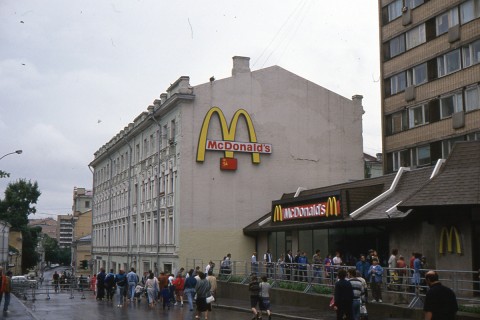
I went to the first McDonald’s in Russia for the bathroom
As the Soviet Union crumbled, the West sent French fries.
The stickers and boomers of Idaho’s Treasure Valley
Grace Olmstead has written a reverent ode to those who stick around.
How deaths of despair reached white communities
Two economists tell the story and suggest reforms.
Take & Read: Ethics
New books that are shaping discussions about ethics in a capitalist society
The deep roots of America’s enchantment with capitalism
Eugene McCarraher explains how money became our object of worship.
The fundamentalists, the modernists, and the oil they both swam in
Darren Dochuk shows how oil and American Christianity have long shaped each other.
Kathryn Tanner’s anti-work ethic
The theologian doesn’t want finance capitalism to determine what we’re worth.

Can Christianity be a counterforce to finance capitalism?
“Religious vocation sits very uneasily with individual self-advancement.”