


A heart broken open
When the teenager stepped into the pulpit, her IV pump slung over her shoulder, the congregation grew quiet.
The wild earth and its consolations
The Mourner’s Bestiary is part memoir, part illness narrative, and part ecological treatise.

Clarissa and her flowers
Reading The Hours in my husband’s hospital room, I was stunned by the novel’s incarnational imagery.
Dear God, you can do better
Two Episcopal priests tell God exactly how they feel about being seriously ill.
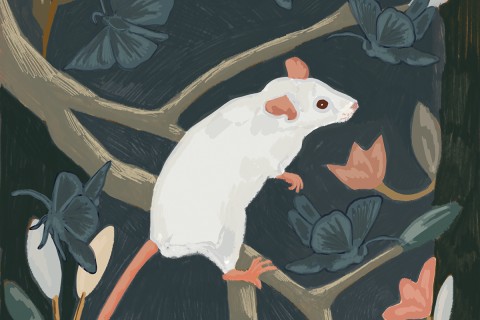
OncoMouse and me
A genetically engineered animal helped me rethink the imago Dei. It might also save my life.
When a culture’s immune system is compromised
Lyndsey Medford’s beautiful new book looks to interconnectedness amid the diseases of capitalism and injustice.

Pastors, like everyone else, need paid family and medical leave
When I was diagnosed with cancer, I was shocked to find I had no paid leave or legal job protection.
Where our deep sadness and the world’s deep hunger meet
Sometimes vocation springs not from joy but from trauma and grief.
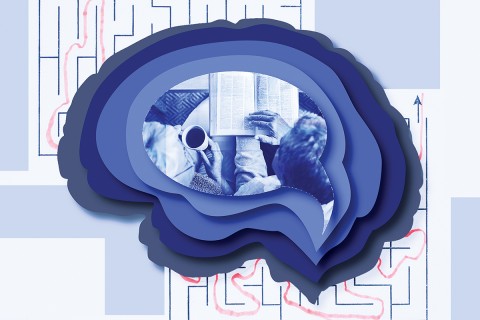
Discovering our voices together after my wife’s stroke
With her own voice changed by the stroke, she wanted to hear the Bible spoken aloud by her husband.
Leila Chatti writes intensely physical poems about faith, illness, and sex
The poetic vision of Deluge reconciles Muslim and Christian themes.

How I learned to love worshiping via video call
I'm immunocompromised. My ability to attend worship has long been determined by the CDC.
When Jane Tompkins couldn’t move, she read
Confined by illness, the feminist literary scholar dove into the complete works of V.S. Naipaul and Paul Theroux.
Todd Billings weaves his struggle with a rare form of blood cancer together with probing biblical and theological reflection.

One day, as I considered my routine of pills and naps and exercises, I saw that it is not unlike praying the hours.
Christian Wiman offers further evidence that his voice is among the most compelling in contemporary poetry. These poems are filled with theological conundrums, unanswered questions, brutal answers to questions never formed, and above all, contradictions.

At 52 I was lead pastor of a large, vibrant church. Then I was diagnosed with ALS, and I began to call on my faith community in a new way.
After her bleak diagnosis, Julie Anderson Love learned that hope has nothing to do
with passivity. She was, she writes, "the patient from
hell."