

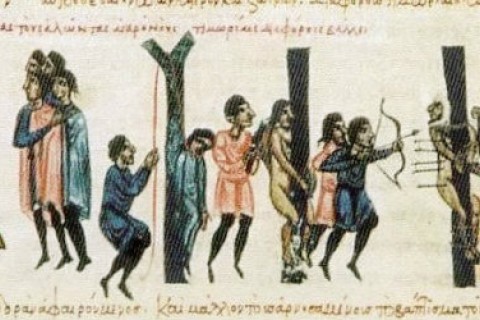
Throughout history, people loyal to a higher law have been responsible for much violence. Should we reject appeals to a higher law?
A recent episode of PBS’s American Experience explored how the massive number of deaths in the Civil War sent the nation into shock. The catastrophe—750,000 dead—was equivalent to the U.S. suffering 7 million deaths today. Besides evoking this ghastly experience, Ric Burns’s film Death and the Civil War (reviewed here in the New York Times), which is based on Drew Gilpin’s book The Republic of Suffering, offers a fascinating perspective on current political debates over the size and scope of the federal government.

There's a danger in making veterans into secular saints. The saints don’t need us to give their deaths meaning; they died fully rewarded.
Americans went into the Civil War believing that God was on their side, and they ended the war believing the same.