

How to Read the Bible, by Harvey Cox
For the Bible to belong not only to the church or the academy but to the people, a guidebook is needed. Harvey Cox provides one.
Questions for Christians, by John Morreall
John Morreall's book is modeled after Peter Abelard's Sic et Non. Morreall wants Christians to ask questions of their beliefs and practices.
Reading for Preaching, by Cornelius Plantinga Jr.
Cornelius Plantinga Jr. contends that to be fully prepared to share a word from God with a congregation, a preacher should attend to storytellers, biographers, poets and journalists.
What Christianity Is Not, by Douglas John Hall
If we're to take a negative route to reach a positive outcome, we will need an experienced and thoughtful guide. Few are better equipped for this task than Douglas John Hall.
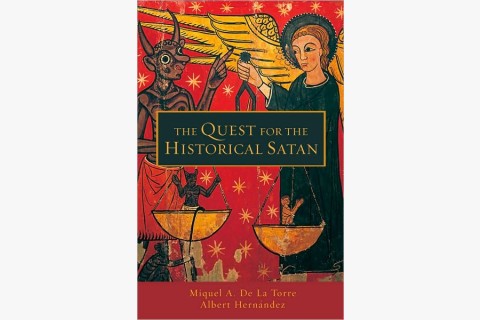
The Quest for the Historical Satan, by Miguel A. De La Torre and Albert Hernández
According to Albert Schweitzer, the quest for the historical Jesus ends with the questers looking down a well and seeing their own reflections....
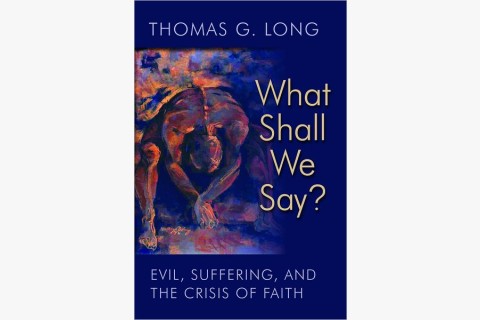
What Shall We Say? by Thomas G. Long
Pat Robertson had a ready explanation for the Haiti earthquake—he said that it was an expression of divine wrath at a centuries-old pact with the devil....
Loss or gain—what drives you?
As a church pastor I've been known to change things, but in contrast to
some of my colleagues I'm pretty cautious. Yesterday at our Missional...
The Cambridge Dictionary of Christian Theology
To be a Christian is to be a theologian, because by definition all Christians, lay or clergy, engage in God-talk. The only question is whether this conversation is well informed....
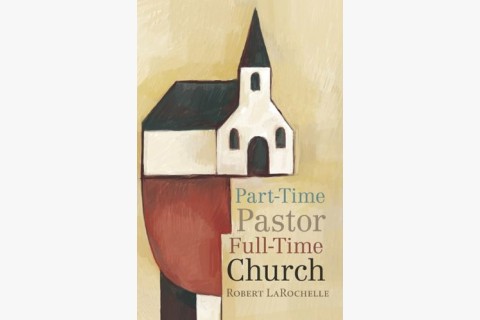
Part-Time Pastor, Full-Time Church, by Robert LaRochelle
A majority of congregations in the United States average fewer than 100 in attendance. While some congregations manage to employ a full-time minister with the requisite M.Div....
Does God love of necessity?
When we say, with the author of 1 John, that "God is Love," what do we mean by this? According to this text, if taken quite literally, it is not simply that God loves whom God chooses to love, but God's essence is love.
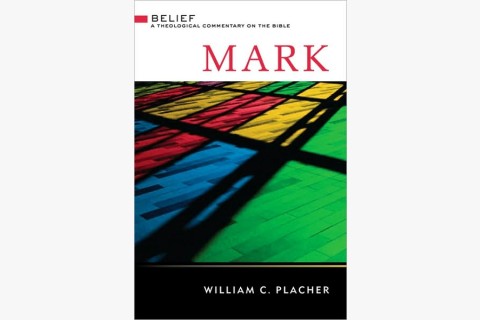
Reading Mark theologically
If your commentary budget has not yet run dry, check out
William Placher's new book on the Gospel of Mark, the first in a new series of...
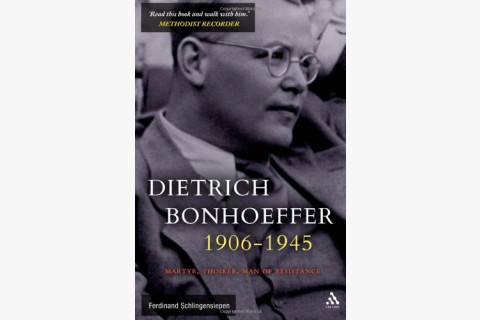
Bonhoeffer demythologized
Dietrich Bonhoeffer has become
an almost mythical being, whose legacy everyone seems intent on claiming. From death-of-God...
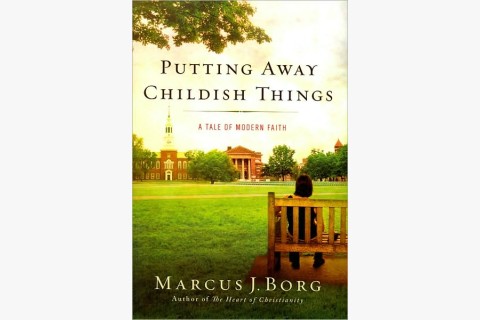
A review of Putting Away Childish Things
Being the Jesus scholar that he is, Marcus Borg certainly understands the power of a story. In Putting Away Childish Things he offers up a didactic novel that explores some of the thorniest theological issues facing the Christian community.
My Neopagan pen pal
I thought that interfaith dialogue had its limits—until I started talking with a Wiccan....
Making Sense of Evolution
Here’s something creationists and evolutionary naturalists agree about:
Darwin’s theory of evolution leads inevitably to atheism. John F....
The Reluctant Revolutionary: Dietrich Bonhoeffer's Collision with Prusso-German History
The martyrdom of Dietrich Bonhoeffer is a well-known story that has proven inspirational a...