
Arts+Culture

Arts+Culture

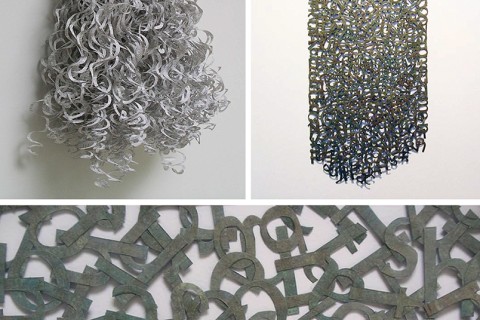
We Are the Eighth Day, © Melanie Weidner

Poetry

Children in the long grass

She likes to watch her children
in the long grass, how they disappear,
emerge, like they’re swimming in
an ocean without current but the one
of growing. See how the long blades
part for them, how they close up
all around, Watch the gold
heads bob, hands reach up for
the sun as if it’s the transportation
of these years. Hear the silence,
the safe silence. And then
the muffled noise rolling through
the shafts, secured forever by the
wrinkled smile of her hearing.
Children are nature’s people now,
but her nature too, the one that
says, play here, will later sigh,
but how could I prevent you.


Film

Bunkered down

Guilt and remorse over Nazi atrocities and the horrors of World War II have consumed Germany for decades, influencing politics, culture and the arts, including cinema. The rise of the German New Wave of filmmakers in the 1970s (led by Werner Herzog, Wim Wenders and Rainer Fassbinder) was fueled in part by a desire to exorcise Germany’s dark past.
Poetry

Synge at Dun Aengus

At the white line of the shore,
where sight loses sense—
to the sure edge of things—I’ve carried me west.

No hope now in Paris . . .
its finery and absinthe,
nights marbled with comfort. And truth? But a tenth

of the whole: lichen
hard upon stones.
Gray within some grayer gray. The only motion—a lone

gannet glides above
the steel-dark surge. Galway
lumbers, crumbling, under an old Imperial sway—

its harbor lights spark
from ages out.
Rock, turf and shore. Here, at least, no doubt.

There is the sky.
There is the sea.
There is the narrow road down to the quay.


Film

Hidden lives

The opening scenes establish the unforced style of Nobody Knows, a heart-rending film by Japanese director Hirokazu Kore-eda about four Tokyo youngsters who are abandoned by their mother.
Poetry

Intercession

Winter dawn pinks even this dirty air,
here where the currents of the world
stall between mountain ranges.
We awaken inhaling fumes and dust,
the calls of crows, breath and prayers
from around the globe.

A child in church, I knelt with
the congregation, leaned into the wails
of women around me pleading for the son
lost to Chicago, for Hiroshimo’s victims,
the girl with the iron lung. They would
begin on a pitch around middle C
and slowly rise with arched phrases
into a high tremolo toward the amen,
as though reaching to heaven.

Now the sun tears
the gray veil, and doves repeat
their soft, low moaning, for heaven
is nearer than we think—in the undersides
of leaves and in their shine,
warmth on my shoulder, scent of bread.
Even in that sick, black night when a man
stood in the center of the lane, his arms
out, pleading for the headlights to come in,
as we stood beside him, now in a silent
heap, his boots flung off, as we
breathed “mercy,” as we breathed “help.”