Faithful responses to work, family, and everyday life
To affirm the truth of heaven is to fire our spiritual imaginations for this life.
Is it the baby or the bathwater?
As it tells the story of our time, the Century makes readers and writers of us all.
Zaccheus doesn't mind the indignity of scrambling up a tree, as long as he’s on top.
When our church offered Rosa sanctuary, our ordinary habits became a politics of hospitality.
My conversation partner may have been a prophet—or a quack. My job was simply to listen.
On Fridays in the church basement, I see glimpses of something precarious and beautiful.
It’s not possible to parent without experiencing risk, weakness, pain, and transformation.
In my 15 years as a pastor, I’ve seen a lot of watery eyes at the table.
My students and I are finding our way into the world again with Evagrius, Teresa of Ávila, and Howard Thurman.
During the pandemic, I’ve realized how much I rely on her as a proxy for my faith.
For 40 days, we contend with our mortality so that we might know what it means to live.
Why are you still in the church? Why bother with Christianity at all?
Christianity is not only about pain and death. It’s about life and joy.
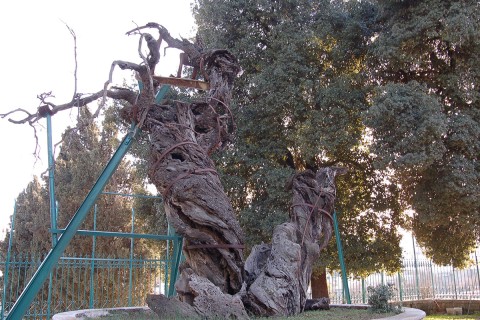
There’s just one oak left at Mamre.
Arthur Kleinman’s memoir gets at the heart of what it means to be human.
Free Newsletters
From theological reflections to breaking religion news to the latest books, the Christian Century's newsletters have you covered.