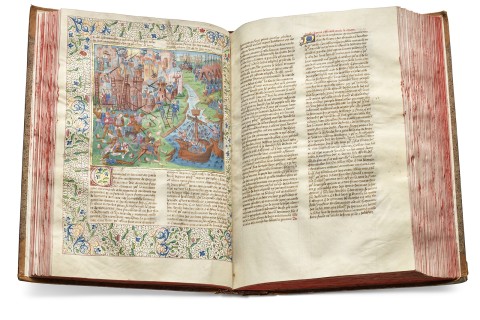
The heft of a pulpit Bible
As I pressed my sermon’s pages across the book’s valley, I couldn’t keep them from sliding into the groove.

Terrible leaders of the Bible
When I remember the story of Jonah the insufferable prophet, I am filled with a strange hope.


Progressive Christians should read the Bible
It’s a rich, multivocal library. And we can’t afford to be ignorant of a book that’s being weaponized against vulnerable people.

A study Bible for Anabaptism’s birthday
“This is not a Bible just for Mennonites,” says Anabaptism at 500 project director John Roth.

The Christian lady preacher and the queer Jewish poet
If I could give every new pastor a gift in their first year of preaching, I’d give them a friend like Jessica Jacobs.
Reading scripture through the experience of disability
Julia Watts Belser sees in the Torah a God who is in love with the creative possibilities of difference.
America the biblical
In a breathtaking scholarly work, Mark Noll explores the doomed experiment of a republic built on an unwritten law of sola scriptura.
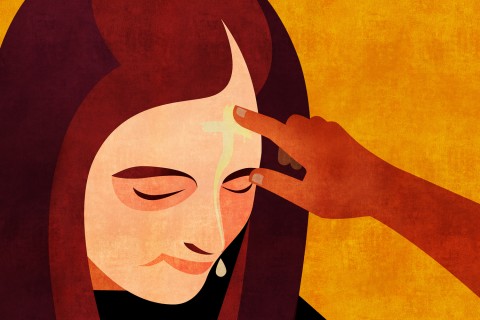
Extravagant consumption
For Jesus, the inverse of scarcity isn’t abundance—it’s accumulation.
Reading scripture through the lens of nature
Daniel Cooperrider understands the Bible as an outdoor book, open to the sky.
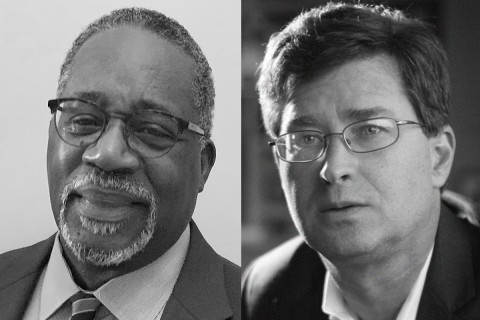
An even better Bible
The leaders of the NRSVue project talk about translation, reception, and what Bibles are for.
We do not read alone
Brad East offers a rigorous argument for the ecclesial context of scripture.
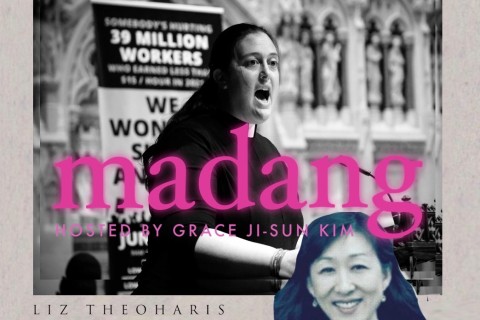
Episode 20: Activist Liz Theoharis, author of We Cry Justice
A conversation with activist and scholar Liz Theoharis about the Poor People’s Campaign, Paul’s letters, jubilee, and more
The Bible’s imprints on US politics are noticeably masculine
Elisabeth Schüssler Fiorenza wants us to reform our collective subconscious.