The Christian Century

Content on this page requires a newer version of Adobe Flash Player.

Get Adobe Flash player

Theolog Shop Amazon CCBlogs Subscribe to the Century ATLA
In This Issue

Features

Living by the Word

Faith Matters

Books

Film

Century Marks

Editor's Desk

News

Music / Video

Notes from the Global Church

Real Live Preacher

American Soundings

Classifieds

About Us

Mission

Masthead

Rights and Permissions

Submission Guidelines

Advertising

Milestones

Privacy Policy

Subscription Help

Subscribe

Renew Subscription

Change Your Address

Report Missing/Damaged Copy

Contact Subscription Services

Contact Us
News
November 29, 2005
Print This Article
Catholic majority on the high court?
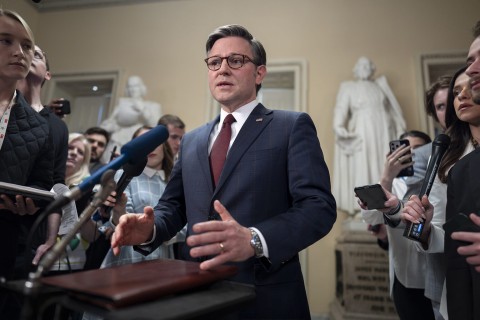
If Judge Samuel Alito is confirmed as the next member of the U.S. Supreme Court, he will usher in the Court's first-ever Catholic majority.

Alito would join fellow Catholics Antonin Scalia, Clarence Thomas, Anthony Kennedy and Chief Justice John Roberts on the Court. Justices John Paul Stevens and David Souter are Protestants, while Ruth Bader Ginsburg and Stephen Breyer are Jewish. (Retiring justice Sandra Day O'Connor, an Episcopalian, will step down from the bench when her successor is approved by the U.S. Senate sometime next year.)

The development is significant in a number of ways, most notably as near-certain proof that anti-Catholicism in politics is dead. "It's much deader than people have thought," said Michael Novak, a Catholic theologian at the American Enterprise Institute. "You almost have to go looking for it. It's not out there screaming at you."

And in a related way, Alito's and Roberts's strong support from evangelical Christians shows how much relations between the two faiths have improved over the past 40 years. Many Protestants were deeply skeptical of Catholic John F. Kennedy's run for the White House in 1960.

Many say that support shows that evangelicals and Catholics have cemented a powerful social-political alliance based on shared values. "The lines of demarcation between Catholics and Protestants are much more blurred now than they were even 20 years ago," said Chester Gillis, a theology professor at Georgetown University.

Richard Land, the top Southern Baptist spokesman on moral-political issues and a supporter of Alito, credited Second Vatican Council reforms and subsequent shared efforts against abortion, euthanasia and homosexuality. "I've got a lot more in common with Pope John Paul II as a Baptist than I do with Jimmy Carter or Al Gore, who are both Southern Baptists," Land said.

The Supreme Court has historically been dominated by mainline Protestants, especially Episcopalians and Presbyterians. Of the 109 Supreme Court justices in U.S. history, only 11 have been Catholic, and four of those 11 are currently on the Court. Despite the long history of Catholics forming a strong base in the Democratic Party, all five Catholic justices—if Alito wins consent—would be selections of Republican presidents.

Catholic scholars and theologians, meanwhile, caution against reading too much into Alito's religion, or a Catholic majority on the Court. They point out that Justice William Brennan, a Catholic who served from 1956 to 1990, joined the majority opinion in the Roe v. Wade decision that legalized abortion, and that Justice Anthony Kennedy voted to uphold that landmark ruling.

In other words, a Court dominated by Catholics would not necessarily reflect church teaching against abortion, euthanasia, capital punishment and homosexuality. Said Gillis: "To say that all Catholics are ideologically identical and will vote in identical manners is inaccurate." -Religion News Service
Print This Article
Subscribe now and receive 2 free issues
Copyright 2006 Privacy Policy About Us Contact Us Classified Ads Advertising Submission Guidelines