
American GIs and the chaplains who served them
Kurt Piehler reconstructs the lived religious experience of the World War II battlefield.
15 London children died in a World War II attack
Francis Spufford’s novel imagines the lives they might otherwise have led.
A desire to return home
Aharon Appelfeld’s novel of wartime survival among Jewish partisans in Nazi Europe
The man who volunteered to be imprisoned at Auschwitz
In the face of evil, we tend to keep our heads down. Not Witold Pilecki.
Robbed of victory in Russia
Svetlana Alexievich tells the stories behind Russia's wartime psychology.
“Seventy-one years ago, on a bright cloudless morning, death fell from the sky and the world was changed.”
I hear these words on a bright, cloudless morning on my way to work. They begin the speech that President Obama gave several hours earlier at Hiroshima.
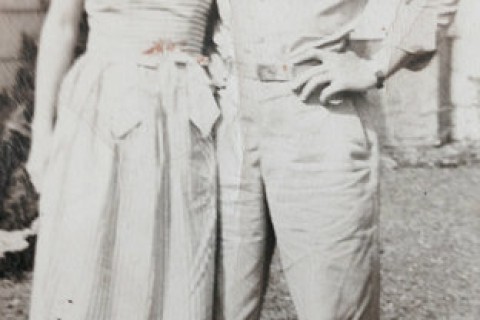
In 1998, I drove my parents from Wisconsin to Georgia to visit the new National POW Museum. My siblings couldn't believe I'd agreed to this.
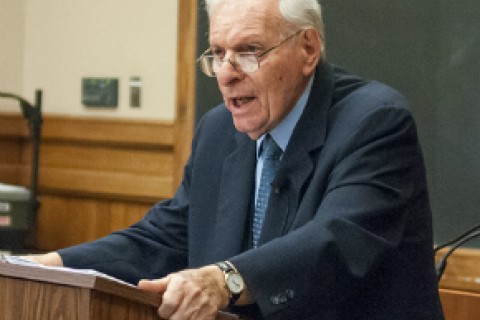
Everyone is ready to bow a knee at the mention of Bonhoeffer’s name. Precious few of us have even heard of Ralph Hamburger.
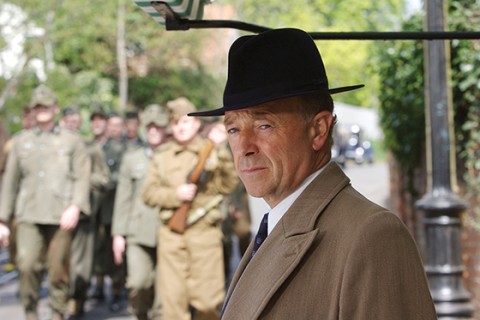
Christopher Foyle has a deep sense of right and wrong. Foyle's War offers both moral clarity and moral complexity.
I’ve seen a bumper sticker that says, “What would Atticus do?”—a tribute to Atticus Finch, the saintly lawyer in To Kill a Mockingbird.
Having finished watching (via Netflix) six seasons of the BBC TV series Foyle’s War, I’m ready to slap on a “What would Christopher Foyle do?” sticker.
These sermons, selected and introduced by Isabel Best, range in time from Bonhoeffer's pastoral tenure in Barcelona to a few months after the start of World War II.
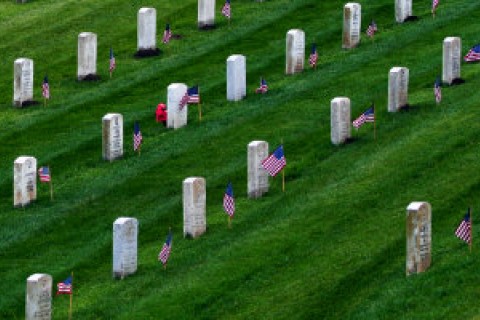
There's a danger in making veterans into secular saints. The saints don’t need us to give their deaths meaning; they died fully rewarded.
A Swiss bureaucrat saved hundreds from the Nazis. Yet even when picking up a cross means picking up a rubber stamp, many desert and flee.
Sarah's Key is culled from a popular novel (by Tatiana de Rosnay)
set during the Holocaust and the Nazi occupation of France. The main
character, an American magazine writer (Kristin Scott Thomas) living
in Paris, discovers that her husband's family acquired their home after
the Jews who once lived there were sent to an abandoned stadium, where
they endured three hellish days before the Nazis transported them to the
camps.