A long-running struggle between Catholic authorities and Roy Bourgeois over his support for ordaining women has ended with Bourgeois’s dismissal from the priesthood and his religious order, the Maryknoll Fathers and Brothers.
Leaders of the Seventh-day Adventist Church have said that recent decisions by two regional bodies to allow ordination of female pastors were “serious mistakes,” and women who are ordained won’t be recognized—at least for now.
In 2004, I was the 40th Korean-American clergywoman to be ordained in the Presbyterian Church (U.S.A.). Forty seems a small number when you consider that in 2011, Korean-American clergywomen will celebrate the 20th anniversary of the first ordination in their ranks. The road to becoming a Korean-American clergywoman remains hard.
Perpetua, Macrina, Theodora, Sara, Syncletica, Melania the Younger and Melania the Elder, Hildegard of Bingen, Catherine of Siena, Teresa of Ávila—I didn’t hear about any of these great women of faith when I was growing up. It’s not that teachers withheld knowledge of them from us. Rather, I think they themselves hadn’t heard of most these women.
Responding to “many news accounts” and “various inquiries” about a controversial investigation of U.S. sisters, a senior Vatican official defended the probe as an “effort to promote the Catholic identity and vibrancy of life” in their communities.
Homeboy Industries, the storied Los Angeles jobs program for gang members founded by Catholic priest Gregory Boyle, has received funding from the Los Angeles City Council to temporarily ease a recession-caused cash crunch at the charity.
"You can be a minister. Just don’t marry one,” I heard myself telling a little girl in my church, and then wondered where that came from. I suspect that I meant it as a compliment to my husband, who was standing nearby. Perhaps I had been short-tempered, as I sometimes am on Sunday mornings, so the comment was my way of saying that I know it is not always easy to be married to a minister.
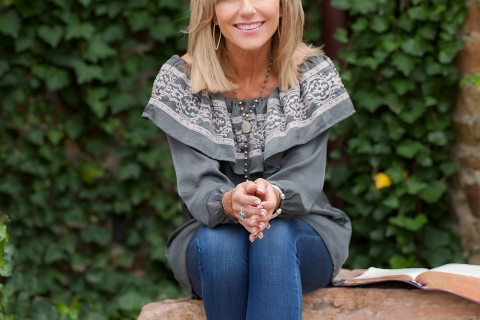
A North Carolina Baptist church has called its second woman pastor—an act that is still rare among Baptist moderates, despite the fact that virtually all moderate and progressive Baptist institutions support women’s eligibility for the ministry.
Methodists opened the ordained ministry to women in 1956, and today female ministers account for about 20 percent of the clergy in the denomination. And 14 bishops heading the 50 U.S. regional jurisdictions of the United Methodist Church are women—28 percent of the total.